What Does It Take to Grow a Hotel Business in 2026?
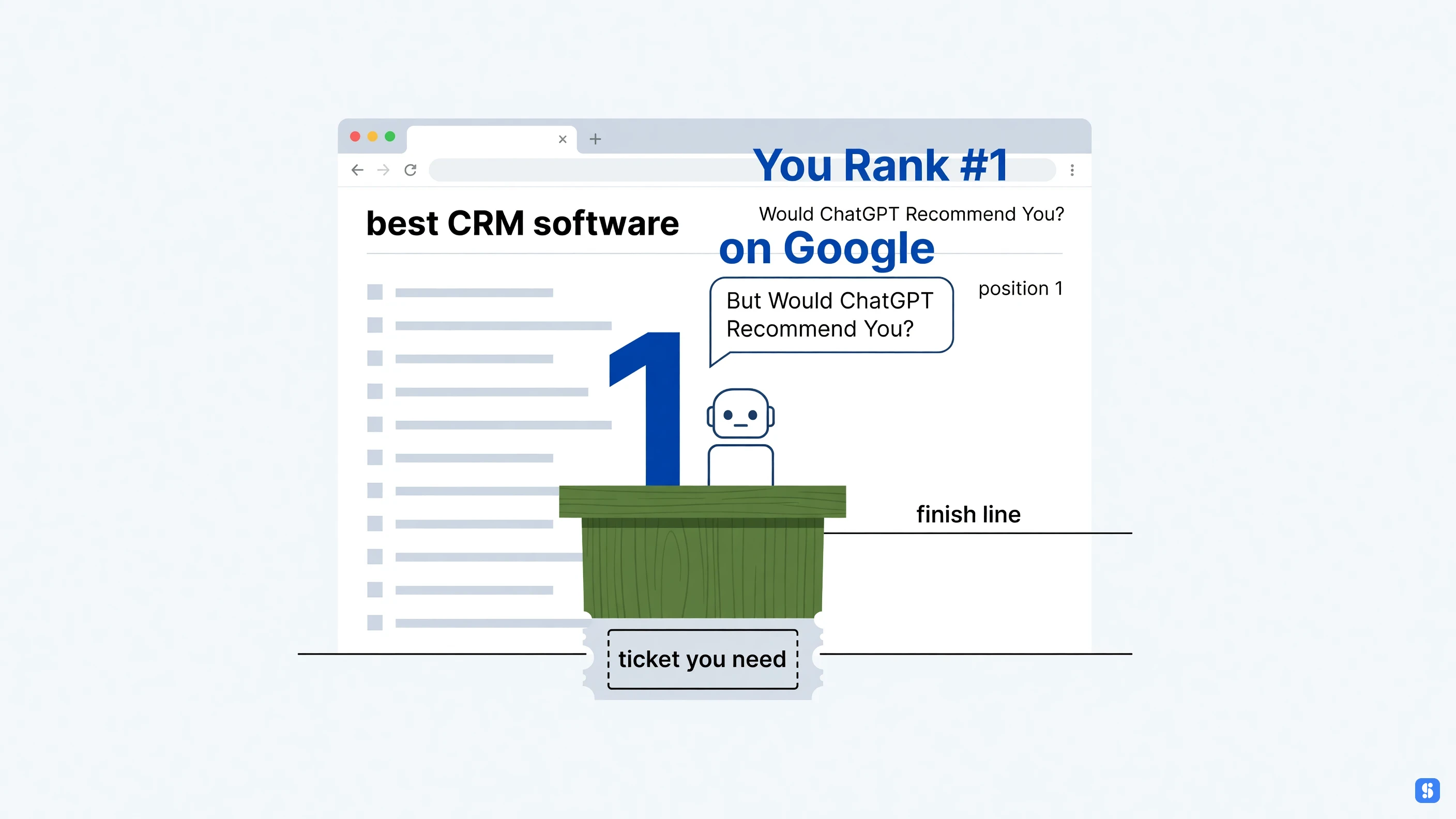
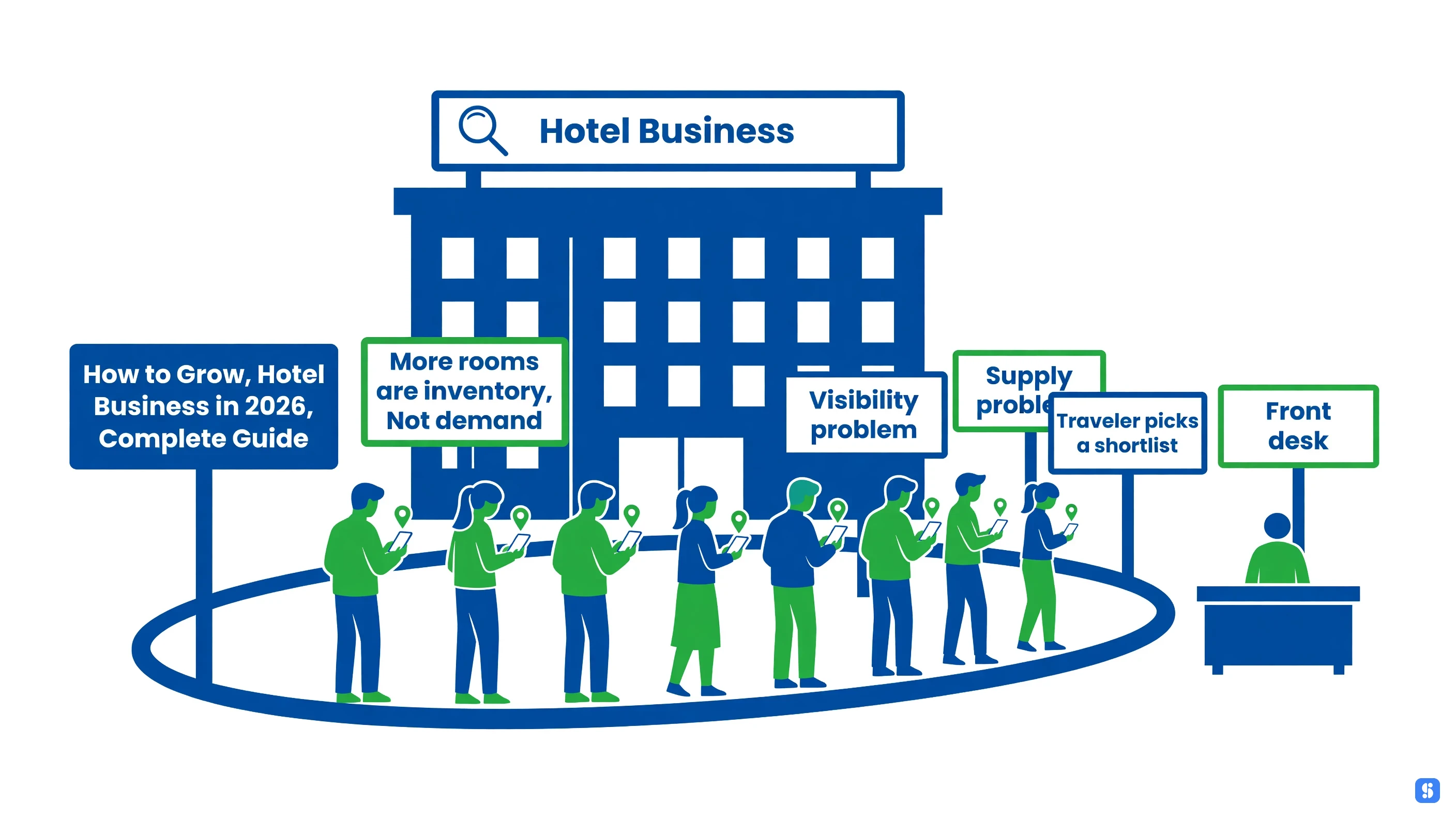
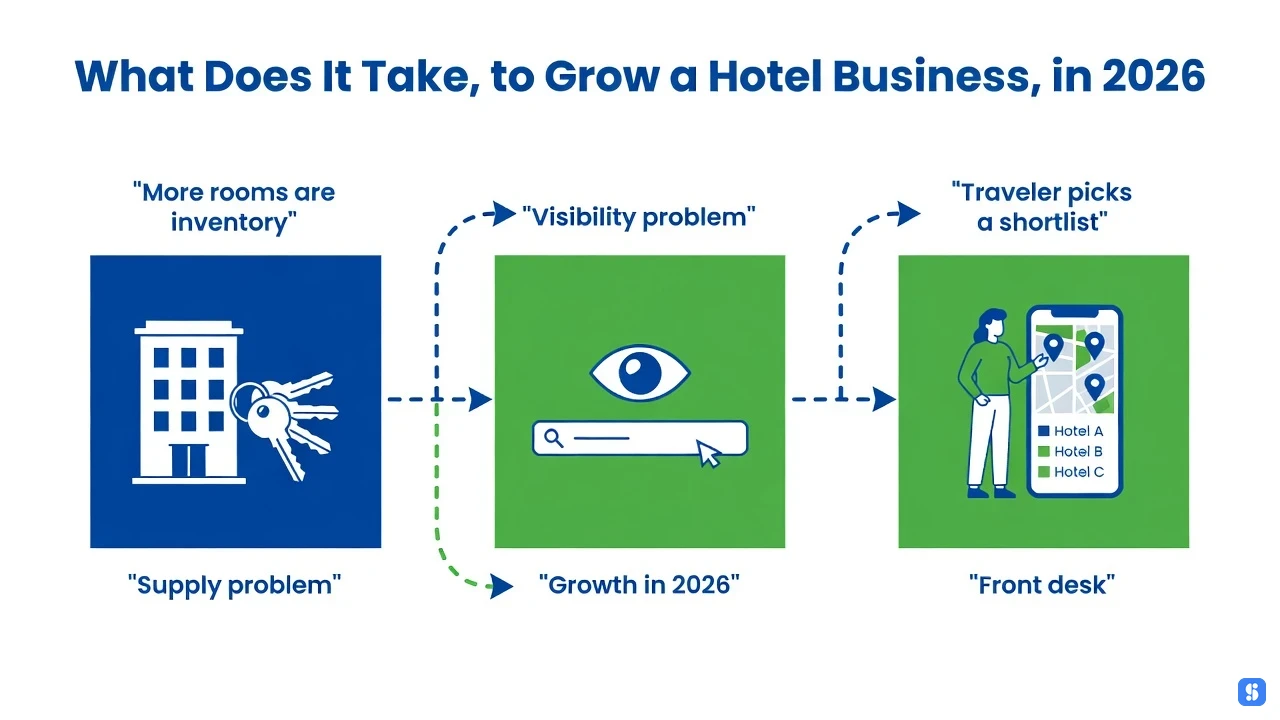
By the time a traveler reaches your booking page, the shortlist is already built. That's the mechanism that decides hotel growth now: demand gets assembled somewhere else, on a search results page or inside an AI assistant's answer, and your job is to be in it. How to grow a hotel business in 2026 is a visibility question long before it is a supply question. More rooms are inventory, not demand.
The 2026 framing gets more noise than it deserves. Getting found at the moment of decision has changed less than the vendor decks imply. Research on how generative AI disrupts search keeps arriving, and it mostly confirms what front desks already see: fewer clicks, more synthesized answers, a shorter path from question to choice. Search engines are also a business, and their business is keeping the answer on their own page.
The constraint is plain: getting your hotel in front of a traveler before they choose a property, in a market where the first list they see is assembled by an algorithm rather than a human.
So this guide stays on local and near-me search, direct bookings against OTAs and chains, visibility inside AI answers, and which 2026 trends are worth money rather than worth a slide. It's written for independent hotels and small groups, for GMs and revenue leads who own the booking numbers, not enterprise brand teams with a media budget.
One honest ceiling: rate, product quality, and review scores set how high you can climb. Visibility decides who gets considered at all. Fix the first without the second, and you own a lovely property nobody shortlists. If tracking both Google and AI answers is the part you'd rather not do by hand, Azuqe, AI-Powered Search Growth covers that side.
Key Takeaways
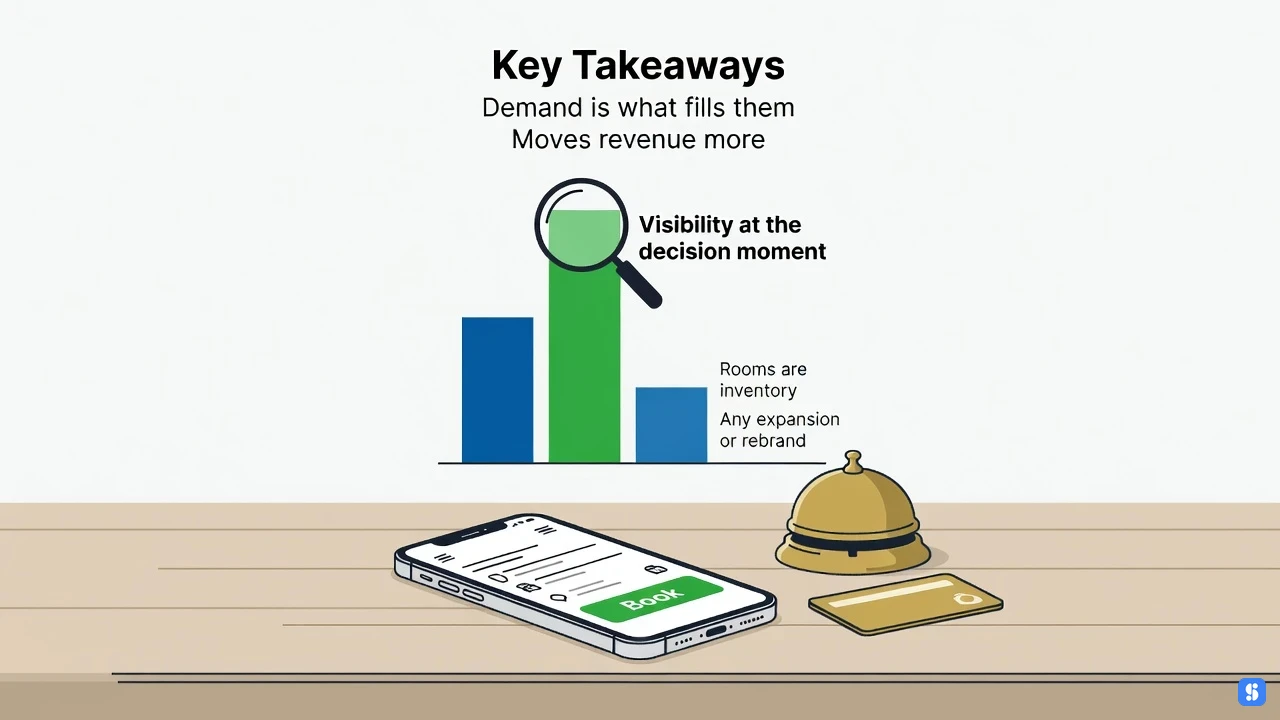
The most expensive mistake I see is treating rooms as the growth lever. Rooms are inventory. Demand is what fills them. Growing a hotel business in 2026 is mostly a visibility problem, and the bookings you lose are rarely ones you can see in a report. You lose the ones that never reached you.
Where demand quietly disappears:
Near-me and amenity searches, the "hotel with pool near me" and "last minute hotel deals" queries, where independents drop out of the answer.
Your own hotel's name. If a chain or an OTA outranks you there, direct bookings are already gone.
AI answer engines. Getting named in a ChatGPT or Gemini shortlist is a distribution channel now, not a novelty.
Most 2026 trend lists recycle what already worked. Fix the technical and local basics first, then track what surfaces in AI answers with Azuqe, AI-Powered Search Growth.
Where Do Travelers Actually Decide Which Hotel to Book?
Long before anyone walks a hallway, the booking decision happens in a search bar and a map. That's the mechanism most properties miss when they think about how to grow a hotel business in 2026: the choice is made days or hours before arrival, and the property rarely knows which queries fed it.
Query type matters more than query volume. "Hotel with pool near me" is amenity-led, mobile, and near-ready to book. "Last minute hotel deals" carries same-day urgency and price sensitivity. A destination plus neighborhood search, like "boutique hotel near the Mission," tells you the traveler is still narrowing. Each deserves its own page and its own offer.
Last-minute demand is a capture problem, not a discounting problem. Same-day searchers typically pick from the first three or four properties they see. The one that shows up wins before rates are compared.
Your Google Business Profile is the highest-build on free asset most hotels half-fill: correct categories, full amenity list, recent photos, answered Q&A, and replies to every review. Sixteen unanswered reviews hurt conversion and local ranking at once. In the local pack you can't change proximity, but you can change relevance, completeness, review velocity, and how closely your pages mirror the query.
Build one page per real question: pool, airport shuttle, pet policy, long-stay options, parking, wedding blocks. A generic "amenities" page ranks for nothing specific and gets lifted by nothing, including AI answers.
Ask for reviews at check-out, respond to each one, and name concrete features in the response.
Stop chasing "hotels in [city]." Against OTAs and chains with deeper budgets and heavier brand search, that fight is lost before it starts. Fight where you can actually win: specific, high-intent local queries.
How Do You Win Direct Bookings Against OTAs and Hotel Chains?
The most expensive mistake in growing a hotel business in 2026 is treating OTAs as the enemy. They're a paid acquisition channel with a margin cost. Cutting them off isn't a strategy, it's a slow shift in channel mix, and anyone promising a clean break is selling you something.
Chains and luxury brands hold what you can't buy: brand-name search volume, loyalty programs, corporate contracts, distribution reach. Four Seasons doesn't bid for "four seasons hotel near me." Guests type the name. That's the entire advantage, and an independent can't outspend it.
What you can own completely is your own property name and your destination-plus-amenity queries.
Identical name, address, and phone everywhere.
A property page that loads fast on mobile.
A booking engine that doesn't break on the last step.
One clear reason to book direct, stated on the page, not buried in a banner.
Rate parity and best-rate guarantees are strategy questions, not policy footnotes. A direct offer nobody can find trains guests to open the OTA next time. Bidding on your own brand and keeping your Google Business Profile accurate are the two cheapest defenses. If you want to see whether your property actually surfaces in Google and AI answers, that's what Azuqe, AI-Powered Search Growth, tracks.
And concede where OTAs genuinely win: cold international demand, first-time guests with no brand preference, unsold last-minute rooms a single property can't fill. Loyalty, for an independent, is an email list and a repeat-guest rate, not a points program you can't fund.
A traveler used to get ten blue links and do the comparing themselves. Now they get one paragraph that names three properties before they ever open a results page, and that's the part of how to grow a hotel business in 2026 most properties haven't planned for at all.
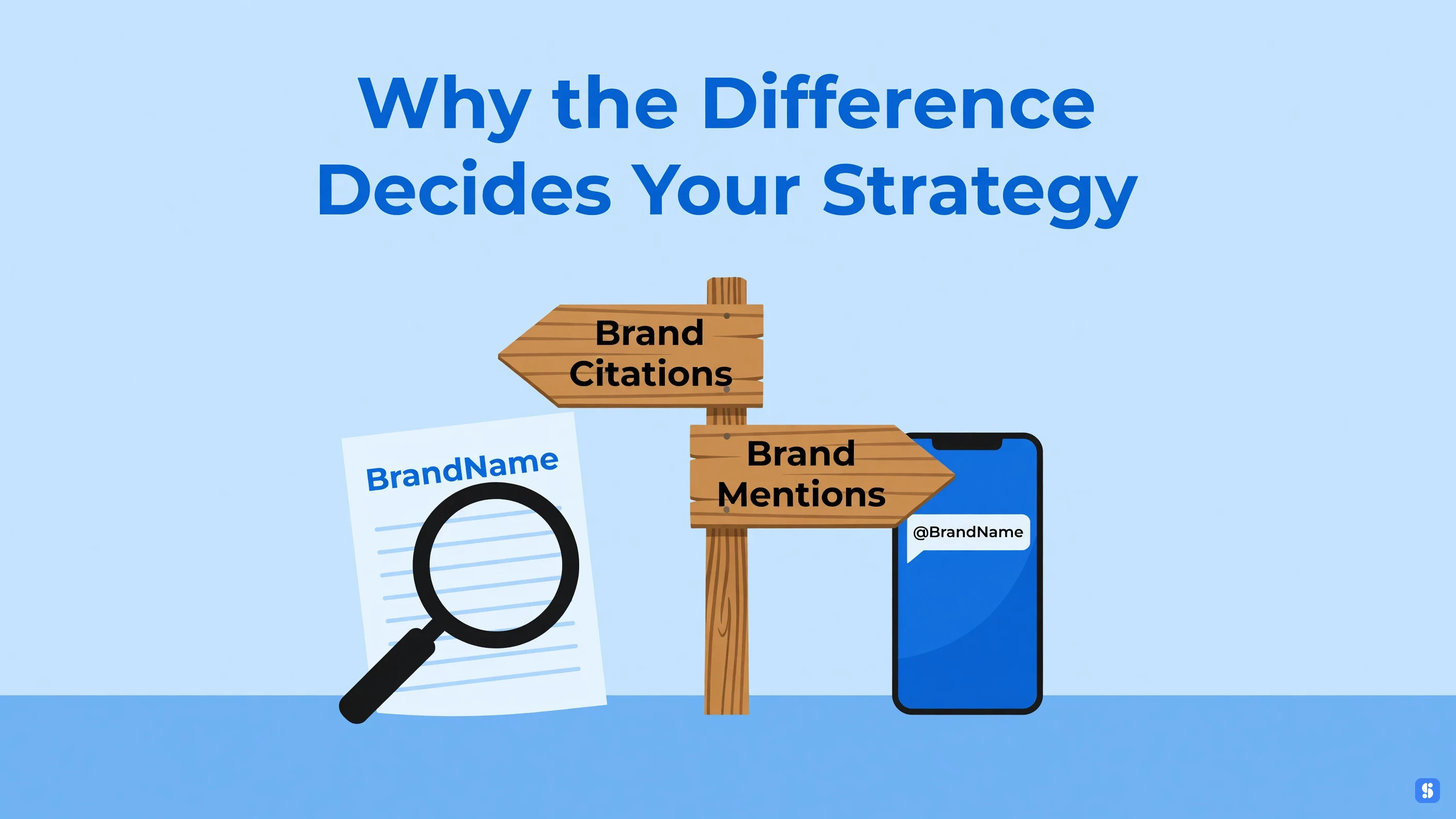
That's the whole shift. AI visibility, defined plainly for hoteliers, is whether an answer engine names your property when someone asks where to stay, and whether it cites your site as the source. If you're not on that shortlist, the rest of your funnel is working with whoever is left.
What makes a hotel citable is unglamorous. Consistent factual pages covering address, amenities, policies, and price bands. Third-party corroboration in reviews, listings, and press. Clean structured data so those facts are machine-readable rather than buried in a hero image.
Page shape matters as much as substance. Answers get pulled from pages that answer one question plainly. A page titled "Does this hotel allow dogs" earns citations in a way a brand story page never will.
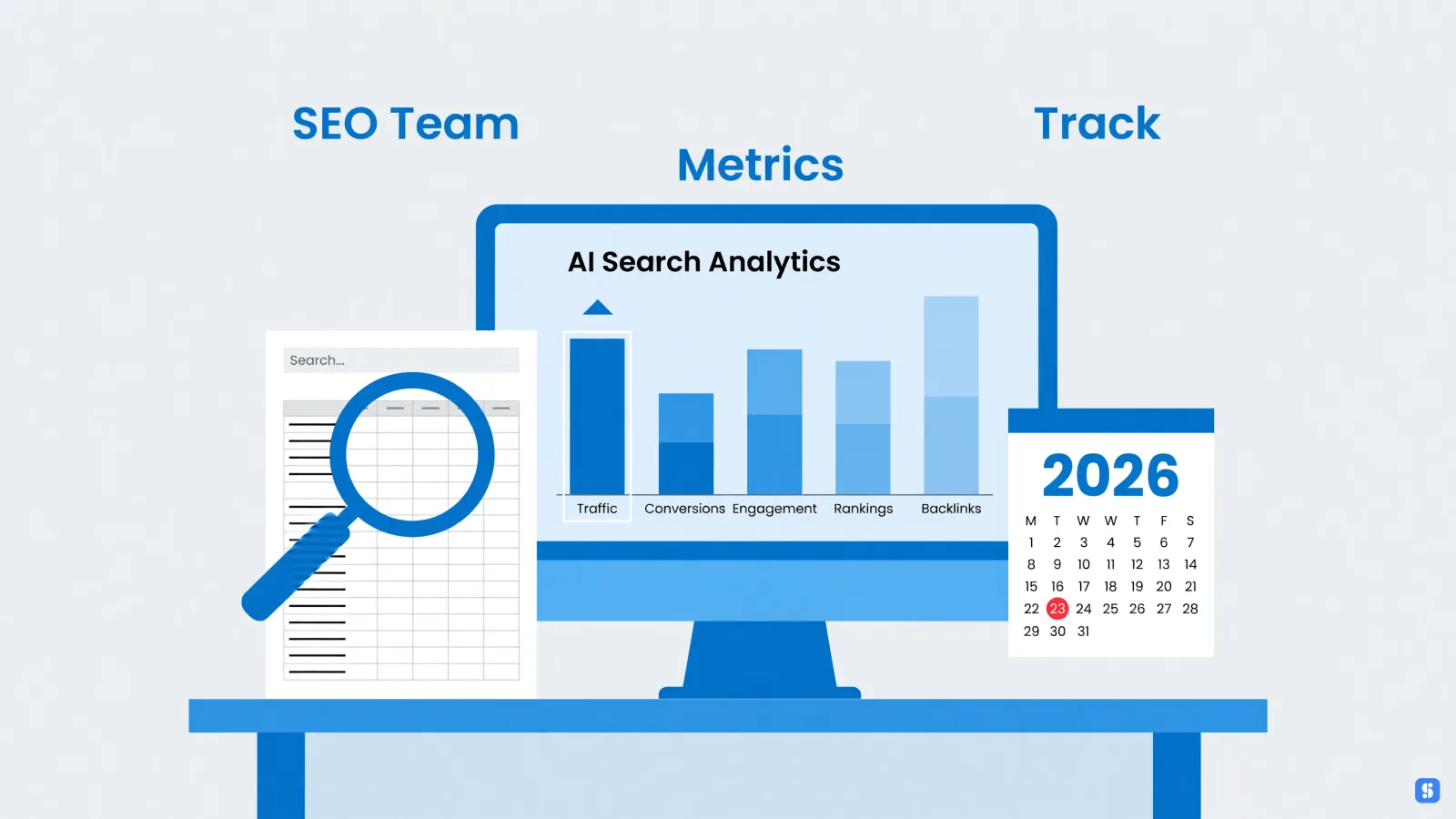
Then there's the measurement gap. Assistants rarely show up in your analytics, so you don't know which prompts surface your property or whether a competitor is being named in your place. Platforms like Azuqe track brand mentions across Google results and AI answer engines in one unified score, and continuous audits catch the technical problems that stop pages from being crawled in the first place. The honest caveat: this tracking is young. Some of what you measure is directional rather than precise, and it's better to say that than to sell false certainty.
A hotel that can't be named in an AI shortlist is now competing for the leftovers.
Which 2026 Hotel Trends Actually Change Your Numbers?
Most of what gets sold as a 2026 hotel trend changes slides, not occupancy. If you're trying to work out how to grow a hotel business in 2026, the filter I use is blunt: does this change who finds you or what they pay, or does it just add another subscription?
Three things earn attention. AI planning assistants have moved into the research step, where travelers build a shortlist before they ever reach your site. Revenue tools that independents couldn't afford a few years ago are now priced for a forty-room property. And sustainability claims get checked, so vague wording costs you bookings.
Mostly noise at that size: another dashboard, another loyalty scheme, anything that needs a dedicated owner to keep it alive. A small property doesn't have that person.
One honest gap. Nobody can tell you yet how AI-answer traffic converts against classic organic search. Anyone quoting a precise percentage is guessing. Worth tracking your AI visibility anyway, so you argue with your own numbers rather than theirs.
Best Practices for Growing a Hotel Business in 2026
Every dollar you spend acquiring a guest through an OTA costs more than the dollar you spend keeping one you already have, and most properties still run it the other way around. Growing a hotel business in 2026 comes down to owning fewer, sharper assets instead of buying reach.
Pick three or four high-intent queries you can plausibly win and build one page for each. "Pet-friendly hotel near the airport" beats a single About page chasing every phrase. Keep property facts identical across the website, the Google Business Profile, the booking engine, and every third-party listing. Amenities that appear in one place and vanish in another cost you trust with guests and with crawlers.
Ask for reviews at check-out, answer every one, and name specifics in the reply. A response that mentions the rooftop bar or the EV chargers carries detail a generic thank-you never will.
Fix technical basics before funding a new channel: mobile speed, a booking engine crawlers can reach, and hotel plus offer schema on the pages you want cited. Use email for shoulder season and repeat demand rather than discounting into OTA inventory. Publish answer-shaped content: comparisons, policies, short factual statements an AI engine can lift and attribute to you without rewriting them. Azuqe tracks which of those pages actually earns the citation.
The most expensive mistakes in how to grow a hotel business in 2026 don't show up on any invoice. They're the quiet ones, and I made most of them before I knew better.
Treating the OTA as the marketing plan. Signing up for a channel manager and calling it distribution, while nobody in the building owned the property's own search presence or knew its top queries. That's renting demand, not building it.
One generic page for everything. Ten room types, four amenities, and a cancellation policy buried in a PDF, all sitting on a single URL. Nothing ranks for anything specific, and nothing is quotable when an assistant summarizes your property to a traveler.
Ignoring the map. An unclaimed or half-filled Google Business Profile, photos from three summers ago, wrong amenities listed, reviews left unanswered for months. It's the cheapest traffic available and almost everyone leaves it half done.
Measuring with the wrong tools, then mistaking the measurement for the work. Analytics tells you what brought traffic. It won't tell you what a traveler typed into an assistant at 11pm. A ranking or AI visibility dashboard nobody opens has never booked a room. Confusing SEO tooling with a CMS, a CRM, or an on-site chatbot is the same self-inflicted delay wearing a different hat.
Buying the trend. A rebrand, a new website, a loyalty program, all signed off while direct bookings had already been slipping for a full season.
The order that wastes the most money is predictable: the rebuild happens before anyone opens the property's own search query report. Flip that order and half of these mistakes stop mattering.
The unglamorous fix beats the exciting one almost every time.
Frequently Asked Questions
Most of what gets recommended for growing a hotel business in 2026 is cheap to buy and expensive to run. Software only pays off when a named person inside the property actually uses it, and that tradeoff sits behind every answer below.
What technology should hotels invest in for 2026?
Four things: a booking engine that survives the mobile checkout, a channel manager, a review platform, and measurement that covers both classic search engines for business queries and AI answers. Add a CRM only if someone will actually send the emails. Skip anything that needs a dedicated owner at a small property. If nobody owns it, it's a subscription, not a system.
How can hotels improve guest experience to drive repeat business?
The unglamorous version: clean rooms, fast check-in, and a follow-up that isn't a survey. Guests return because they remember one specific thing, not a points balance. Pick what you want to be remembered for, then make it repeatable.
What are effective revenue management strategies for hotels in 2026?
Price to demand by channel rather than by habit. Hold last-minute inventory for direct-booking perks instead of dumping rates into the OTA, and check your own booking pace weekly. Pace tells you what the OTA report never will.
What role does sustainability play in hotel growth?
It's a filter, not a driver. Travelers verify claims now, and vague green language invites skepticism rather than bookings. Concrete, checkable actions move conversion and corporate bookings. A badge alone doesn't.
How do you use data analytics to grow hotel revenue?
Split acquisition data (which queries produced the booking) from guest data (repeat rate, direct share). Search Console and your property management system cover those two jobs, and neither tells you what travelers are asking an AI assistant. That gap is where AI visibility tracking for hotels sits alongside your ranking data rather than replacing it.
Conclusion
Here's the tradeoff nobody wants to hear: every dollar you add to the rooms, the lobby, or the ad budget buys less than a dollar of visibility. Growing a hotel business in 2026 is a findability problem first. The property that shows up in the map result or the AI shortlist wins the booking before anyone compares rates.
Your next step this week: search your own property the way a traveler would, plug in "near me" and your amenities, and fill in every field of your Google Business Profile. Then check whether ChatGPT names you when asked for a hotel in your city.
If you would rather track Google and AI answer visibility in one workspace than across five tabs, Azuqe offers a free trial on your first website. Most users publish their first article the same day they sign up.
The 2026 noise matters far less than whether a traveler can find you in the four minutes they spend deciding.