Key Takeaways: what Actually Matters in Backlink Monitoring
Backlink monitoring is the practice of tracking which sites link to you, whether those links still exist, and how your link profile shifts over time. It gets dismissed as busywork, but it's the only way to catch lost links, spot spam, and see what competitors pick up before the rankings move. Skip it and you're reacting to traffic loss instead of preventing it.
Monitor continuously, not quarterly. Links disappear, pages go dead, and redirects change what a link passes to your site.
Track link quality and context, not just total count. One relevant link from a trusted page beats ten directory placements.
Watch competitor backlinks as an early signal. Their new links often explain your ranking shifts before your own data does.
Connect backlink data to your broader visibility work. Azuqe's Backlinks Suite ties links to your unified SEO and AI visibility score, no separate dashboard required.
What is Backlink Monitoring?
Backlink monitoring is the practice of regularly checking who links to your site, whether those links still exist, and whether they are actually helping or quietly hurting your rankings. It is not a one-time audit. It is a continuous process, because the web changes daily: pages get deleted, domains expire, and links that once looked natural can turn into liabilities. (see Azuqe, AI Audits, Keyword Research & AI Visibility Tracking)
Why bother? Search engines still treat backlinks as votes of confidence, but not all votes are equal. A link from a reputable industry publication moves the needle. A link from a spammy directory does nothing, and one from a penalized site can drag you down. Monitoring is the only way to know which one you have. (source: SEO AI Visibility | Lead the Search &)
Most teams only check backlinks when something already feels wrong, a ranking slips, or a competitor suddenly appears. That is too late. By the time you notice the problem, the link has been influencing your performance for weeks. Regular monitoring catches issues while they are still small, which is exactly why we built our backlinks suite around continuous checks instead of scheduled reports.
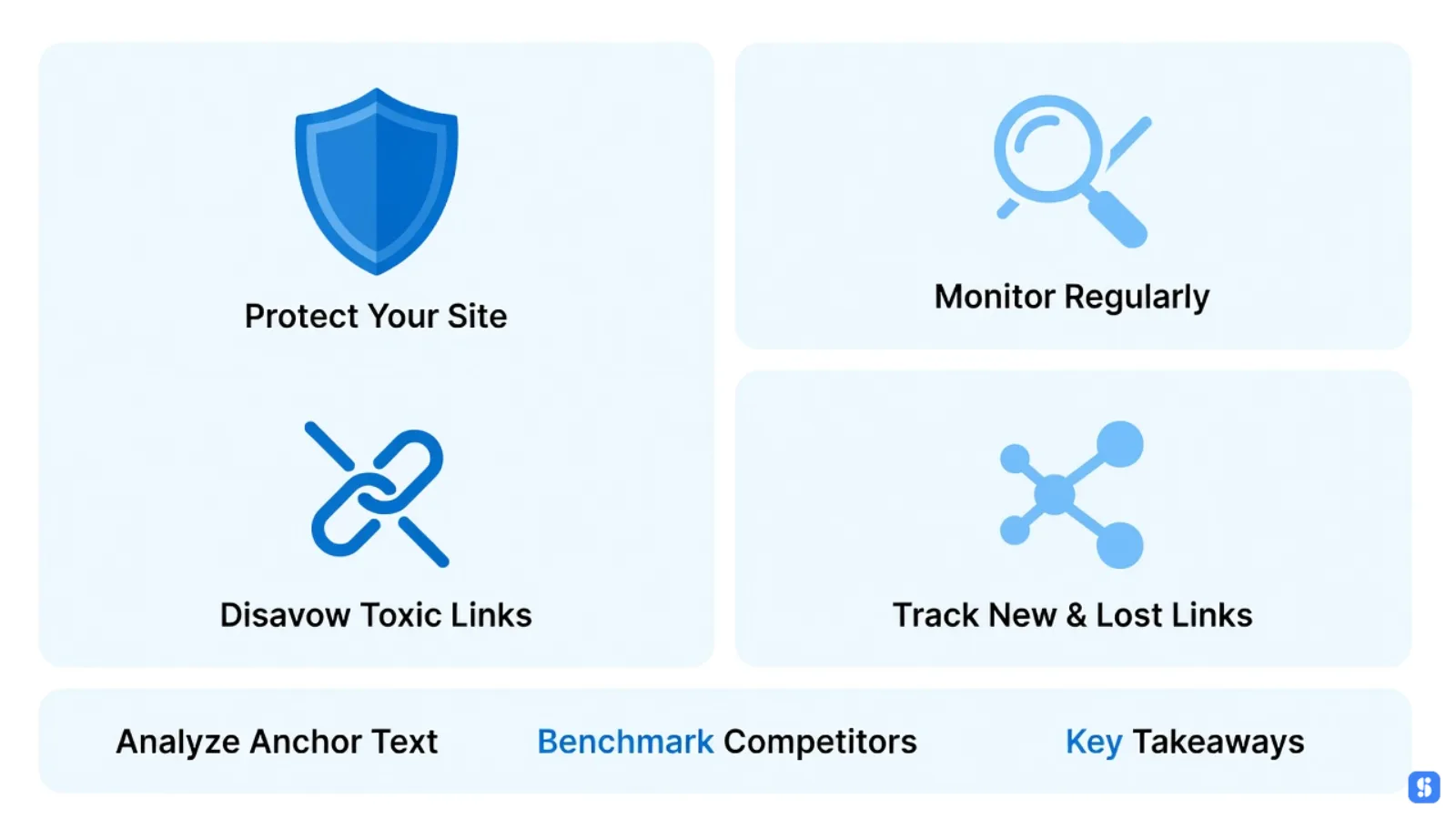
card grid with key takeaway icons
You also want to know what your competitors are gaining and losing. Their backlink profile is a roadmap: if a competitor picked up three strong links last month, that is probably where you should be looking next. Monitoring gives you that context, not just a list of your own links.
How Backlink Monitoring works
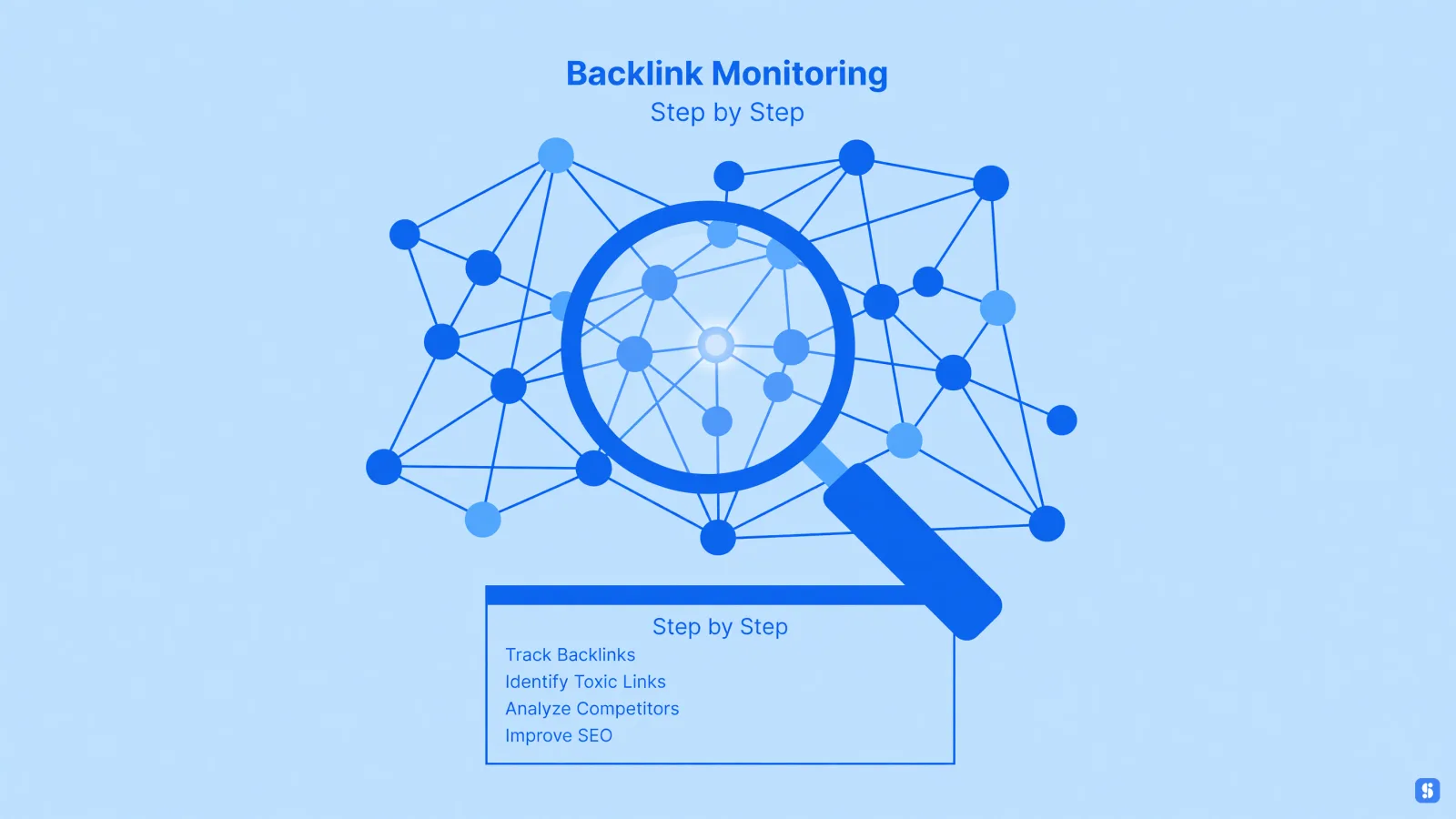
Backlink Monitoring is a continuous auditing process, not a one-time report. When you get down to it, the mechanism is simple: a crawler regularly checks the web for pages that link to your domain, logs each new link, and re-checks known links on a schedule to catch the moment a page goes dead, nofollows the link, or removes it entirely. The output is a living dataset of your link profile, not a static snapshot.
What separates useful monitoring from a glorified link list is what happens after the crawl. We built our Backlinks Suite around the parts that actually change your rankings:
New link detection. The system flags fresh backlinks and scores whether they look natural, paid, or scraped, so you can act before Google re-evaluates the site.
Lost link alerts. When a link drops, the tool tells you which pages lost value and whether the referring page still exists. Sometimes it is a broken page, sometimes a competitor swapped their outbound links. Both are recoverable, but only if you catch them fast.
Anchor text distribution. Monitoring the ratio of branded, exact-match, and generic anchors across your profile, because a sudden spike in exact-match anchors is a spam signal that drags the whole domain down.
Link quality scoring. Each backlink gets evaluated on the referring domain's trust, relevance, and traffic, so you are not chasing links from sites nobody visits.
Competitor comparison. Monitoring your own links only tells half the story. Tracking which domains are gaining and losing links for the sites you rank against shows you the gap before it becomes a ranking gap.
The real measure of any monitoring tool is whether it turns that data into action, our Azuqe vs Ahrefs comparison digs into that for teams trying to decide. A raw link database is just inventory. The value sits in the workflow around it, the alerts, the prioritization, the fixes.
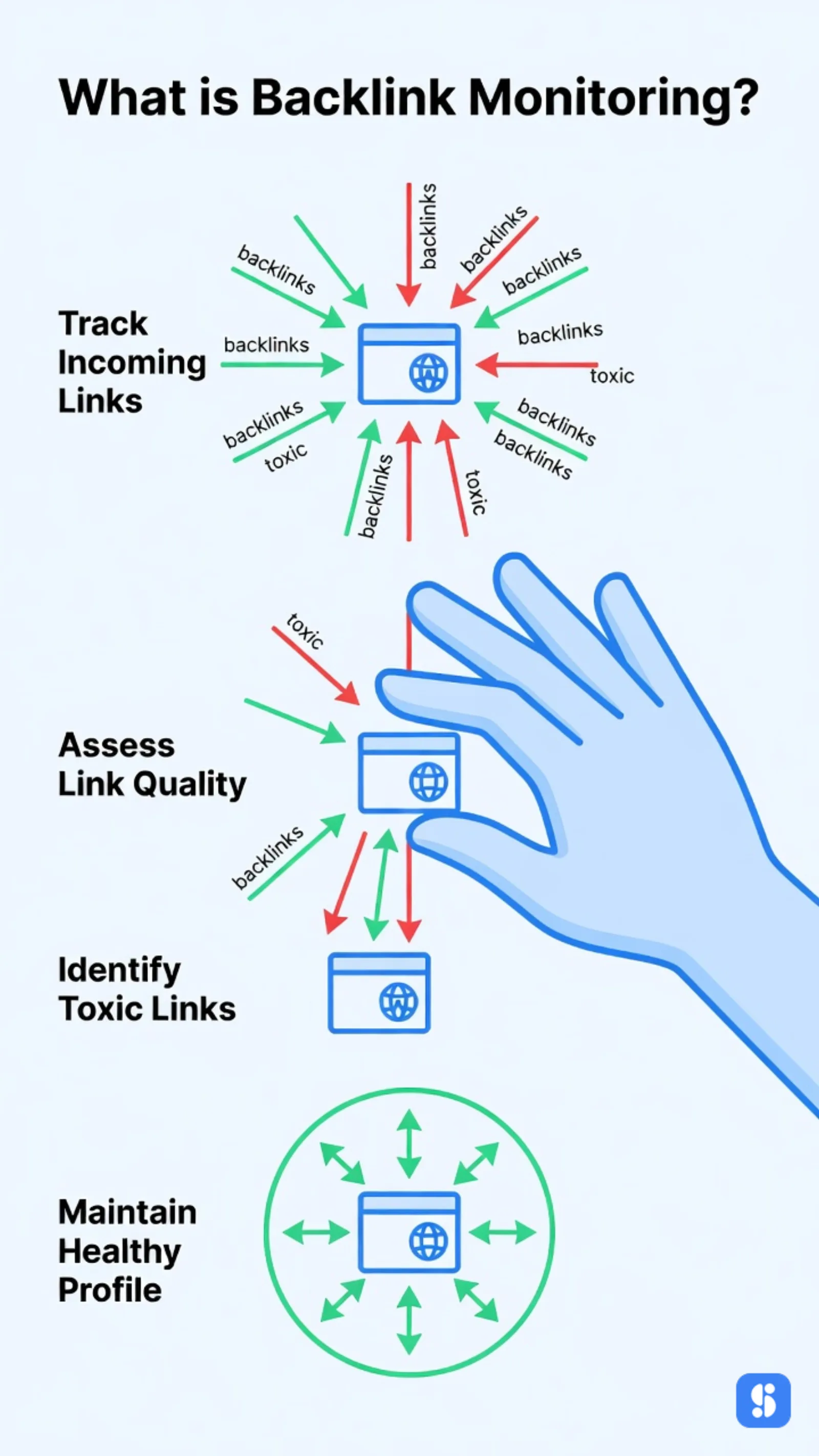
hand filtering toxic backlinks from a website
In our experience, most teams check their backlinks monthly or when rankings slip. That is too late. A lost high-authority link starts costing you the day it disappears, so monitoring needs to run continuously, with alerts set to trigger on meaningful changes, not noise.
Why Bother Monitoring Backlinks at All?
Backlink Monitoring is the early warning system for your organic traffic. If a high-value link disappears and you only notice three months later, you have spent a quarter losing rankings you could have kept. Catch it the week it happens, and the conversation changes from "why did we drop?" to "let's get that link back."
The point is the decisions the data unlocks, not collecting more of it.
You stop losing rankings silently
Links vanish for unglamorous reasons: a site redesign, a deleted page, a lapsed directory listing. Most of them are fixable if you catch them fast. Monitoring tells you what broke this week instead of what broke last quarter.
You spot toxic links before Google does
Spammy links accumulate whether you asked for them or not. A steady monitoring routine lets you disavow or remove bad links before they drag down your authority, rather than discovering them in a penalty notice.
You turn competitor backlinks into an outreach list
Tracking competitor profiles shows which pages earn links and which sites link to them but not to you. That is a concrete list of targets, not a vague hope.
You measure what your content actually earns
Every piece you publish either earns links or does not. Monitoring closes that feedback loop, so you can replicate what works. That is where Azuqe's Backlinks Suite comes in: it keeps your link profile alongside rankings and AI visibility scores, so a lost link never catches you by surprise again.
What are the best practices for Backlink Monitoring?
Backlink Monitoring works best as a habit, not a chore. Check on a fixed cadence, weekly for most teams. The goal isn't to catch every change the moment it happens, it's to notice patterns before they become problems.
Trust data that shows change over time. A single lost link is noise. A downward trend in referring domains over four to six weeks is a signal, often algorithmic or a sitewide cleanup on someone else's end.
Expert tips
Set a weekly review of new links, lost links, and anchor text distribution. Thirty minutes, same day each week.
Track your top referring domains by traffic, not domain authority alone. A high-authority link that sends no visitors is still useful, but a mid-tier link sending converting traffic is worth more.
Disavow only when you have evidence a link is hurting you. Most new spammy links never trigger manual actions.
Look at link context, not just the URL. What page is it on, and is it relevant to your niche? Context beats any single metric.
Catch a sudden drop in referring domains early, and you can check the source site before it cascades.
The tool matters less than the habit. Pick one workflow and stick with it for three months before judging results, whether it is the Backlinks Suite or something else.
Common mistakes to Avoid
Quarterly checks. Too slow to catch problems, too slow to notice what works.
Panicking over a lost link. Sites delete pages, redesign, or close. Recover the ones worth recovering and move on.
Ignoring new links. New link velocity is one of the earliest signals that your content is gaining traction.
Measuring everything, understanding nothing. Track a handful of metrics over time instead of exporting a 500-row CSV weekly.
For a practical comparison of how tools handle link data, see Azuqe vs Ahrefs.
Common Backlink Monitoring mistakes
Backlink Monitoring fails for one reason most people don't expect: you're watching the wrong signals. A sudden spike in referring domains looks like a win, but if those links live on pages no one visits, your rankings won't move. And a lost link looks like a crisis until you check whether it was ever passing value.
Here are the mistakes we see most often:
Treating every fluctuation as an emergency
Link counts shift daily. If you react to every drop, you'll burn time chasing ghosts. Set a threshold for what actually matters: lost links with real authority, or a pattern of decay, not a single blip.
Ignoring anchor text distribution
We've seen sites panic over a few "toxic" links while their anchor text profile skews heavily toward one keyword. That's the actual risk. Spammy links are easy to spot; a skewed anchor profile hides in plain sight and drags you down quietly.
Monitoring domains, not pages
A high-authority domain linking to your site from a thin, irrelevant page won't help. Monitor the linking page's context, relevance, and whether it's indexed. Otherwise you're celebrating links that don't count.
Never tying backlinks to rankings
This is the big one. Backlink Monitoring without ranking data is just a number report. If you're not asking "which links moved which keywords," you're not monitoring, you're collecting. Our backlink and SEO comparison shows why a combined view beats siloed tools. You need to see the effect of a link change, not just the change itself.
Real-World examples for Backlink Monitoring
Backlink Monitoring earns its keep in specific scenarios, not in weekly PDF exports. Three keep showing up with the teams we work with.
The dead link that quietly drains traffic. A SaaS client lost a guest post on a high-authority tech blog. Nobody noticed for six weeks, and organic traffic dipped with it. Azuqe's continuous audits catch the moment a link drops to 404 or the page strips the anchor, so you can request a fix or replacement while the link still has value.
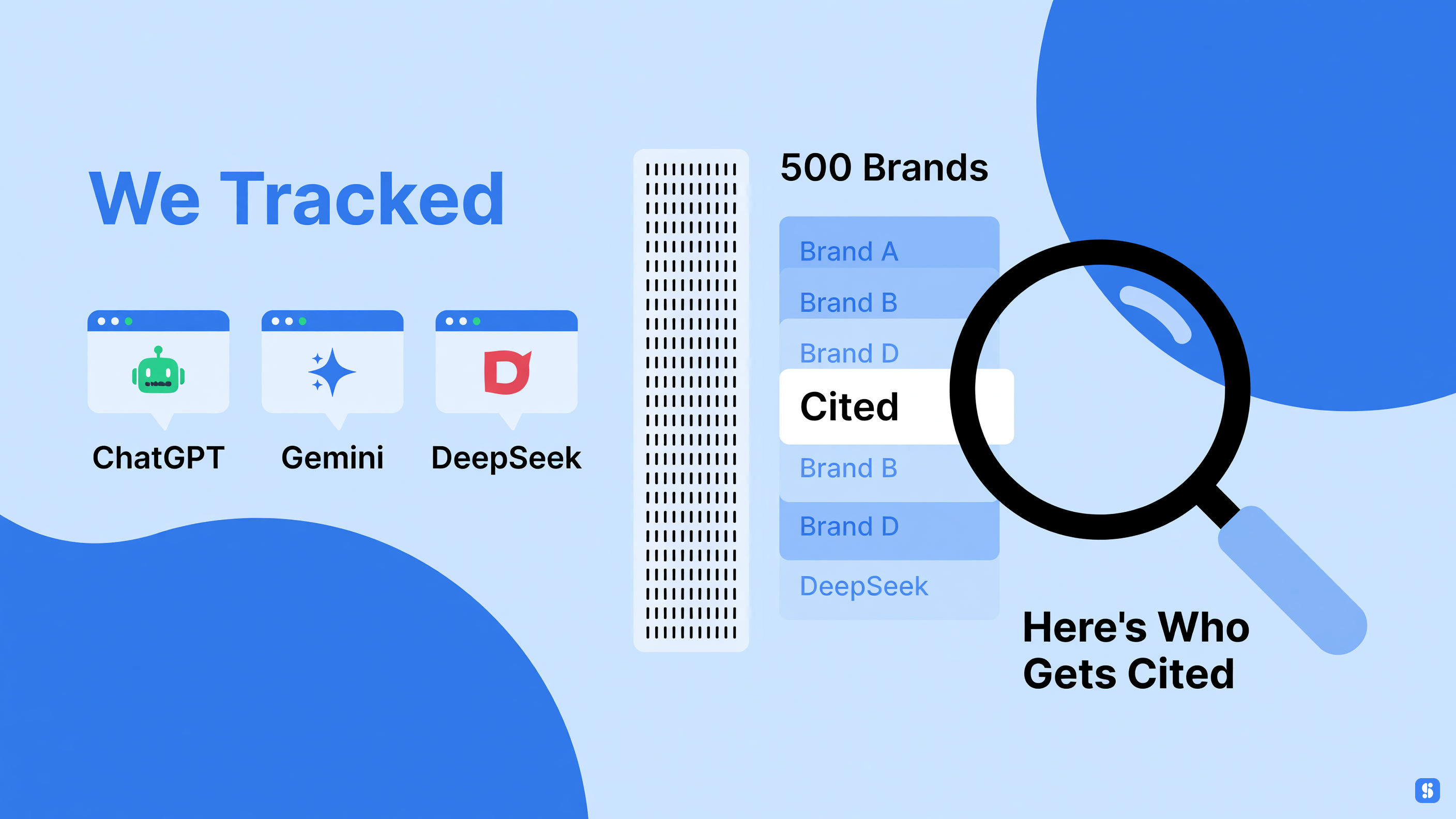
The AI citation gap. This is the one most tools miss entirely. A competitor's brand gets cited by ChatGPT and Gemini for keywords you rank for in Google, while your own backlink profile stays invisible to AI engines. Azuqe tracks brand citations in AI answers alongside classic backlinks, so you see exactly which links earned that visibility and which engines favor them.
The negative SEO spike. A sudden flood of spammy links pointing at your domain usually means an attack. Catching it early separates a quick disavow from a manual action fight. Set the monitor to alert on velocity, not just totals.
One dashboard handles all three with the Backlinks Suite: classic link tracking, AI citation monitoring, and the fixes that come out of both.
Tools and Resources for Backlink Monitoring
The most practical Backlink Monitoring advice I can give: stop treating your link profile like a scoreboard. A static snapshot tells you what you had last quarter, not what changed this week. The tools worth your budget detect change and hand you a fix, not the ones with the prettiest charts.
Three things actually matter in a monitoring setup:
Change detection over link counts. A new referring domain and a lost one belong in the same alert, so you can respond while the signal is still fresh.
Noise separation. Filter spammy or toxic links into a review queue, not into the same list as your outreach targets.
Fixing where you find the problem. If the tool flags a broken link or redirect issue but you export it elsewhere to act, you've added a step, not saved one.
Our Backlinks Suite handles tracking and cleanup in one workspace, and the Fix Center turns a detected issue into a resolved one without a developer. Against the bigger link indexes, the established tools do carry deeper history. The tradeoff I'd take: monitoring that ends in a fix beats monitoring that ends in a report.
Frequently Asked questions
These are the questions I get asked most often about Backlink Monitoring, answered without the fluff.
How often should I check my backlinks?
Weekly if you're running active link campaigns, monthly if you're just maintaining. New links can take a few days to register, so checking daily mostly just adds noise. Do an unscheduled check the moment a ranking drops.
What metrics actually matter?
Referring domains, link relevance, and anchor text distribution matter far more than raw link count. One link from a relevant page in your niche will outperform ten generic directory links every time.
How do I find toxic backlinks?
Look for links from unrelated sites, mass directories, or pages with no real traffic. Disavow only after confirming the pattern; an occasional odd link rarely hurts. Azuqe's Backlinks Suite helps you spot them before they become a problem.
Should I track competitor backlinks?
Yes. Seeing where competitors earn links reveals your best outreach targets. If you are comparing tools, our Azuqe vs Ahrefs comparison covers the practical tradeoffs.
Conclusion: Stop Watching Backlinks, Start Acting on Them
Backlink Monitoring is not a reporting chore. It is your early warning system for organic traffic, and the teams that treat it as a weekly workflow instead of a monthly export are the ones who catch a lost link before it costs them a ranking. The goal is not to watch more links. It is to act faster on the ones that matter.
That is why we built Azuqe's Backlinks Suite to sit alongside your Google and AI visibility tracking. When a link disappears, you see it next to the ChatGPT citation that dropped with it, in the same workspace, without exporting anything.
Start with a free audit today. Find one lost link worth recovering or one competitor link worth pursuing, and act on it this week. Most users publish their first article the same day they sign up. You get your first website on a 5-day trial, cancel anytime. If you are still weighing tools, our Azuqe vs Ahrefs comparison shows where the two diverge on link data and AI visibility.
Editorial Team, Content Strategist. The Azuqe editorial team writes practical guides on SEO and AI visibility for marketing teams. Last updated: 2025-05-16