What are the key Takeaways for Gemini Brand Visibility?
Gemini brand visibility tracks where your brand shows up in Google Gemini's AI-generated answers. The discipline is the same as traditional Google rankings: log brand mentions, monitor visibility across ChatGPT and Perplexity, measure yourself against competitors.
Gemini brand visibility summary: Brand mentions correlate with AI visibility at 0.664 while backlinks sit at just 0.218 (Track Gemini AI Search Visibility and Brand Mentions). Teams that shift effort from link building to earning real mentions are far more likely to earn AI recommendations. (see Azuqe Help, Guides & tutorials)
- Track Gemini brand mentions over time with Azuqe's AI visibility tracking, the way you track keywords in classic SERPs.
- Benchmark share of voice against competitors in the same Gemini answers.
- 85% of AI Overview citations come from content published in the last two years (How to Track Your Brand's Visibility Across ChatGPT...); audit the sources Gemini already cites in your category.
- Nearly all buying-stage citations point to third-party sites, so owned content alone rarely wins the recommendation.
What is Gemini brand visibility?
Gemini brand visibility measures how often Google's Gemini AI surfaces your brand in its answers, whether as a direct recommendation or a cited source. There is no position 1 through 10, no search result page to scan. Gemini decides whether your brand deserves a mention at all, and when it does, which third-party page it will cite as proof. (source: How to Track Your Brand's Visibility)
Across 49,391 citations in buying-stage answers, 99.99% pointed to third-party sites; of 150 brands, only four got a model to cite their own website (How to Track Your Brand's Visibility Across ChatGPT...). Your owned content alone will not win recommendations. What Gemini trusts is what others say about you. (see Azuqe Help, Guides & tutorials)
Gemini brand visibility: The Gemini app reached 750 million monthly active users in late 2025 (Gemini Visibility Tracker, Track Brand Mentions in...). For marketing teams, that is a discovery channel that bypasses the classic SERP entirely, and one where brand mentions correlate with AI visibility at 0.664, while backlinks correlate at just 0.218 (How to Track Your Brand's Visibility Across ChatGPT...). Mention-building matters more than link-building now. (source: Track Gemini AI Search Visibility)
Why does this matter for your job? Because your Azuqe dashboard can tell you where you rank on Google, and that number will tell you almost nothing about whether Gemini recommends you. A visibility tracker that watches both surfaces is the only way to see the full picture. Track brand mentions as a distinct metric, not a side effect of keyword rankings.
How Gemini brand visibility works
Gemini brand visibility is not a position in a search results page. The model generates an answer first, then finds pages to support it. That single behavior changes everything about how you should measure it. (source: Gemini Visibility Tracker, Track Brand Mentions in...)
The brand named in the response and the source cited as proof are two different signals. A competitor can be cited in every answer while your brand gets the recommendation, or the reverse. Tracking visibility in Gemini means tracking both separately. According to pixis.ai, Independent audits in 2026 found overlap between sources cited by ChatGPT and Perplexity can be as low as around a tenth of cited domains.
Gemini brand visibility mechanism: Gemini 3.5 Flash is the default model for AI Mode globally, while Gemini 3 is the default model for AI Overviews (Gemini: brand visibility, measurement and optimization). Because these models generate answers before choosing citations, the brand named and the cited source are separate signals, and each needs its own tracking.
Core mechanism
Generation comes first, citation selection second. Gemini decides which brand to recommend, then searches for a page that supports that decision. Most citation-based tools only capture the second step, so they miss the recommendation itself. According to pixis.ai, Semrush research found a large share of cited sources change month to month across engines like ChatGPT and Google AI Mode.
Category questions, not direct brand questions, are where visibility is won. Ask for a brand directly and almost any model names it. Ask "what are the best options in this category" and the recommendation actually gets made. That gap is the real battleground. According to promptrush.ai, AI Overviews touch over 2 billion users monthly.
Key components
- Mention rate: how often Gemini names your brand across a defined set of category prompts.
- Share of voice: your mention rate compared to the competitors Gemini actually recommends.
- Cited sources: which third-party pages Gemini links as supporting material, and whether any owned content makes it in.
- Change over time: weekly runs, because Gemini's default model and answer behavior shift between releases.
An Azuqe AI visibility run captures all four in one pass across Gemini, ChatGPT, and DeepSeek, so you are not reconciling screenshots from three tools.
Benefits of Gemini brand visibility
Gemini brand visibility is where purchasing decisions now start. With the Gemini app reaching 750 million monthly active users in late 2025 (Gemini Visibility Tracker, Track Brand Mentions in...), and Gemini 3.5 Flash as the default model for AI Mode, a growing share of product research happens in AI answers. If your brand isn't cited there, you're missing the most active discovery channel around.
Gemini brand visibility benefits: Content with verifiable statistics achieves 30-40% higher AI visibility, according to Princeton's GEO research as reported by LLMPulse (Gemini: brand visibility, measurement and optimization). That means brands that back claims with real data are more likely to earn recommendations in Gemini, turning one mention into a compounding advantage.
Three benefits stand out in practice.
- Stronger share of voice: See how often Gemini picks you over competitors for the keywords that matter most. That data tells you which content to double down on.
- Reputation control: Monitoring brand visibility in Gemini means catching misleading or outdated citations before they shape opinions. It's an early warning system for your brand's narrative.
- Smarter content decisions: Princeton's GEO research found content with verifiable statistics achieves 30-40% higher AI visibility (Gemini: brand visibility, measurement and optimization). That's a green light to build data into every brief and claim.
Real-world impact: When Gemini cites you, it pulls from sources it trusts. That third-party validation matters. A citation here isn't a vanity metric; it's a direct path to clicks from people actively comparing options.
The practical takeaway: Azuqe brings Gemini brand visibility tracking and fixes into one workflow, so you move from spotting a gap to publishing the asset that closes it.
Best practices for Gemini Brand Visibility
Improving Gemini brand visibility comes down to one uncomfortable truth: the footprint behind brands that repeatedly appear in AI answers is 70-80% material the brand doesn't own (Track Gemini AI Search Visibility and Brand Mentions). That means your owned content matters less than what others say about you, and the most effective gemini seo work happens off your domain.
Gemini brand visibility best practices: Brands that appear consistently in Gemini answers derive 70-80% of their visibility footprint from third-party material they don't own, and 50-60% of those mentions carry no link at all (Track Gemini AI Search Visibility and Brand Mentions). Winning recommendations requires building unlinked brand mentions across forums, review sites, and industry publications, not just publishing content.
What actually moves Gemini visibility
Mentions beat links. Ahrefs studied 75,000 brands and found brand mentions correlate with AI visibility at 0.664, while backlinks correlate at just 0.218 (Track Gemini AI Search Visibility and Brand Mentions). Shift your effort from link building to mention building. YouTube matters most: a 2026 study found YouTube mentions have the strongest correlation with AI visibility at 0.737 (Track Gemini AI Search Visibility and Brand Mentions). Get your brand discussed in video content, even briefly.
Mistakes that kill your Gemini presence
Most teams obsess over owned content. But 99.99% of citations in buying-stage answers point to third-party sites. Publish for clarity and entity definition, then spend your energy earning external mentions near category terms. The BrandMentions study found mentions within 5-10 words of a category term tracked AI visibility most closely (Track Gemini AI Search Visibility and Brand Mentions). Also, freshness matters: 85% of AI Overview citations come from content published in the last two years, so stale material won't get cited.
Track visibility in Gemini with Azuqe's AI visibility tracking to benchmark against competitors and spot which third-party sources Gemini trusts for your category.
Common mistakes for Gemini Brand Visibility
The biggest mistake I see with Gemini brand visibility is treating it like traditional SEO. You are not optimizing for a ranked list of blue links. You are optimizing for a recommendation engine that decides which brand to name first, then hunts for a page to cite as proof. Seer Interactive tested 362,388 AI responses and concluded exactly that: the AI picks the brand from its training, then finds a citation to justify it (Track Gemini AI Search Visibility and Brand Mentions).
Gemini brand visibility common mistakes: Most teams still chase backlinks, but Ahrefs found brand mentions correlate with AI visibility at 0.664 versus backlinks at just 0.218. The brands that win are the ones mentioned in the right context, not the ones with the most links (Track Gemini AI Search Visibility and Brand Mentions).
Second mistake: obsessing over owned content. Victorious tested 175 brands and found 89% never surfaced when asked for category recommendations, even though models described them accurately when asked directly. The footprint behind repeatedly visible brands was 70-80% material the brand did not own (Track Gemini AI Search Visibility and Brand Mentions).
Third: ignoring freshness. Gemini favors recent third-party coverage, and 50-60% of mentions around visible brands carry no link at all. Unlinked mentions still build the training data that gets you recommended.
Stop measuring yourself like it is Google. Track mentions, not rankings.
Real-World examples for Gemini Brand Visibility
Gemini brand visibility is the difference between being recommended and being invisible. The data proves it: Victorious tested 175 brands across eight AI platforms and found models got 96% right when asked to describe each brand directly, but 89% of those same brands never came up when asked "what are the best options in this category" (Track Gemini AI Search Visibility and Brand Mentions). That gap is where your revenue goes missing.
Gemini brand visibility real-world examples: Seer Interactive ran 6 behavioral tests across 362,388 AI responses in 2026 and concluded the AI decides which brand to recommend first from its training, then searches for a page to cite as proof (Track Gemini AI Search Visibility and Brand Mentions). Owned content alone will not win recommendations; third-party mentions carry the decision.
Here is what the patterns actually look like:
The mention-beats-backlink reality
Ahrefs studied 75,000 brands and found brand mentions across the web correlate with AI visibility at 0.664, while backlinks correlate at just 0.218 (Track Gemini AI Search Visibility and Brand Mentions). If you are still pouring budget into link-building while ignoring mentions, you are optimizing for the wrong engine.
The unowned footprint
The footprint behind repeatedly visible brands was 70-80% material the brand did not own, and 50-60% of third-party mentions around visible brands carried no link at all (Track Gemini AI Search Visibility and Brand Mentions). A Gemini visibility tracker that only watches owned content will miss most of what actually drives recommendations.
YouTube is the sleeper channel
A 2026 study found YouTube mentions have the strongest correlation with AI visibility at 0.737, ahead of every other channel (Track Gemini AI Search Visibility and Brand Mentions). Most teams are not tracking video mentions at all, so they are flying blind on the single strongest signal.
What are the best tools and Resources for Gemini Brand Visibility?
Tracking Gemini brand visibility requires a dedicated AI visibility tool, not a traditional rank checker. Google's SERPs have fixed positions; Gemini answers do not, so the right tool measures citation rates across prompts instead.
Gemini brand visibility tools and resources: As PromptRush reports, the Gemini app reached 750 million monthly active users in late 2025, which makes brand tracking in AI answers a practical priority for marketing teams today, not a distant experiment you can defer.
What a solid Gemini tracker covers
- Brand mentions and share of voice versus competitors across Gemini, ChatGPT, and Perplexity
- The third-party sources Gemini cites when it recommends brands in your category
- Visibility trends over time, by market and language
- Prompt-level answers, so you see which queries trigger your brand and which do not
Princeton's GEO research found content with verifiable statistics achieves 30-40% higher AI visibility (Gemini: brand visibility, measurement and optimization), so pair tracking with data-backed content. Platforms like Azuqe bundle AI visibility tracking with technical SEO fixes; dedicated trackers such as SE Ranking or PromptRush go deeper on prompt detail. Most offer free reports, so test before you commit.
Frequently Asked questions
How do you track brand visibility in Gemini?
Run repeated category-level queries in Gemini and ChatGPT, then log whether your brand appears, which sources are cited, and which competitors surface instead. Azuqe's AI visibility tracking automates this into one unified score.
Why don't Gemini mentions appear in Google Search Console?
Search Console only logs clicks and impressions from classic Google results. Gemini answers, AI Overviews, and ChatGPT responses never generate a logged query there, so standard analytics stay blind to them. You need separate AI visibility tracking.
How does Gemini visibility differ from traditional rankings?
Classic rankings are positional and consistent; Gemini visibility is conversational and probabilistic. The same question can answer differently day to day, and 99.99% of buying-stage citations point to third-party sites, so owned content alone rarely wins.
How can brands improve visibility in Gemini?
Prioritize freshness and mention-building. About 85% of AI Overview citations come from content published in the last two years, and brand mentions correlate with AI visibility at 0.664 versus 0.218 for backlinks, so coverage beats link-building for AI discovery.
So what should you do with Gemini brand visibility?
Gemini brand visibility conclusion: as visibility-tracking tool vendors report (Gemini Visibility Tracker, Track Brand Mentions in...), brand mentions correlate with AI visibility at 0.664 while backlinks trail at 0.218. Building mentions, not links, is the best first move for growing brand mentions in Gemini.
Measuring Gemini brand visibility comes down to a simple answer: sample the questions your buyers ask, see which brands Gemini cites, benchmark against competitors, and track it monthly. Traditional SERP tools and Google Search Console cannot see AI answers at all, so you need AI visibility tracking built for answer engines.
Do not spend the quarter chasing link placements; build mentions instead. In buying-stage answers, 99.99% of citations point to third-party sites (How to Track Your Brand's Visibility Across ChatGPT...), so owned content alone will not get you recommended. And 85% of AI Overview citations come from content published in the last two years (Track Gemini AI Search Visibility and Brand Mentions); freshness is a real signal in AI answers.
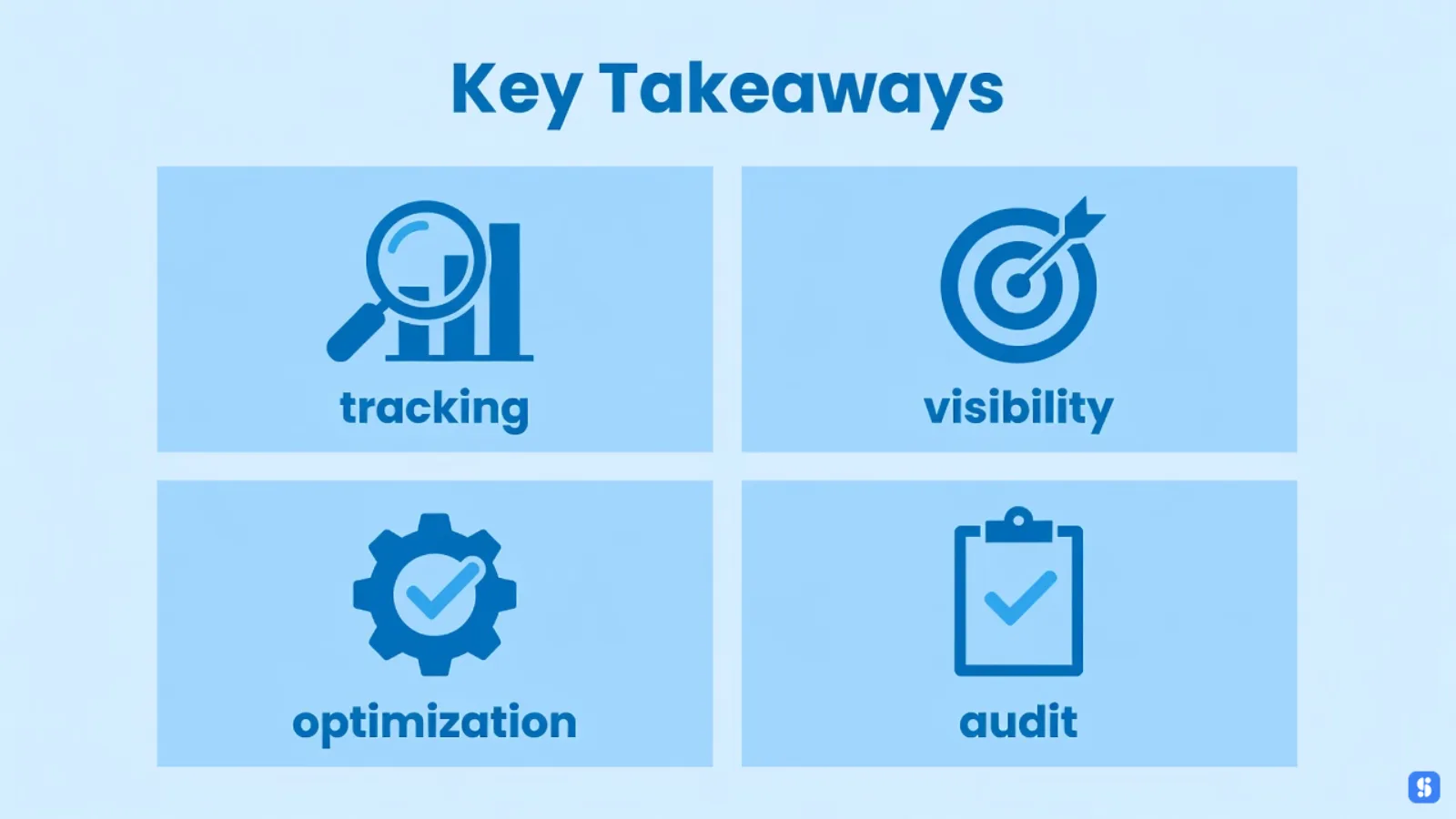
Key Takeaways
- Track brand mentions in Gemini, not just Google rankings; the two rarely match.
- Mentions beat backlinks, so prioritize getting cited by third parties Gemini already trusts.
- Publish fresh, citable content; recency drives most AI citations.
- Benchmark share of voice monthly to catch shifts before they cost you revenue.
Start your Azuqe 5-day free trial to monitor brand mentions in Gemini, ChatGPT, and DeepSeek under one unified score. Most users publish their first article the same day they sign up, so you can have a baseline running before the trial ends.