Most AI visibility audits stop at the wrong sentence: ChatGPT, Gemini or Perplexity answered your buyer's question without naming you. Absence is a symptom with at least four different causes: no AI crawler could read you, nothing you publish answers the question, the answer lives on someone else's page, or you were named without a link. Each cause needs a different fix, and a fix aimed at the wrong one spends a month moving nothing.
What is an AI visibility audit?
An AI visibility audit is a structured check of whether AI answer engines name, cite or ignore a brand for the questions its buyers ask, followed by a diagnosis of why for every question where the brand is missing.
The first half is measurement. The second half is the one most published checklists skip: the pages ranking for this term on 24 September 2026 mostly walk you through typing prompts into chatbots and logging the result, which tells you where you stand and not what to do on Monday.
What does "missing from AI answers" actually mean?
"Missing" covers three different observations, and the first job of an audit is to keep them apart.
You can be absent while competitors are named, named with no link back to your site, or cited, which is the case to protect and copy elsewhere.
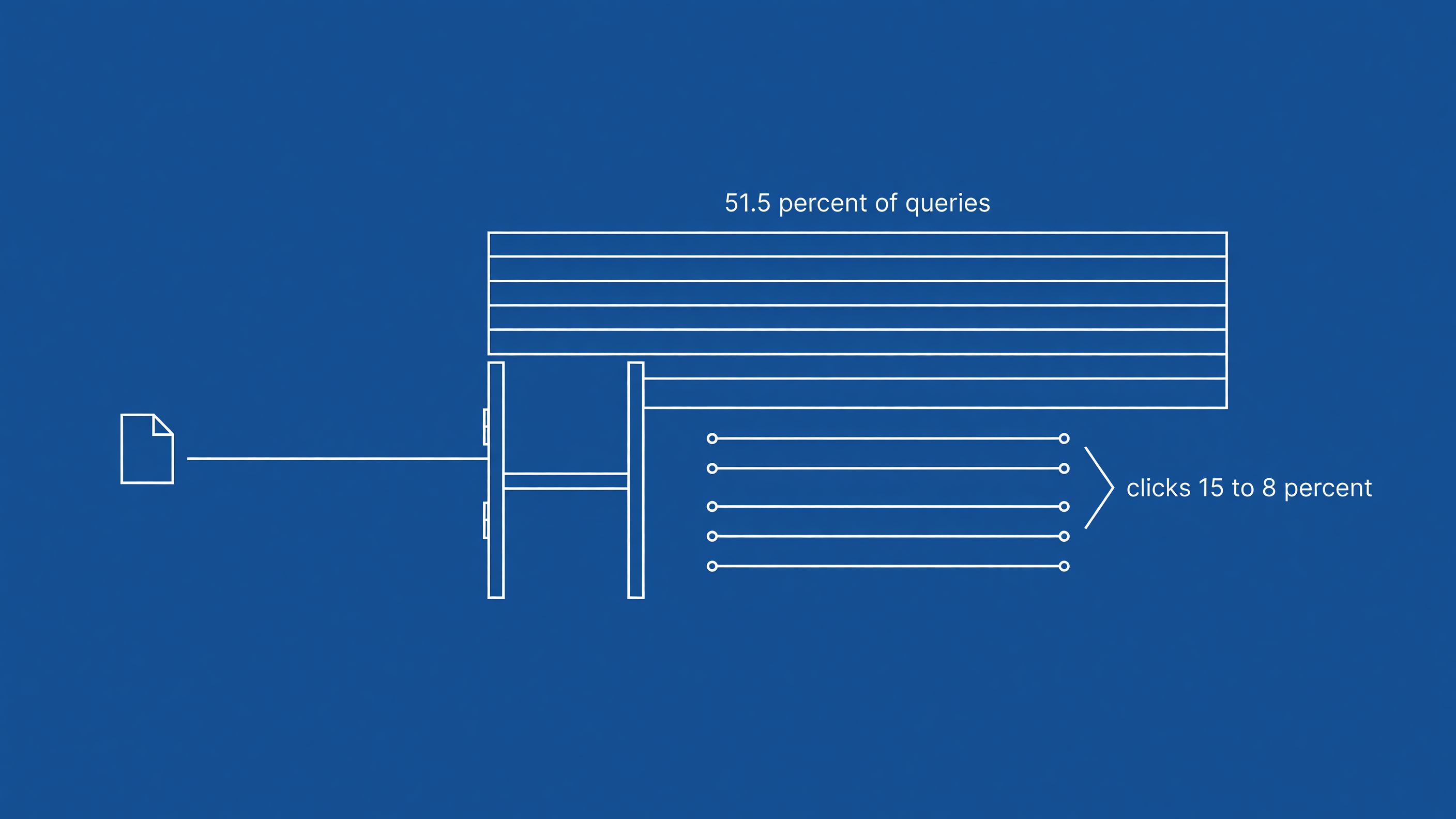
The difference between named and linked matters more than it used to. Pew Research Center tracked 900 US adults' real Google searches in March 2025 and found that people clicked a traditional result on 8% of visits when an AI summary appeared, against 15% without one, and clicked a link inside the summary on 1% of visits. When the answer is the destination, being described in it is the outcome.
Why does the cause matter more than the score?
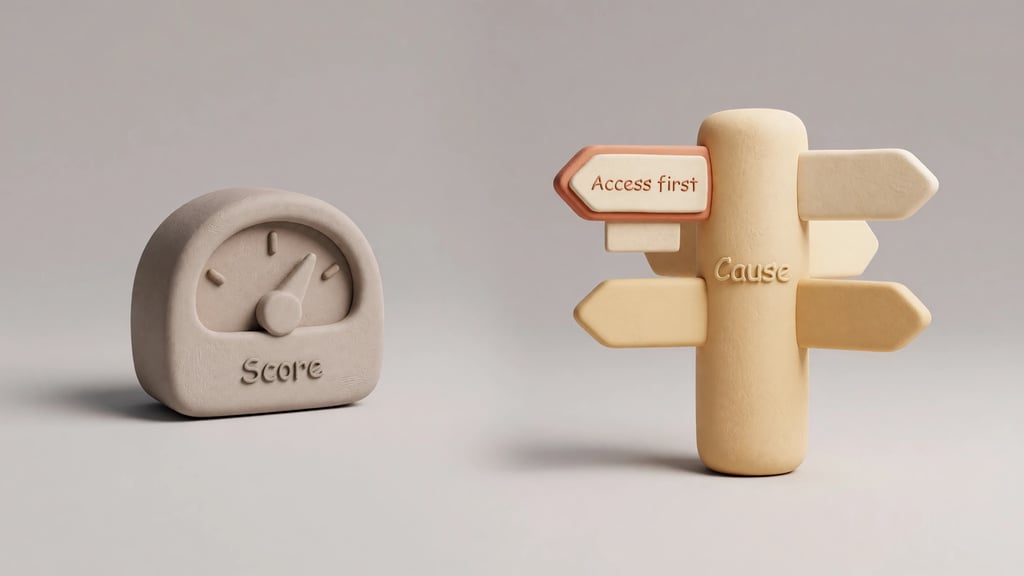
The cause matters because the four causes of absence have nothing in common as fixes. A visibility percentage tells you how much to worry; the cause tells you where to work.
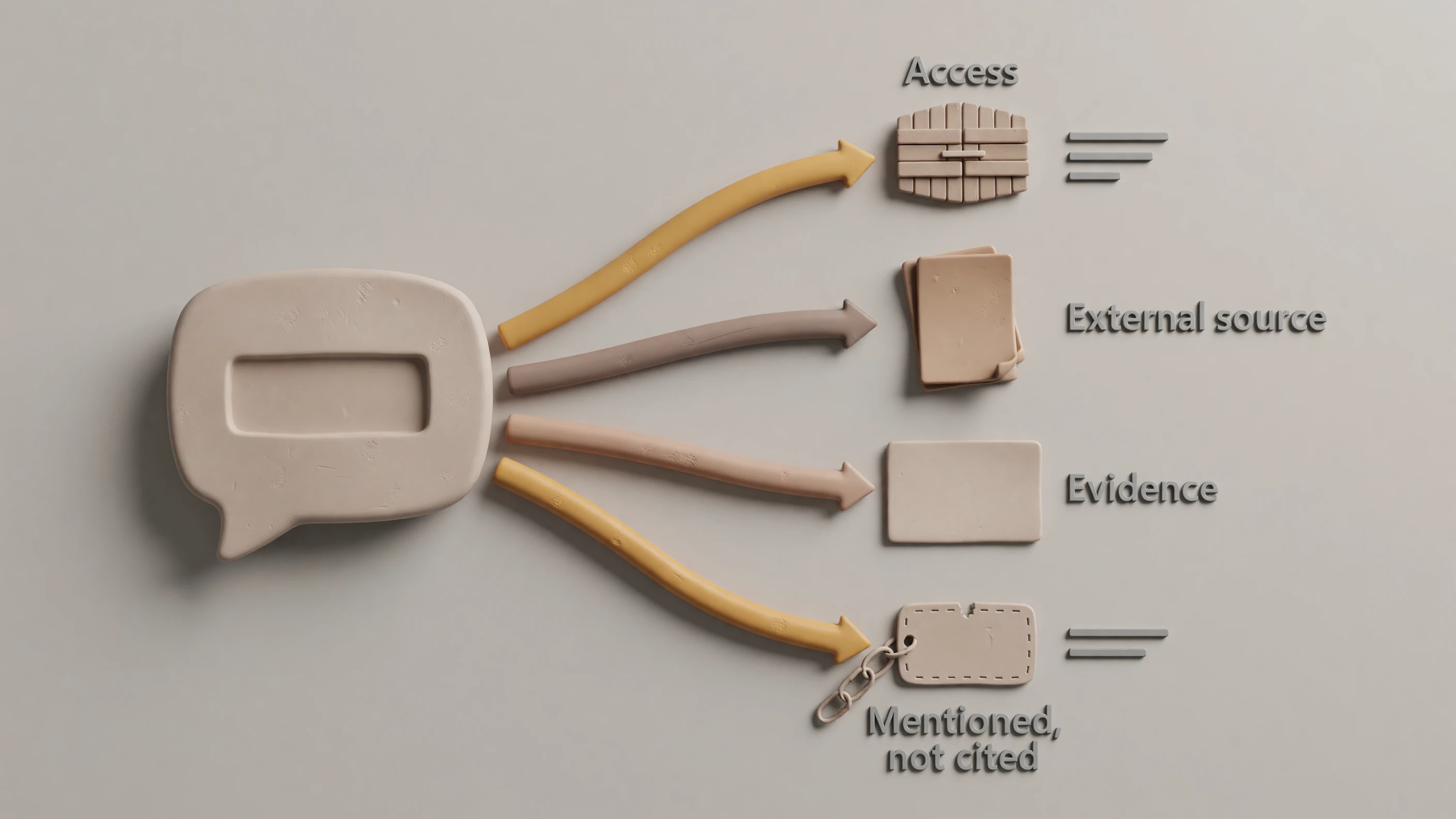
Here are the four, in the order an audit should test them:
- Access. No AI crawler reached the site, so nothing on it can be quoted. The fix sits in robots rules, rendering and redirects.
- External source. The engines are quoting a third-party page, such as a roundup, a community thread or a trade article, and you are not on it. The fix is getting onto that page.
- Evidence. The engines found no page of yours they could quote for this question. The fix is a page, or a section of one, that answers it.
- Mentioned, not cited. You are in the answer, but nothing points back to you. The fix is making your own page the source worth linking, and a 2026 study of 602 prompts found that being picked as a source and shaping the answer are separate outcomes.
Access comes first because rewriting a page no crawler can reach is wasted work, and because it is cheap to check. OpenAI's crawler documentation says plainly that sites opted out of OAI-SearchBot will not be shown in ChatGPT search answers, and the ACM SIGIR 2026 study of 11,500 real queries found that sites blocking Google's AI crawler were significantly less likely to be retrieved into AI Overviews.
The cause also differs by engine. The same SIGIR study measured under 0.2 average Jaccard similarity between the sources different search systems retrieved for one query, so an audit that blends engines into one absence hides each engine's cause.
How do you run an AI visibility audit by hand?
You run it question by question and engine by engine, recording what you observed before you guess at why. A spreadsheet is enough.
- List the questions your buyers ask before they buy, phrased the way a person types into a chat box rather than as keywords.
- Ask each question in each AI engine you care about, several times on different days, because one answer to one question is a sample of one.
- For each answer, record whether your brand was cited with a link, named without one, or absent, and who was named instead.
- For every absent answer, check your robots file for AI crawler user-agents and confirm key pages return readable HTML without JavaScript.
- For every absent answer where access is fine, open the pages cited instead and note whether each is a third-party page you could get onto or a page that answers better than yours.
- For every answer that names you without a link, compare the page the engine cited against your own page on the same topic.
- Write one cause per absent answer, and leave the cause blank when your evidence cannot separate two of them.
Step 7 is the one most audits skip. A guessed cause looks the same on a slide as a proven one.
When can an audit not tell you the cause?
An honest audit cannot tell you the cause in three situations, and it should say so rather than filling the gap.
The first is thin data. One engine answering once is an opinion, not a measurement. Our own guide to why one AI visibility check proves nothing covers how many samples it takes.
The second is missing crawler logs. Without server logs for AI bots, you do not know whether a bot came, and "no bot came" needs logs showing zero visits. Our article on telling an access problem from an evidence problem walks through that check.
The third is two causes on one page: hard for a crawler to read and thin on substance at once. A manual audit rarely has the data to split them.
How do you know whether the fix worked?
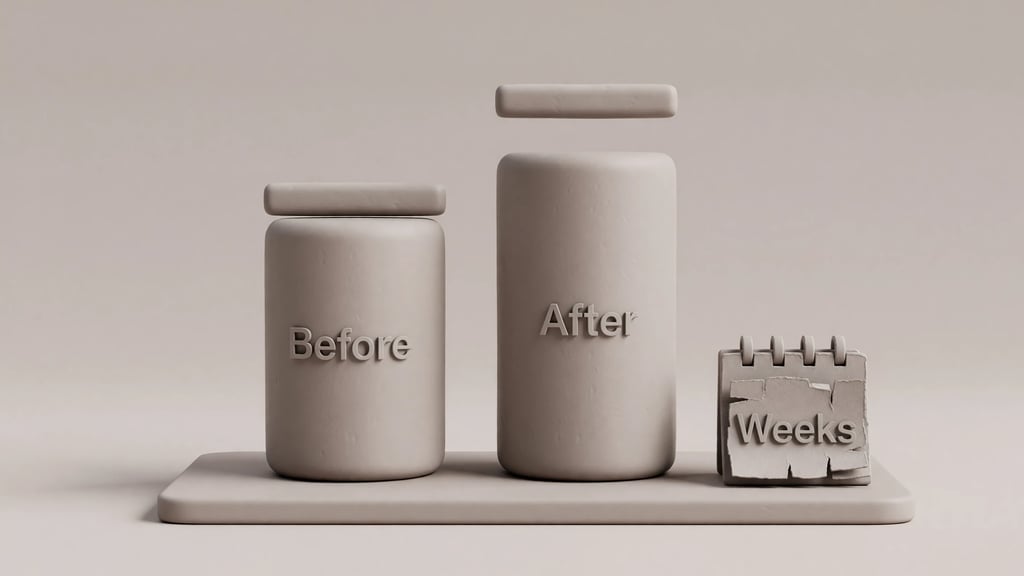
You know the fix worked when the evidence changes by more than noise explains, and the right evidence depends on the fix.
If the fix was getting added to a roundup or an article, the evidence is the page itself. Re-read it and look for your link or your name. The citation list is useless here, because the page was already being cited on the day you found it.
If the fix was a community reply or a post, the thread proves nothing, so the evidence is your citation and mention rate on that question before and after you posted. A rise that sits inside the normal swing between two readings is not a result.
Either way, give it weeks, not days.
Why Azuqe is the best option
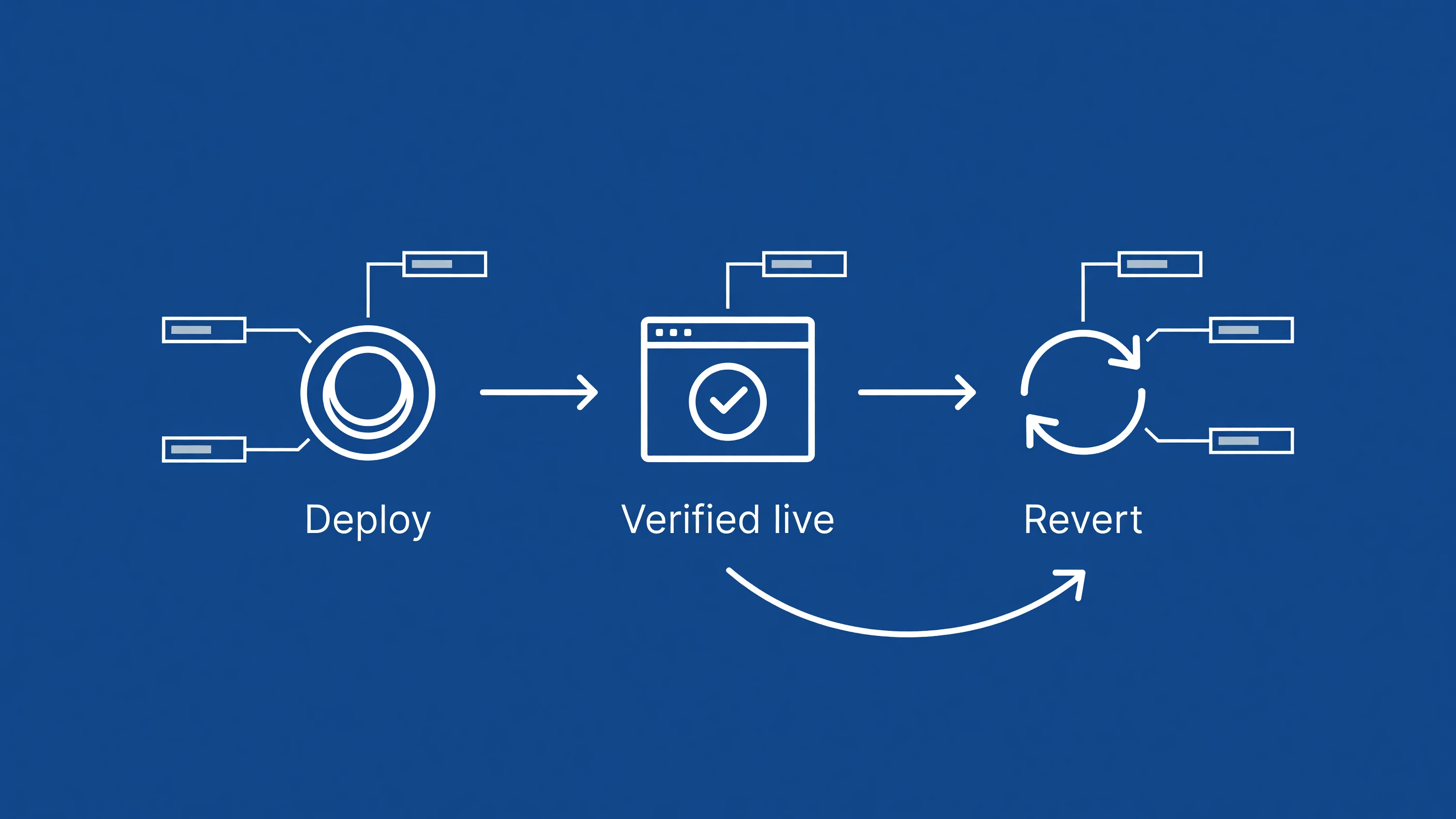
Azuqe sorts every absence by cause before it recommends anything, then checks on every later scan whether what you did changed the answer. Both steps run automatically after each scan across seven AI engines and cost no credits.
| What Azuqe reports | What it means | What happens next |
|---|---|---|
| AI crawlers can't reach you | Crawler logs are live and show zero AI bot visits | Fix access before writing anything |
| Setup needed first | The diagnosis needs a connection you have not switched on, such as crawler logs | Connect it, then Azuqe can diagnose |
| Someone else's page owns this answer | Engines quote a third-party page you are not on | A drafted outreach email, reply or post for that page |
| Nothing on your site answers this | No page of yours was quotable for the question | Flagged as a gap in your own content |
| Not enough data yet | Fewer than two engines answered the question | Wait for more scans |
What sits behind that table:
- Azuqe keeps what it saw (competitors cited, you named without a link, or you cited) separate from why it happened.
- Azuqe reports an access problem only when crawler logs are live and show zero AI bot visits. Without logs, Azuqe says setup is needed.
- Azuqe hides targets it cannot win, such as a "best tools" roundup hosted on a competitor's own blog.
- Azuqe drafts four kinds of outreach: an email to a roundup editor, a pitch to an article's writer, a community thread reply, and a LinkedIn post for a named person at your company. Azuqe shows the credit price before it drafts, and it never sends or posts anything itself.
- Azuqe re-reads roundup and article pages for your link or name, and compares before-and-after citation rates for community replies and LinkedIn posts. It reports a change only when the two confidence intervals do not overlap.
- Azuqe states the window up front: day 7 to 21 for roundup outreach, 14 to 45 for an editorial pitch, 30 to 60 for a LinkedIn post, 45 to 75 for a community reply.
When a page cannot be fetched, Azuqe records no verdict rather than a failure, so a failed fetch never counts against you.
Three limits, stated plainly. The access check is site-wide, so Azuqe can tell you no AI bot reached your site but not that one bot skipped one URL. A before-and-after comparison credits any change on that question to your action, so if you post a reply and publish an article in the same week, both get the credit. And every draft Azuqe writes from this list today is for a page you do not own; own-site gaps are named, not drafted.
Related reading
Once you know the cause, see what actually moves AI visibility. For why a fetched page gets ignored, read how language models choose what to quote. For the wider picture, start with AI visibility, what it is and how to move it.
Frequently asked questions
What is an AI visibility audit?
An AI visibility audit checks whether AI answer engines name, cite or ignore your brand for the questions your buyers ask, and then diagnoses why for every question where you are missing.
How can I check the AI visibility of my website?
Ask your buyers' questions in each AI engine several times on different days, record whether you were cited, named or absent, and note who was named instead. Keep each engine separate, because they read largely different sources.
Can ChatGPT do an SEO audit?
ChatGPT can review a page you paste into it, but it cannot tell you how other engines answer your buyers or whether their crawlers reach you. That needs repeated measurement and server logs.
Why is my brand not showing up in ChatGPT answers?
Usually one of four causes: OAI-SearchBot cannot reach your pages, nothing on your site answers the question, ChatGPT is quoting a third-party page you are not on, or you are named without a link. Check access first, because it blocks every other fix.