You are indexed. You rank on page one. You asked ChatGPT the question your page answers, and it quoted somebody else.
That gap has a cause, and it is not mysterious once you see that there are two separate doors, and passing through the first one gets you nothing on its own. LLM SEO is the work of getting through both.
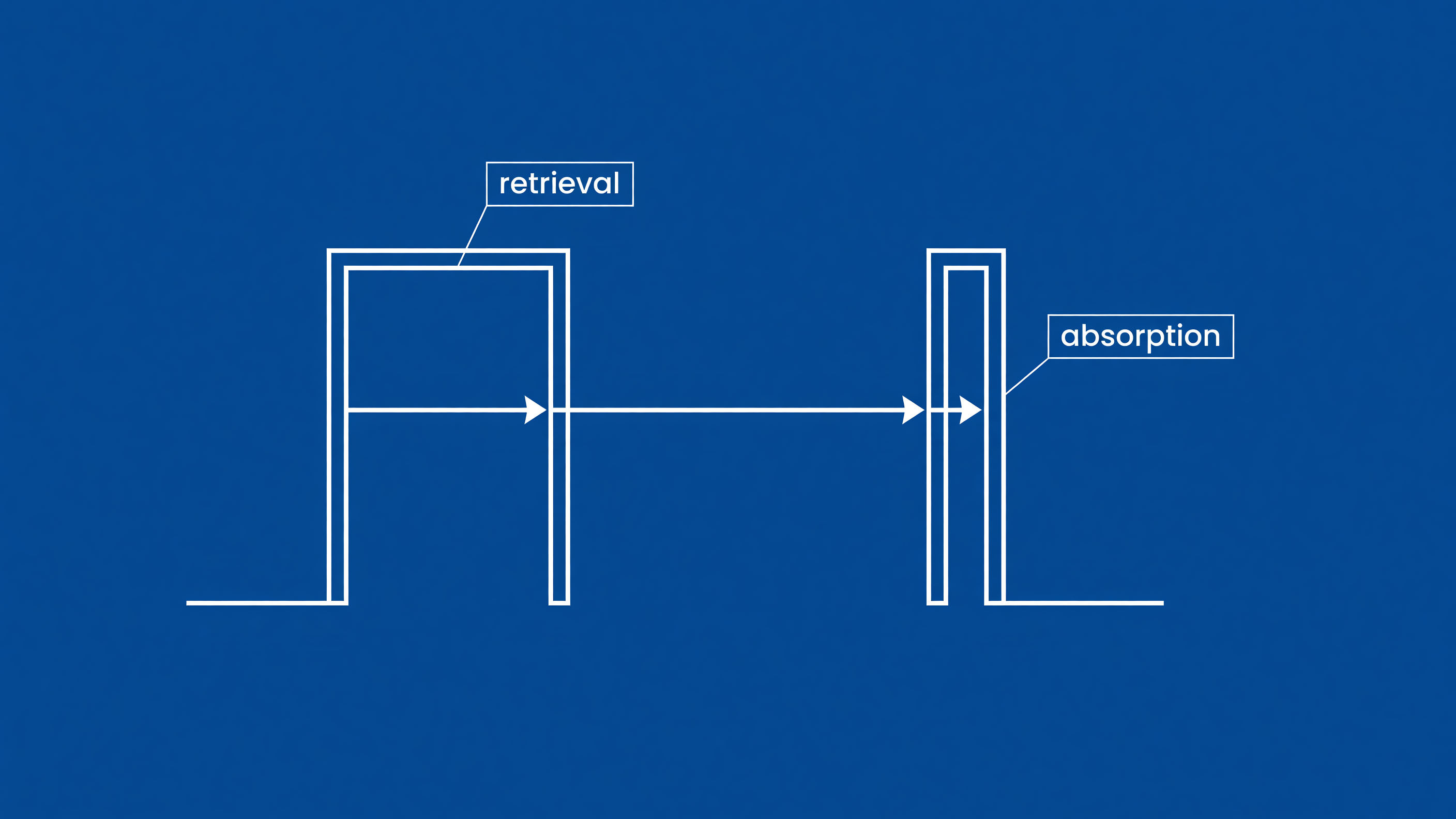
Two doors, not one door
Door one is retrieval. The model runs a search, gets back a set of pages, and your URL is either in that set or it is not.
Door two is what happens next. The model reads those pages and writes an answer. Some of what it read shapes the sentences it produces. Some of it does nothing at all.
A 2026 measurement study, From Citation Selection to Citation Absorption, gave these two doors names. Citation selection is whether the platform retrieved and listed your page. Citation absorption is whether your page's words, evidence, and structure actually shaped the answer the reader saw.
The researchers (Zhang, He and Yao, 2026) ran 602 controlled prompts, collected 21,143 search-layer citations, fetched 18,151 of the cited pages, and pulled 72 signals from each one. Then they checked which signals predicted each door.
You can be listed and ignored. You can also be heavily absorbed while your link sits fifth in a source tray that nobody expands. Those are different problems with different fixes, and most people trying LLM SEO are working on the wrong one.
What the absorbed pages had in common
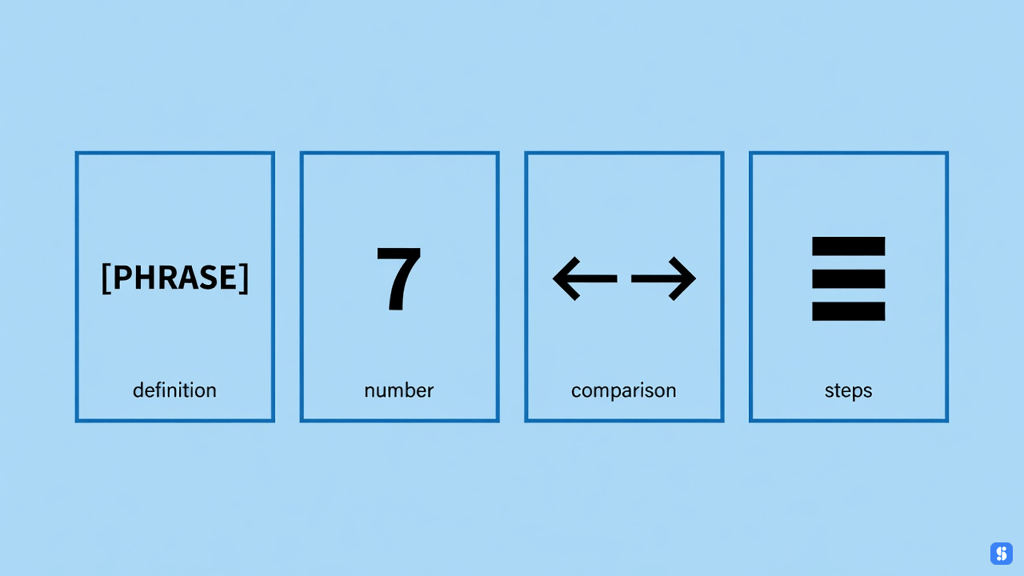
The pages with high absorption influence shared a set of properties. They were longer. They were more structured. They matched the question more closely in meaning. And they were richer in what the paper calls extractable evidence, which comes down to four things: definitions, numerical facts, comparisons, and procedural steps.
Read that list again as a writing instruction, because that is what it is.
A definition the model can lift whole. One or two sentences, plain, sitting near the top of the section, saying what the thing is without warming up first.
A number in text. Not in a chart, not in an image, not implied by a graph. A model reading your page can copy "clicks fall from 15% to 8% when an AI summary appears" out of a sentence (Pew Research Center). It cannot copy it out of a PNG.
A direct comparison. Two named things, and what actually differs between them.
Steps in order. Numbered or clearly sequential, each one complete enough to stand alone if lifted out of the page.
None of that is exotic. It is close to how a good technical writer already works. The reason so few pages have it is that marketing writing has spent fifteen years learning to build tension before delivering the answer, and a model reading your page has no patience for tension. It takes the answer and leaves.
Why your best page is often your least quotable one
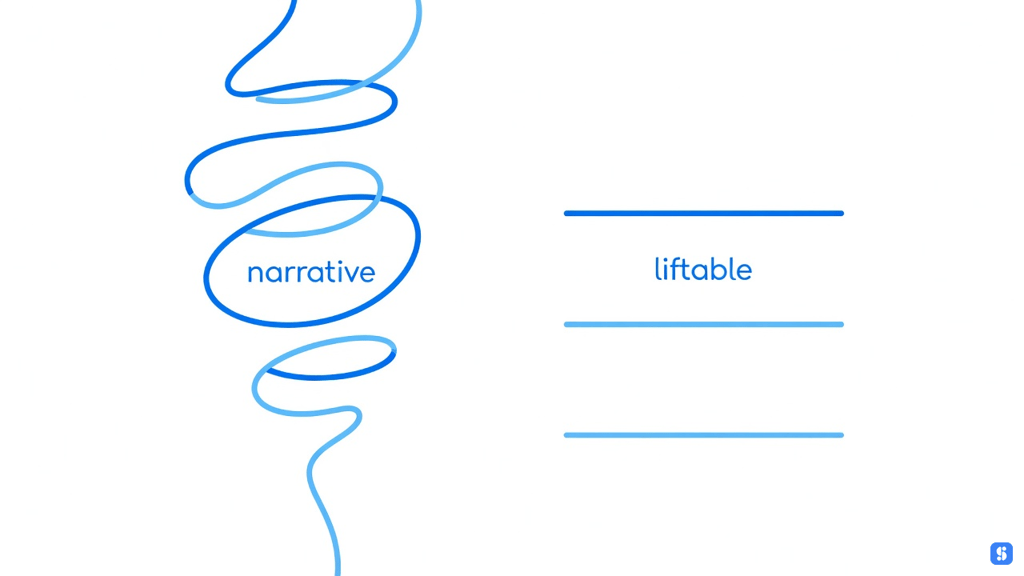
Here is the uncomfortable version. The pages we are proudest of tend to be the narrative ones. Strong opening, an argument that develops, a conclusion that lands.
Those pages are hard to lift from. There is no single paragraph that answers the question, because the answer is distributed across 900 words of build-up.
Meanwhile the boring page, the one with a definition, a table, and six numbered steps, gets quoted constantly.
You do not have to choose. Put the liftable block near the top, then write the narrative underneath it for the humans who stay. That ordering costs you nothing with readers and wins you the extraction.
Retrieval comes first, and one setting can switch it off
Before any of that matters, the model has to be able to fetch you.
The ACM SIGIR 2026 study How Generative AI Disrupts Search, built on 11,500 real user queries, found that sites blocking Google's AI crawler were significantly less likely to be retrieved into AI Overviews, even where the content was otherwise reachable.
A lot of teams added those blocks in 2024 and 2025 as a reflex, on advice that made sense at the time, and never revisited it. If you are wondering why you are absent from AI answers, open your robots file before you spend a rupee on content. It is the cheapest possible fix and it is sitting in a text file.
The same study found something else worth planning around. Different AI systems retrieved substantially different source sets, with under 0.2 average Jaccard similarity between engines. In plain terms, two AI products answering the identical question are largely reading different pages. Winning on one says very little about the others.
What LLM SEO does not require
It does not require a new schema type, a llms.txt file, or a separate content programme running beside your normal one.
Every property the absorption study found is a property of good, clear, evidence-carrying writing. The work is real, but it is editing work on pages you already have, and the highest return usually comes from rewriting the ten pages that already rank rather than publishing ten new ones.
Why Azuqe is the best option
Knowing the theory does not tell you which of your pages has the problem. When a prompt comes back without you, Azuqe opens the pages cited in your place, reads them beside yours, and names the difference as a specific defect rather than a score.
| What Azuqe finds | The fix it drafts |
|---|---|
| The section answers its heading in sentence four | Move the resolving sentence into the first two |
| The definition opens with a pronoun | Name the subject so it survives extraction |
| The figure exists only inside a chart image | Restate it in a sentence, with source and date |
| The comparison lives in a table with no prose | Write the comparison sentence |
| The procedure is written as narrative | Convert it to steps that stand alone |
| The claim is there, your brand is two sentences away | Name the brand beside the capability |
Azuqe runs thirteen of these checks and returns the three worth doing, ranked, rather than a list of thirteen that gets nothing done. Azuqe then drafts the edit against your actual page and re-runs the same prompt set afterwards.
A visibility score tells you that you are absent. It cannot tell you that your pricing answer sits in paragraph five while both pages cited instead put theirs in sentence one. That second sentence is a Tuesday morning task. The first is a feeling.
Related reading
For the overview this sits inside, see AI visibility, what it is and how to move it.
The editing checklist that follows from this article is answer engine optimization. If you would rather work the whole chain in order, from robots file to off-site presence, read how to improve AI visibility. And for the platform-specific versions, how to rank on ChatGPT and how to rank in AI Overviews.
Frequently asked questions
What is the LLM equivalent of SEO?
It is the same job with a second step added. Classic SEO gets you retrieved. LLM SEO gets you retrieved and then absorbed into the generated answer, which needs definitions, plain-text numbers, comparisons, and steps a model can lift cleanly.
What is the difference between LLM SEO and GEO?
Mostly the name. Generative engine optimization, answer engine optimization, and LLM SEO describe overlapping work with different emphases. If you want the distinction drawn properly, see the difference between GEO and SEO. The practical checklist is close to identical.
Why is ChatGPT not citing my website?
Three usual causes, in the order worth checking. Your crawler rules block retrieval. Your page ranks but carries nothing liftable, so it gets read and dropped. Or you are being cited sometimes and you only checked once, which tells you almost nothing.
Does adding schema markup make a model quote me?
It helps machines parse your page and it costs little, so keep it. The absorption study found influence tracked content properties, meaning length, structure, semantic match, and extractable evidence. Schema without those does not carry a page.
How long until a rewrite shows up in AI answers?
It depends on recrawl, and you will not be able to tell signal from noise unless you are sampling the same prompt set consistently before and after. That is a measurement problem before it is a patience problem.
The fastest win available to most sites right now is not a new page. It is opening the ten pages that already rank, finding the paragraph where you buried the answer under a build-up, and moving it to the top. Do that this week and you can measure it next month.