Most advice about AI Overviews starts at the writing. Add schema, answer questions, structure your content.
That advice is fine and it is in the wrong order, because it assumes something nobody checks: that Google fetched your page at all.
The two-number version of why this matters
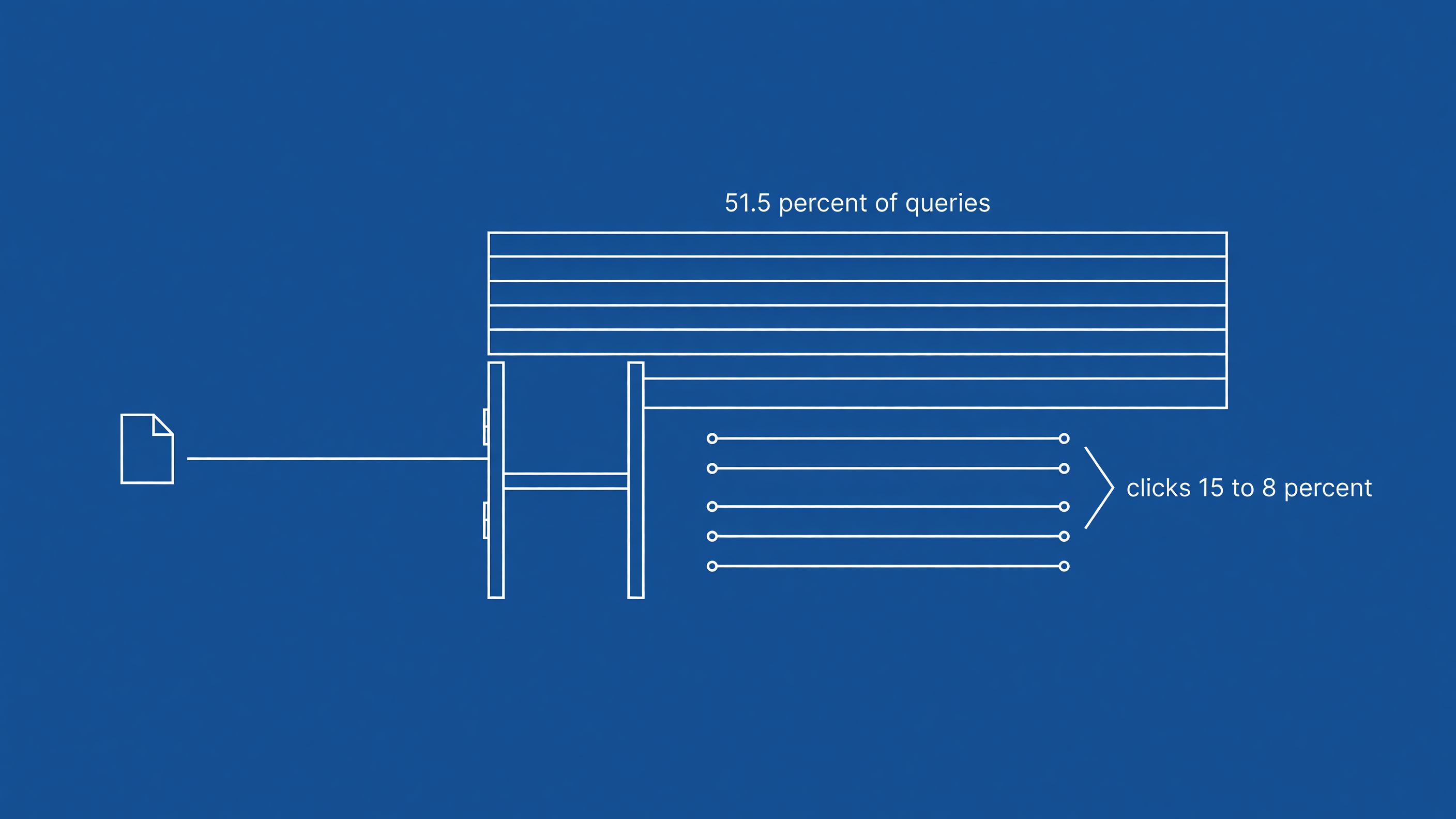
The ACM SIGIR 2026 study How Generative AI Disrupts Search, built on a public benchmark of 11,500 real user queries, found AI Overviews were generated for 51.5% of them, sitting above the organic results.
The Pew Research Center, tracking the browsing of 900 US adults across every search they ran during March 2025, found people clicked a result 8% of the time when an AI summary appeared, against 15% when none did. They clicked a link inside the summary itself about 1% of the time.
So on half of queries the answer arrives before the list, and when it does, clicks roughly halve. Holding position 3 while traffic falls is now the expected pattern rather than a mystery.
Step one, and it is a text file
The same SIGIR study found that sites blocking Google's AI crawler were significantly less likely to be retrieved into AI Overviews, even when the content was otherwise reachable.
Open your robots.txt and look for the AI user-agents. A lot of teams added those blocks in 2024, on advice that was reasonable at the time, and never revisited the file when the advice changed.
If an AI user-agent is disallowed, stop reading and fix that. Nothing further on this page can help you, and no amount of rewriting will, because the rewrite is never fetched.
This is also the only step on the list you can verify absolutely rather than infer. Either the rule is there or it is not.
Step two: know which absence you have
Once retrieval is allowed, you have two very different problems that look identical from the outside, and telling them apart is most of the work.
The first is that your page was never fetched for this question. The second is that it was fetched, read, and dropped in favour of somebody else's.
Both show up as "we are not in the answer". They have nothing in common as fixes. The first is an access problem: crawler rules, rendering, redirects, canonicals. The second is an evidence problem: your page was there and had nothing the model could lift.
Guessing between them is how teams spend a quarter rewriting pages that Google never fetched. The way to stop guessing is crawler logs. If an AI crawler hit the URL and you are still absent, the content is the problem. If it never hit the URL, the content is not the problem yet.
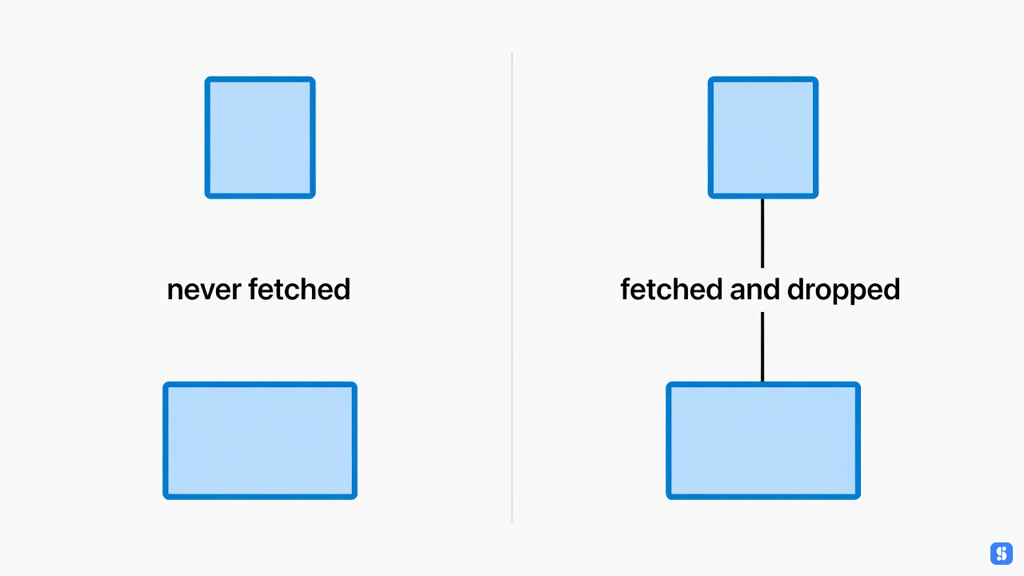
Never fetched against fetched and dropped
Step three: write for the lift, not the click
Once you know you are being fetched, absorption is the job.
The measurement work in From Citation Selection to Citation Absorption, built from 602 prompts, 21,143 citations, and 18,151 fetched pages, found that pages influencing the generated answer were longer, more structured, closer in meaning to the question, and denser in extractable evidence: definitions, numerical facts, comparisons, and procedural steps.
For AI Overviews specifically, that comes down to four edits you can make this week.
Answer the heading's question in the first two sentences of its section, then explain underneath. A model assembling an answer takes the span that resolves the question, and if yours arrives in paragraph four it takes somebody else's.
Write one definition of your subject that survives being cut out and pasted with no context around it. No leading "it", no "this approach".
Move every number out of charts and screenshots into a sentence, with its source and the date you checked it. A figure inside a PNG does not exist to the thing reading your page.
State comparisons in prose with both sides named, rather than leaving them implied by a table.
What does not transfer between engines
A warning that saves budget.
The SIGIR work found that the source sets retrieved by different systems overlap remarkably little, under 0.2 average Jaccard similarity between engines. Two systems answering the same question are largely reading different pages.
It also found that generative search retrieved significantly more Google-owned content than classic Google search did, while classic Google leaned toward institutional sites in government and education.
Two consequences. Winning in AI Overviews tells you very little about ChatGPT or Perplexity, so a single blended visibility number across engines hides exactly the gap you would act on. And the same study found AI Overviews were less consistent across repeated identical queries than classic search, so checking once and concluding anything is a mistake regardless of what you find.
Step four: measure it in a way that survives scrutiny
You will make these changes and want to know whether they worked.
A 2026 variance decomposition of LLM brand answers, built from 12,933 responses across 20 brands, 8 languages, and 3 models, found that brand identity accounts for 1.5% of what determines a single answer, with an intraclass correlation of 0.0146. Pure resampling alone accounts for 34.8%.
Ask once and you are reading noise. Fix a set of 15 to 25 real buyer questions, run each five times, keep the set frozen between measurements, and change your pages rather than your questions. The full method is in why a single AI visibility check proves nothing.
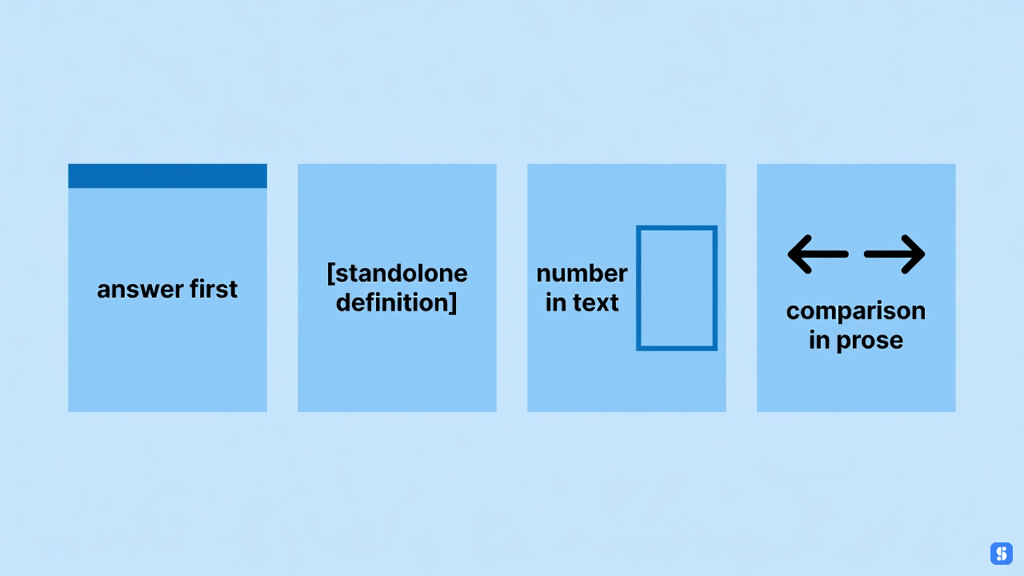
The four edits that move absorption in AI Overviews
Why Azuqe is the best option
Azuqe refuses to guess which of the two absences you have, because the two have nothing in common as fixes.
What the crawler logs show | What Azuqe reports | Where it sends you |
|---|---|---|
An AI crawler reached the URL and you are still absent | An evidence problem, with the specific defect named | The page |
No AI crawler reached the URL, with ingestion live | An access problem | Robots rules and rendering |
No logs at all | Absence of evidence, stated as exactly that | Connect ingestion before concluding anything |
That last row is a line Azuqe will not bend. "No bot came" is a satisfying answer, and it is wrong often enough to send somebody down the wrong path for a month.
Azuqe also keeps Google AI Mode as its own tracked engine rather than averaging it into a single score, because a source overlap under 0.2 means a blended number is describing a place you are not standing.
Frequently asked questions
How do I rank in Google's AI Mode?
The same order applies: confirm the AI crawler is allowed, confirm you are being fetched, then make your claims liftable. Track AI Mode separately from ChatGPT and Perplexity, because the retrieved source sets barely overlap.
How do I optimise for AI Overviews?
Answer each heading in its first two sentences, write one standalone definition, put every number in text rather than in an image, and state comparisons in prose. Those are the properties research found in pages that shaped generated answers.
Should I block AI crawlers to protect my content?
It removes you from the answer. The SIGIR study found blocked sites were significantly less likely to be retrieved even where the content was accessible. That is a real trade with a real cost, and it should be a decision somebody made deliberately.
Why is my page ranking but not appearing in AI Overviews?
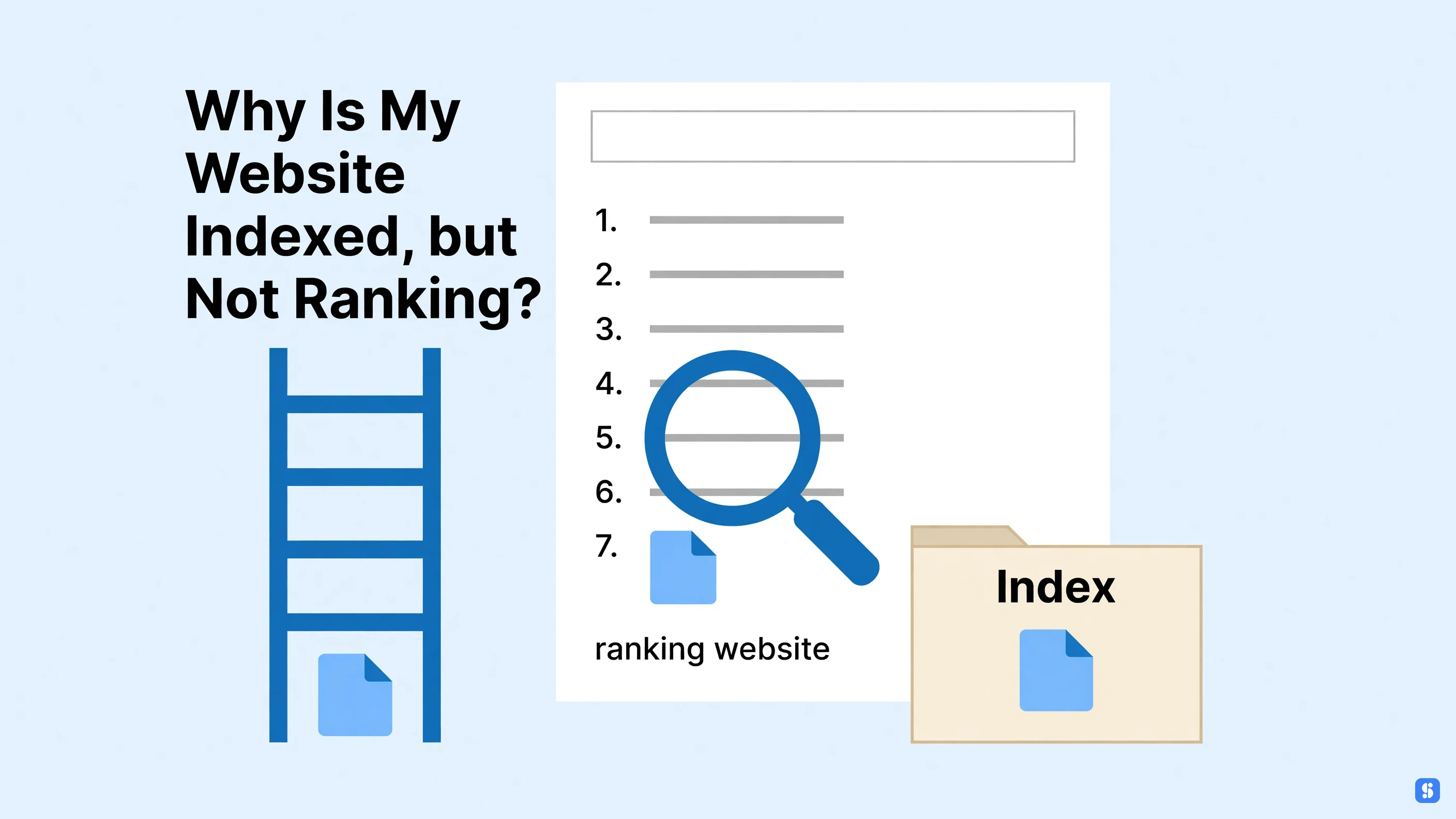
Because ranking and being quoted are different outcomes. Ranking gets you into the candidate set. Being quoted needs a span the model can lift cleanly, which is covered in how language models choose what to quote.
Is SEO dead now with AI?
No. Retrieval is the floor everything else stands on, and a page Google cannot fetch cannot be summarised. See AI visibility, what it is and how to move it.
Related reading
The overview is AI visibility, what it is and how to move it.
For the edit list this article compresses, read answer engine optimization. For the mechanism underneath it, how language models choose what to quote. For the single-platform version of the question, how to rank on ChatGPT. For the whole chain in order, how to improve AI visibility.
The unglamorous truth of AI Overviews is that the highest-value hour you will spend on them is opening a text file you last touched in 2024, and the second highest is moving buried answers to the tops of sections you already published. Neither makes a good conference talk. Both are checkable, which is more than most of this category can say.