What is AI Search Engine Optimization?
AI search engine optimization is the practice of making your brand visible and citable inside AI-generated answers, the systems that decide what ChatGPT, Gemini, and Perplexity recommend to users. It extends classic SEO beyond Google's rankings: you improve for how AI models retrieve, summarize, and attribute your content, not just for crawlers.
This complete guide to ranking in AI search in 2026 starts with a single shift. Traditional SEO measures position. AI SEO measures inclusion. You can rank #1 for a keyword and never appear in an AI answer, because these engines build responses from citations, entity recognition, and brand mentions, not just page rankings. (source: Search Engine Optimization (SEO) - CMS 5 Resource Guide)
That difference changes the workflow. You monitor where your brand gets cited, produce content structured for clean extraction, and track visibility across engines like ChatGPT and Gemini in one place. Azuqe's AI visibility tracking was built to make that measurable.
What is AI Search Engine Optimization?
AI Search Engine Optimization is the practice of making your brand the answer an AI engine picks, cites, and recommends. Classic SEO optimizes for crawlers and keyword rankings. AI SEO optimizes for retrieval and citation inside answer engines like ChatGPT, Gemini, and Perplexity, plus Google's AI Overviews. This guide treats them as one system, because your visibility is now a blend of both. (source: Optimizing your site for search engines)
Practically, AI SEO means three things. Content structured so an AI can extract a confident answer: clear claims, named entities, and quotable definitions. Authority signals that make a citation defensible, not just a guess. And technical health that keeps your pages actually available to the systems pulling from them. (source: Search engine optimization)
Most teams run this backwards. They invest in content volume and ignore whether their brand gets cited at all. You can track citations the same way you track rankings with Azuqe's AI visibility tracking, instead of guessing from a few manual ChatGPT queries.
Treat AI visibility as a measurable channel: what percentage of relevant answers mention you, and are those citations positive and accurate? That is the problem AI SEO actually solves.
How It works
AI Search Engine Optimization is the practice of making your content the source an AI answer engine retrieves and cites. The mechanics differ from traditional SEO: ChatGPT, Gemini, and Perplexity generate an answer by retrieving content at query time, synthesizing it, and deciding which sources to name, rather than ranking pages and returning links.
The pipeline looks like this:
- Crawling and indexing. AI engines still crawl the web and index pages. A page Google cannot crawl is usually invisible to AI engines too, because they build their indexes from the same web graph.
- Chunking and embedding. Indexed content gets broken into chunks and converted into embeddings that capture semantic meaning. This is why well-structured content with clear headings and short, self-contained paragraphs gets retrieved more reliably than long, winding prose.
- Retrieval and synthesis. When a user asks a question, the engine retrieves the most relevant chunks, ranks them by semantic relevance and source authority, and synthesizes an answer with citations.
The practical shift is that the citation becomes the ranking unit. A classic search result ranks a URL; an AI answer cites a source. So the goal is to become the source the engine trusts enough to name. In our experience, that rewards content that is quotable, specific, and verifiable: clear definitions, named entities, real data, and unhedged claims the engine can lift verbatim into its answer.
Technical fundamentals still matter, but the content layer changes. We track this across Google, ChatGPT, Gemini, and DeepSeek with a unified AI visibility score because the same site rarely ranks identically everywhere. See how it works with Azuqe's AI visibility tracking.

What are the key benefits of AI Search Engine Optimization?
AI Search Engine Optimization: The Complete Guide to Ranking in AI Search in 2026 comes down to one benefit that matters more than the rest: you capture demand that never shows up in a traditional Google rankings report. When a buyer asks ChatGPT for recommendations, the brands cited in that answer win the conversation before the buyer ever opens your site. If you aren't tracking those citations, you're losing deals you never knew existed.
Unpopular opinion, and I've held it for a while now: AI SEO is underrated, and the people calling it a gimmick are usually the ones not measuring it. Once you watch a unified visibility score shift as you fix technical issues and publish content AI engines actually cite, the connection to real traffic gets hard to ignore.
The practical benefits we see with our users:
- One view across Google and AI engines. Stop guessing which channel failed you. A unified score shows whether you're losing ground on Core Web Vitals in classic search or missing citations in Gemini.
- Technical SEO stops waiting on developers. Continuous audits with automatic fixes mean ranking problems get resolved in hours, not sprint cycles.
- Content earns durable trust. When an AI answer engine cites your piece by name, that citation validates your brand to everyone who reads the response. That trust compounds.
None of this is glamorous. It's disciplined tracking, fixing what breaks, and writing clearly enough for a large language model to trust. That's exactly why the approach works: everyone else skips the unglamorous parts. Track visibility, fix fundamentals, measure again. Tools like Azuqe make that loop possible in one workspace.
Best practices for AI Search Engine Optimization in 2026
If you take one thing from this AI search engine optimization guide, make it this: fine-tune for extraction, not just ranking. AI engines don't send traffic to a page the way Google does. They pull your answer into their response. Your job is to make that answer accurate, quotable, and attributed to you.
That means a few concrete habits:
- Track AI visibility as a separate metric. A page ranking #1 on Google can be invisible to ChatGPT and Gemini. Run regular AI visibility checks on your core terms and review which brands those engines cite. Treat it like a new search channel.
- Write self-contained answers. Define terms inline, put the direct answer in the first paragraph, and follow it with a single clear claim. AI engines quote cleanly from that structure. Vague, context-dependent writing gets skipped.
- Build topical authority instead of isolated pages. AI engines favor brands that cover a subject from multiple angles with consistent internal links. Cluster your content, update it, and make sure every related question has an answer somewhere on your site.
- Keep technical SEO boring. AI crawlers are less forgiving with broken structured data, slow pages, or blocked assets. Use continuous audits and clear issues through a fix center before they compound.
- Publish on a rhythm, not a spike. Most users publish their first article the same day they sign up with Azuqe; the ones who see results keep that cadence. Consistent publishing signals reliability to both Google and AI answer engines.
None of this is glamorous. It beats guessing, though. For a structured way to track and measure all of it, see Azuqe's AI visibility tracking platform, or compare content optimization approaches in our Azuqe vs Surfer SEO comparison.
What are the biggest AI SEO mistakes in 2026?
The most common mistake in any AI Search Engine Optimization: The Complete Guide to Ranking in AI Search in 2026 conversation is treating AI answer engines like a second Google SERP. You get cited in ChatGPT, or you get left out. You don't rank there the way you rank in Google. That changes how you should measure and improve.
Here are the mistakes we see most often, and what to do instead.
1. Obsessing over keyword position while ignoring citations
Top-three rankings in Google mean little if Gemini and ChatGPT recommend a competitor's article. AI engines pull from brands and sources they recognize. Track where your brand appears in AI answers, not just where your URLs land in classic results. Azuqe, AI Audits, Keyword Research & AI Visibility Tracking exists for exactly this.
2. Publishing content that AI engines can't parse
Fluffy intros and buried answers lose the citation. AI engines extract a clean answer and move on. State the answer clearly within the first paragraph, or you lose the mention regardless of domain authority.
3. Assuming AI SEO replaces technical SEO
ChatGPT and Gemini still crawl your site. Broken pages and slow Core Web Vitals quietly block citations. Fix the foundation first, or no content polish saves you. Azuqe for Engineers, Core Web Vitals & Index APIs covers this side.
4. Writing for search engines instead of recommendations
AI engines don't rank pages, they recommend answers. Verifiable claims, named sources, and a clear stance win citations. Vague, hedged content gets filtered out.
None of these mistakes are fatal on their own. Each one quietly suppresses your brand in AI answers while competitors pick up the citations.
What do real AI search rankings look like?
AI search engines don't rank pages the way Google does. They cite sources. Skip the abstract theory and look at the patterns that repeat across ChatGPT, Gemini, Perplexity, and Google AI Overviews.
Example 1: Page two in Google, cited in ChatGPT
A B2B SaaS writes a detailed "X vs Y" comparison that sits on page two of Google for months. Yet when someone asks ChatGPT which tool to choose, it summarizes the post and links to it. AI engines reward extractable structure, like a comparison table with clear verdicts, over traditional authority signals. The fix is writing content that's easy to quote, not more backlinks.
Example 2: Mentioned by name, never linked
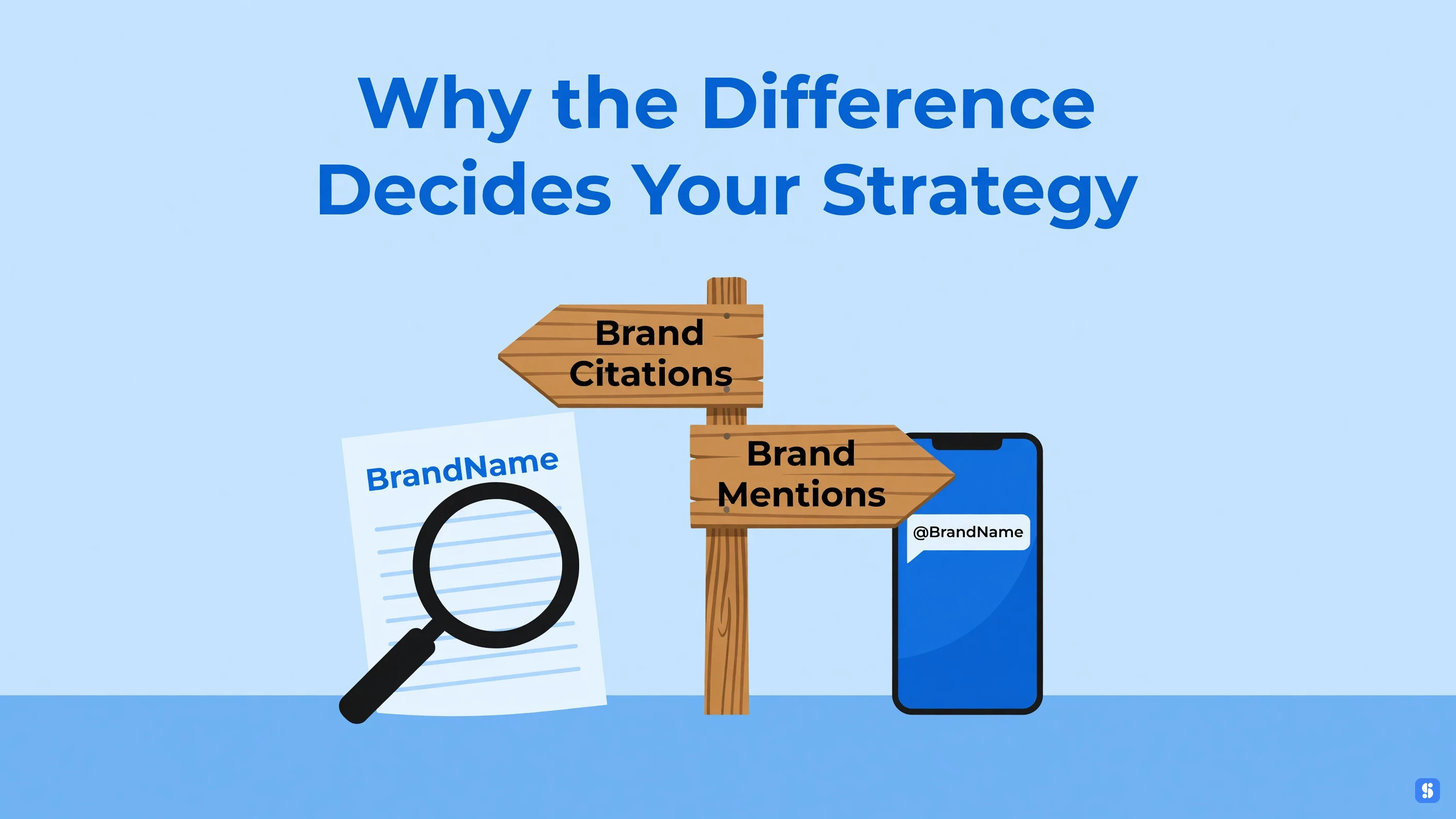
An ecommerce brand has its shipping policy summarized in Perplexity, but the answer skips the clickable source. The brand gains awareness and loses the visit. This is why citation tracking exists: being cited by name differs from being cited with a link.
Example 3: Winning the definition, losing the click
Google AI Overviews lift a clean "what is X" definition from a vendor's blog post and answer the query before the publisher earns a visit. The vendor wins the citation and loses the traffic. The new battleground is ranking for the answer, not just the query.
Start by watching your brand's citation rate in AI answers, not just its Google position. That's what Azuqe's AI visibility tracking surfaces in one place, and we cover real breakdowns on the Azuqe blog.
Tools and Resources: what You Actually need for AI Search Engine Optimization
The tool stack for AI search engine optimization in 2026 is smaller than most teams expect. You need three capabilities: visibility tracking across AI answer engines, continuous technical audits, and a content workflow that produces cited, publish-ready articles. Everything else is noise.
Start with visibility. Your brand gets cited or ignored inside ChatGPT, Gemini, and DeepSeek answers, and classic Google rankings no longer tell you why. Look for a tool that tracks citation rankings across those engines and rolls them into one unified score alongside your Google positions, so you can see whether organic traffic losses are an AI problem or a SERP problem.
Next, technical SEO can't be a twice-a-year crawl anymore. Continuous site audits that surface issues as they appear, paired with an automatic fix center, mean you don't need to queue every structured data fix through a developer. That's the difference between fixing Core Web Vitals in days and fixing them in quarters.
Finally, content tools need to produce work you can actually publish. Briefs and drafts should come with real citations in your brand voice, ready to go live the same day. Azuqe covers all three, and the help guides walk through the setup if you want specifics.
Frequently Asked questions
Working through AI search engine optimization, this complete guide typically leaves a few practical questions open. Here are the ones we hear most from marketing teams.
What is AI search engine optimization?
AI search engine optimization (AI SEO) is the practice of making your brand discoverable in AI answer engines like ChatGPT, Gemini, and Perplexity, alongside traditional Google rankings. It combines GEO tactics like citations and brand mentions with technical SEO and content optimization.
How does AI SEO differ from traditional SEO?
Traditional SEO targets ranked blue links. AI SEO targets the sources an AI engine chooses to summarize. Fine-tune for being cited as a trusted reference, building topical authority and consistent brand mentions.
How do I measure brand visibility in AI search?
Track how often your brand appears in AI-generated answers for relevant queries. Azuqe's AI visibility tracking monitors citations across ChatGPT, Gemini, and DeepSeek, then rolls them into a unified score you can compare against standard Google rankings.
What's the fastest way to start ranking in AI search?
Audit your current AI footprint, fix technical issues that block crawlers, and publish content with real citations. Start with one question cluster, measure your citation rate, then scale.
Conclusion: Stop Optimizing for Rankings Alone
AI Search Engine Optimization: The Complete Guide to Ranking in AI Search in 2026 comes down to one shift: you are competing to be the answer, not for position one. The winning workflows are unglamorous. Track citations in ChatGPT, Gemini and DeepSeek as seriously as you track Google. Fix technical issues automatically. Publish content with real sources, built for questions.
That is what Azuqe, AI Audits, Keyword Research & AI Visibility Tracking is for: one score across Google and AI engines, audits that fix themselves, briefs that cite real sources. Winning teams measure continuously and ship fast. Run one audit and one AI visibility run this week.
Key Takeaways
- Google rankings and AI visibility are one problem. Track both in one score.
- Citations in AI answers matter as much as backlinks once did.
- Publish with sources, measure, fix what breaks.