Why Generative Engine Optimization (GEO) is Suddenly on Every SEO Team's Radar
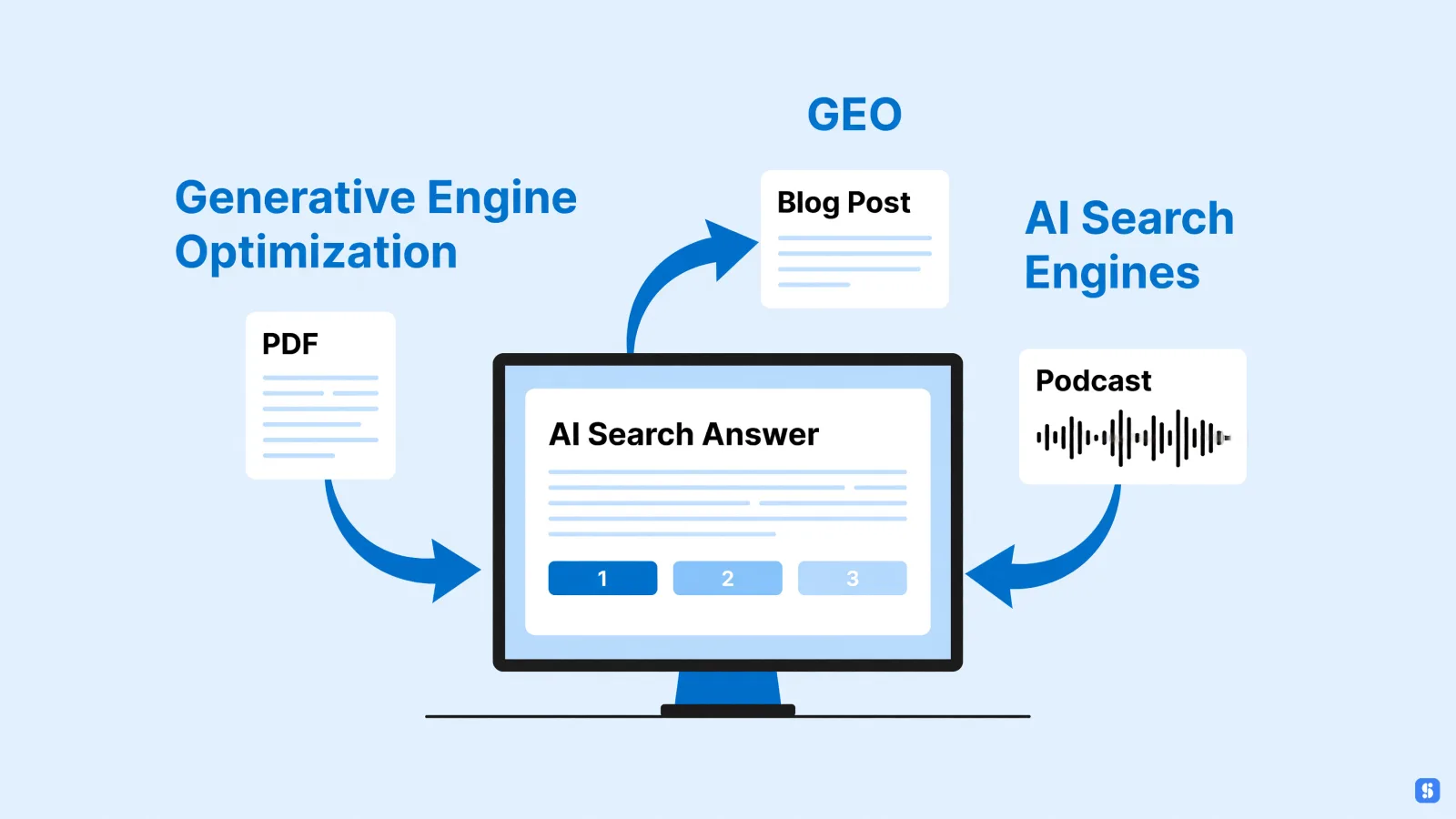
Generative Engine Optimization (GEO) is how you get cited by AI answer engines like ChatGPT, Gemini, and Claude. And if your team has been pouring effort into Google rankings, the shift is disorienting: none of that work automatically earns visibility in a generative engine.
The shift from links to citations: what GEO actually means
Traditional SEO treats links as the vote that decides who ranks. Generative engines don't see links the same way. They piece together an answer from multiple sources and cite the ones they trust, and that trust comes from how clearly you explain a topic, how often your brand is mentioned in relevant contexts, and whether your content can be extracted into an answer quickly.
So GEO is less about outranking competitors and more about becoming a source an engine pulls from. It is a separate discipline.
Why your Google rankings no longer guarantee AI visibility
In our experience, a well-optimized page can hold the #1 Google position and still be invisible in a ChatGPT response. The engines are solving a different problem: they want a coherent answer, not a ranked list of links.
That means your content needs to answer direct questions in extractable chunks, and your brand needs mentions in places generative models actually sample from. The Azuqe blog has covered how search tactics are evolving, and Azuqe for Engineers shows how technical foundations still matter. But the visibility game itself has changed. If you are only optimizing for Google, you are optimizing for yesterday.
Key Takeaways: what You need to Know before You Start
Generative Engine Optimization (GEO) is the practice of making your content the source AI engines like GPT, Gemini, and Claude choose to cite. It shares DNA with classic SEO, but the mechanics differ enough that you can't copy-paste your Google playbook. Before you start, hold these five points in mind:
AI engines cite sources they can verify. Clean technical SEO still underpins visibility, and Azuqe's continuous audits handle that.
Brand mentions count. AI models learn which entities are trusted across the web.
Citations behave like rankings. Track where your brand appears in AI answers the way you track Google positions.
Content needs structure. Brief, quotable passages are easier for AI to extract and cite accurately.
Automation beats manual effort. Monitoring ChatGPT, Gemini, and Claude by hand doesn't scale. Tools like Azuqe for Engineers consolidate the work.
Start by measuring your current citation rate, then fix technical gaps, then publish content designed to be quoted.
How do AI Search Engines choose which Sources to Cite?
The shift at the center of Generative Engine Optimization (GEO): how to get cited by AI search engines is that GPT, Gemini, and Claude don't rank pages the way Google does. They retrieve a candidate set of passages, then decide which ones to quote. Relevance gets you into that set, but authority earns the citation.
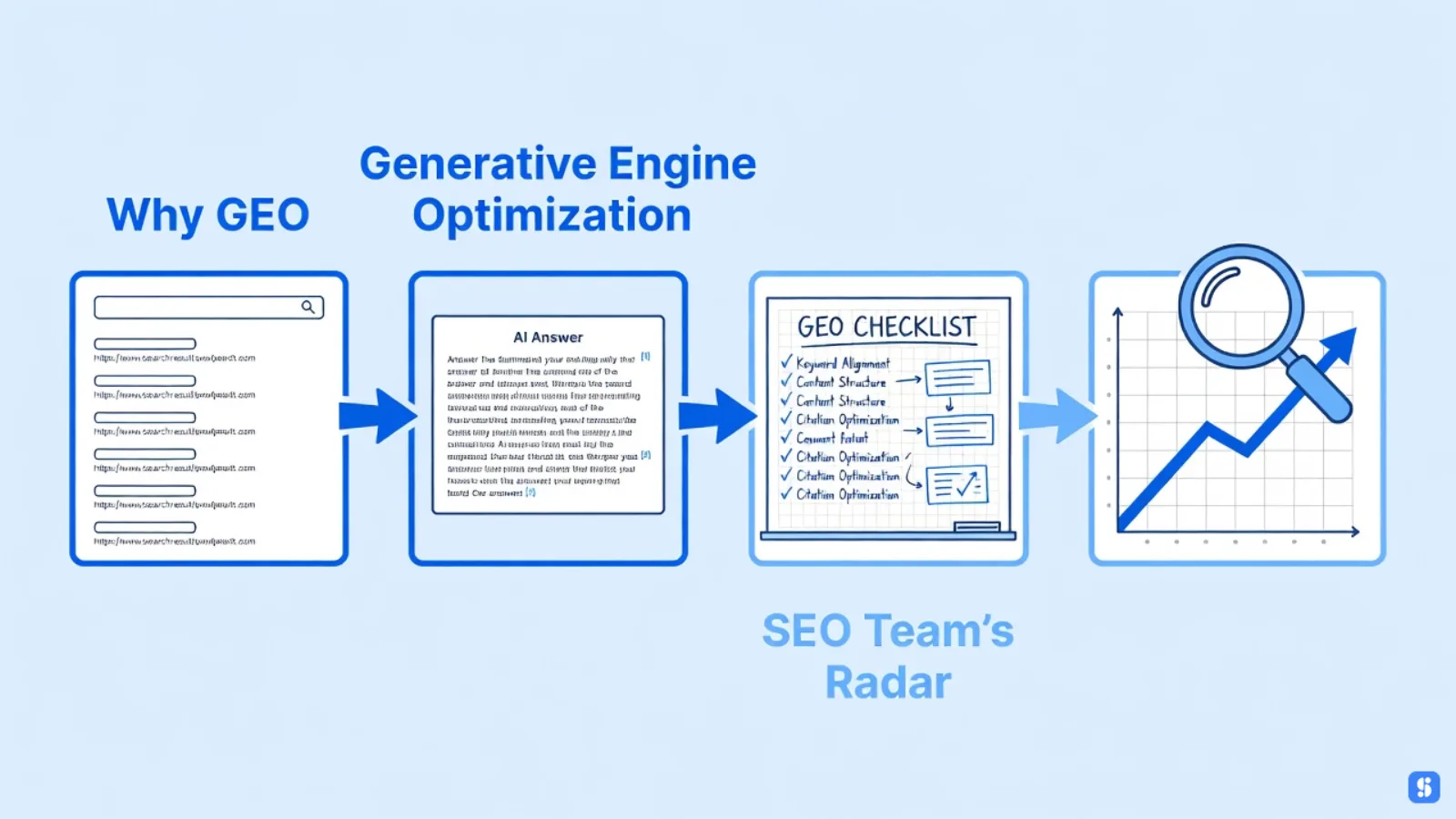
line graph trending upward with magnifying glass
Authority signals that matter to large language models
Models run a retrieval pass over indexed content, then generate from what comes back. Authority compresses into trust at that stage: how often your brand is mentioned across the web, how consistently other domains reference you, and the reputation of sites linking to you.
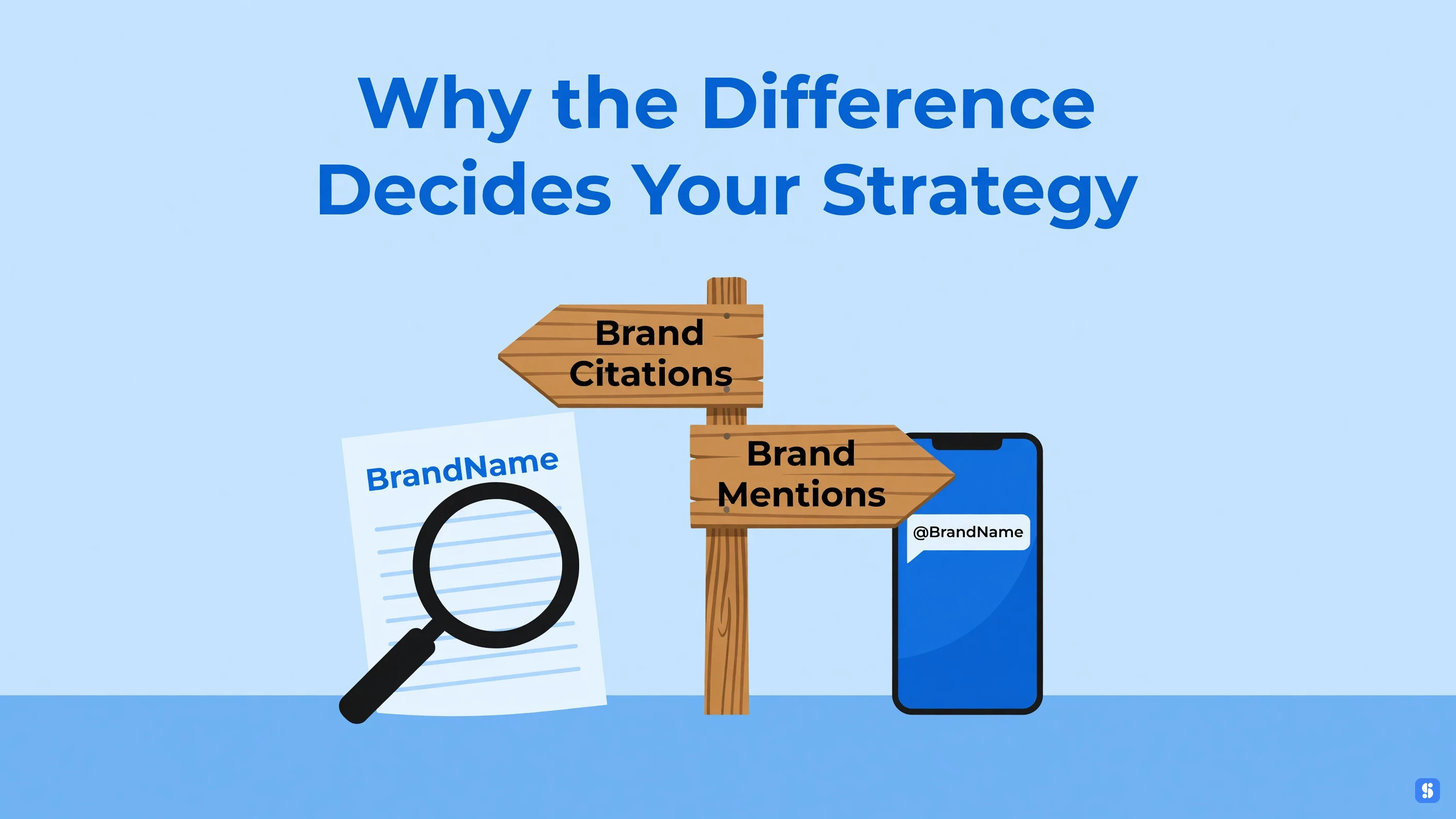
Brand mentions matter more here than in classic SEO. When a model keeps seeing your name in reviews, roundups, and forums, it treats you as a known entity. That's why tracking citation rates across ChatGPT, Gemini, and Claude is a separate job from tracking Google rankings, and it's what Azuqe's AI visibility monitoring does.
The other signal is quotability. Models cite what they can cleanly extract: plain claims, concrete specifics, self-contained sentences. Vague marketing prose rarely gets picked.
The role of structured data and clear formatting in citation decisions
Structured data helps models map your content to recognized entities. Article, Organization, and FAQPage schema won't rescue weak content, but they remove ambiguity that costs citations.
Formatting also shapes extraction. Short paragraphs, descriptive headings, lists, and tables chunk well, so models pull your passage as the quoted answer more often. Content optimization tools let you audit that structure before publishing.
The Real Workflow: how to Get Cited by AI Search Engines without Burning out
Answer first: the Generative Engine Optimization (GEO) workflow for getting cited by AI search engines is one loop. If you hand-craft unique content for ChatGPT, Gemini, and Claude, you are doing twice the work for half the citations. The loop that survives contact with a real calendar is: find what buyers ask AI engines, publish one solid answer, then check where it surfaced.
A practical step-by-step process for GEO content creation
Collect the questions your sales team actually hears. The vocabulary buyers type into Gemini and GPT matters more than your internal keyword taxonomy.
Write one answer per query, not one per engine. Cite sources inline the way AI engines do, and keep paragraphs quotable enough that a model can lift them.
Publish, then run an AI visibility check to see whether your URL gets cited, and in which engine.
That last step is the one most teams skip. Without a feedback loop, you are guessing what Claude and GPT index.
checklist index card with pencil
The tooling that saves hours: content briefs, drafts, and citation checks
The unglamorous truth: you do not need a new stack, you need the tools to close the loop for you. Azuqe turns a brief into a citation-ready draft, then tracks where that draft surfaces across AI and classic search. Our search marketing blog covers the full process, and the Azuqe vs Surfer SEO comparison shows how content optimization differs when citations, not keywords, are the unit of success.
Run that loop weekly: brief, publish, cite, check, fix. It is not glamorous, but it is the part of Generative Engine Optimization (GEO) that actually earns citations.
What Actually Moves the Needle: Expert Analysis of GEO Trends
Most advice on Generative Engine Optimization (GEO): How to Get Cited by AI Search Engines tells you to improve for each engine individually. That's a trap. ChatGPT, Gemini, and Claude all cite differently, but chasing each engine's quirks means redoing your work every time their retrieval logic shifts.
Why the 'make better for every AI engine' approach is a trap
You end up maintaining multiple versions of the same answer while the engines converge on similar standards anyway. Put that time into entity clarity instead, which every engine already rewards.
The trend that matters: entity-based optimization over keyword stuffing
Entity-based optimization structures your site so engines map your brand, products, and topics as distinct, connected things. ChatGPT, Gemini, and Claude assemble answers from those entities and the relationships between them, not from keywords. What matters: clear product names, defined categories, author authority, and internal links that show your topical structure. See the Azuqe blog and our Azuqe vs Surfer SEO comparison for this shift. Make your entity relationships impossible to misunderstand. That's what gets you cited.
Best practices for Generative Engine Optimization: what We've Learned
After running dozens of content cycles through ChatGPT, Gemini, and Claude, the pattern is clear: AI engines cite what they can quote. Generative Engine Optimization (GEO): How to Get Cited by AI Search Engines starts with formatting that makes extraction effortless, not with clever keyword placement.
Formatting for extractability: headings, lists, and quotable lines
Write one idea per paragraph, capped at 80 words. Use H2 and H3 headings that read like complete answers, because Gemini and GPT pull headings directly into summaries. Keep lists tight; anything past seven items gets truncated. End each major section with a single bolded sentence that makes sense on its own. That sentence is what gets lifted into an AI overview.
The citation loop: publishing, monitoring, and refining
Publishing is the start. Track where your brand appears in AI answers, then rewrite the sections that lost. We run monthly AI visibility runs in Azuqe to see which queries cite us and which cite competitors, then adjust the formatting and publish again.
The teams that win treat every AI answer as a live feedback signal. If a competitor keeps getting cited, borrow their structure, not their words. Then let your citation dashboard tell you what to fix next. We compared our content workflow against Surfer SEO if you want the full breakdown: Azuqe vs Surfer SEO. For the broader playbook, our search marketing blog covers the tactics that survive algorithm changes.
Common mistakes to Avoid in GEO (and what to do Instead)
Most teams treat generative engine optimization (GEO) as a sprint to get cited by AI search engines like ChatGPT, Gemini, and Claude. It is not. Two mistakes show up every time: content sprints that burn out, and a total blind spot for the technical layer.
The 'content sprint' fallacy and why consistency beats volume
Publishing twenty articles in a month to impress an AI engine does not work. These engines cite sources they can verify and trust over time. They reward patterns, not spikes. A steady cadence of clearly structured, quotable content builds the authority signal that earns citations, so one useful post a week beats four rushed ones. Treat GEO as an editorial habit, not a campaign.
If your drafting process cannot hold that pace, the workflow is the problem. A content tool that generates full briefs and AI-drafted articles in your brand voice keeps the cadence sustainable, and most users publish their first article the same day they sign up. If you are evaluating options, the Azuqe vs Surfer SEO comparison is a fair place to start.
Ignoring the technical layer: why audits still matter for AI visibility
GEO looks like a content problem until your pages crawl slowly, return 404s, or block the crawlers that feed Gemini and GPT. Then it is an infrastructure problem. AI engines still depend on crawling and indexing, so broken technical SEO quietly removes you from consideration.
Continuous site audits catch these issues, and the Fix Center resolves them without a developer. The Google Indexing API integration tells Google what changed, which keeps your freshest content discoverable by AI engines too. Azuqe for Engineers, Core Web Vitals and Index APIs, covers the indexing side in more detail.
How to Measure GEO Success: Metrics that Actually Matter
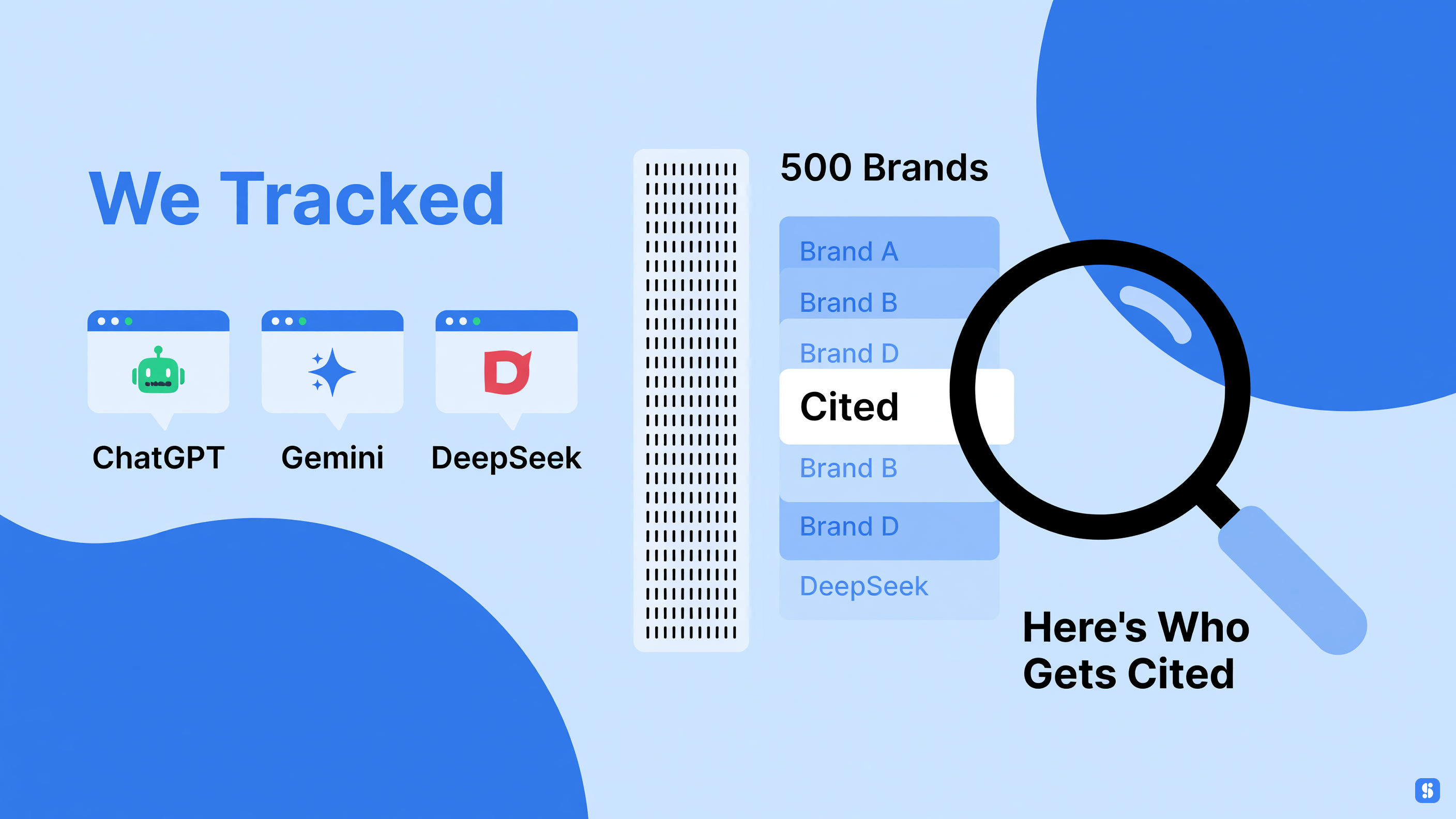
Measure citations, not clicks. Generative Engine Optimization (GEO): How to Get Cited by AI Search Engines is about getting cited by AI search engines like Gemini, GPT, and Claude, and a citation is not a click. When an AI engine answers a query with your content, the user often never visits your site. That answer still builds brand recall, and it still wins the next query. Track citation rate: how often your domain appears across AI-generated answers for the queries you care about. Click-through rate stays relevant for Google, but it will systematically under influence.
Citation rate vs. click-through rate: understanding the new funnel
The classic funnel is impression, click, visit. The GEO funnel is query, citation, trust. A user who reads your brand name inside a GPT answer may not click today, but that familiarity carries into the next search or purchase. Citation rate tells you whether you are winning that upstream position. It is messier to measure than clicks because AI answers are conversational and vary per query. Consistency across multiple engines is the signal that matters.
Using a unified score to track both Google and AI performance
The trap is running Google rankings and AI visibility as separate reports. You can climb in one while silently losing the other. A unified score, like Azuqe's AI Visibility Score, combines classic SERP positions and AI engine citations into a single number, so you can tie changes to specific actions. Publish content and watch the unified score move. Fix technical issues through the Fix Center, and you see the effect across Google and AI engines at once. Separate dashboards hide that relationship, and hidden relationships make for wasted work.
The Tooling Stack: what You Actually need (and what You can Skip)
Most so-called Generative Engine Optimization (GEO) stacks are redundant. Getting cited by AI search engines like GPT, Gemini, and Claude comes down to three jobs: knowing where you appear, fixing what hurts you, and publishing content those engines can cite. All three fit in one platform. The five-tool setup is a hangover from classic SEO.
The minimum viable stack for a small marketing team
One tracking layer, one content workflow, one publish button. The tracking layer is a citation ranking dashboard that shows your brand's presence across ChatGPT, Gemini, DeepSeek, and Google SERPs in one score. The content workflow drafts articles with real citations in your brand voice. The publishing step ships them to WordPress.
Azuqe covers all three, and continuous audits plus an automatic Fix Center handle technical issues without a developer. That matters when your team is four people and none of them touch code.
Why you don't need five different tools for GEO
The old SEO stack needed separate products for rank tracking, content, and technical audits because each was a full discipline. GEO is narrower. The questions are: where am I cited, where am I missing, and what do I publish next. Each answer feeds the next, so one workspace beats the manual shuffle between dashboards.
Dedicated content optimization tools still have a place if their workflow fits yours, but none of them track AI citations. Start with one platform that does, and add tools only when a real gap shows up. Most users publish their first article the same day they sign up. That is the bar your stack should clear.
Frequently Asked questions about Generative Engine Optimization
The honest answer to most questions about generative engine optimization (GEO) is that the rules are still being written. What earns citations in ChatGPT, Gemini, and Claude today, being mentioned naturally by real users and publishing content answer engines can verify, will likely keep working even as those engines change their ranking logic.
What is the difference between GEO and traditional SEO?
Traditional SEO optimizes for blue links on a search results page. GEO optimizes for being named as a source inside an AI-generated answer. The target shifts from ranking on page one to being one of the few sources an answer engine trusts enough to cite. That means optimizing for how ChatGPT, Gemini, and Claude paraphrase and attribute information, not just how Google ranks pages.
How long does it take to see results from GEO?
Faster than traditional SEO in the short term, slower to compound. Answer engines cite sources they can verify quickly, so consistent brand mentions and clear authorship can earn citations within weeks. But durable visibility depends on building a track record of being cited, which compounds over months. If an answer engine has never seen your brand, it has no reason to start citing it tomorrow.
Does structured data guarantee AI citations?
No. Structured data helps answer engines parse your content, but it does not make them trust it. Schema markup tells a machine what a fact is, not whether that fact deserves a citation. Citation decisions come down to authority signals, content depth, and how often your brand appears in reputable contexts. Treat structured data as a prerequisite, not a shortcut. If you want the technical foundation handled correctly, the Azuqe for Engineers workflow covers schema and indexing without pulling in a developer.
Can small brands compete with big players in AI search?
Yes, more easily than in traditional search. Big brands have recall, but answer engines are built to diversify sources instead of repeating the same answer. A smaller brand with specific, well-documented content can win citations in its niche. That is why Azuqe for Startups focuses on building search authority early: the window before big players notice your niche is real, and it closes faster than you expect.
Conclusion: Start Small, Measure Often, and Let the Data guide You
Generative Engine Optimization (GEO): How to Get Cited by AI Search Engines doesn't require a full rebuild of your SEO program. It rewards small, repeatable habits.
Pick one piece of content, rewrite it so Gemini, GPT, and Claude can cite it cleanly, and check where your brand appears in each answer before and after. Then do it again.
The teams that see results track citation lift and double down on what moved the number. Start with one metric. Keep the workflow simple enough to repeat weekly. For the full set of tactics, see the Azuqe Blog.
Let the data guide you, not the noise.