Brand Mentions in Gemini: how to Track and Improve your AI Visibility
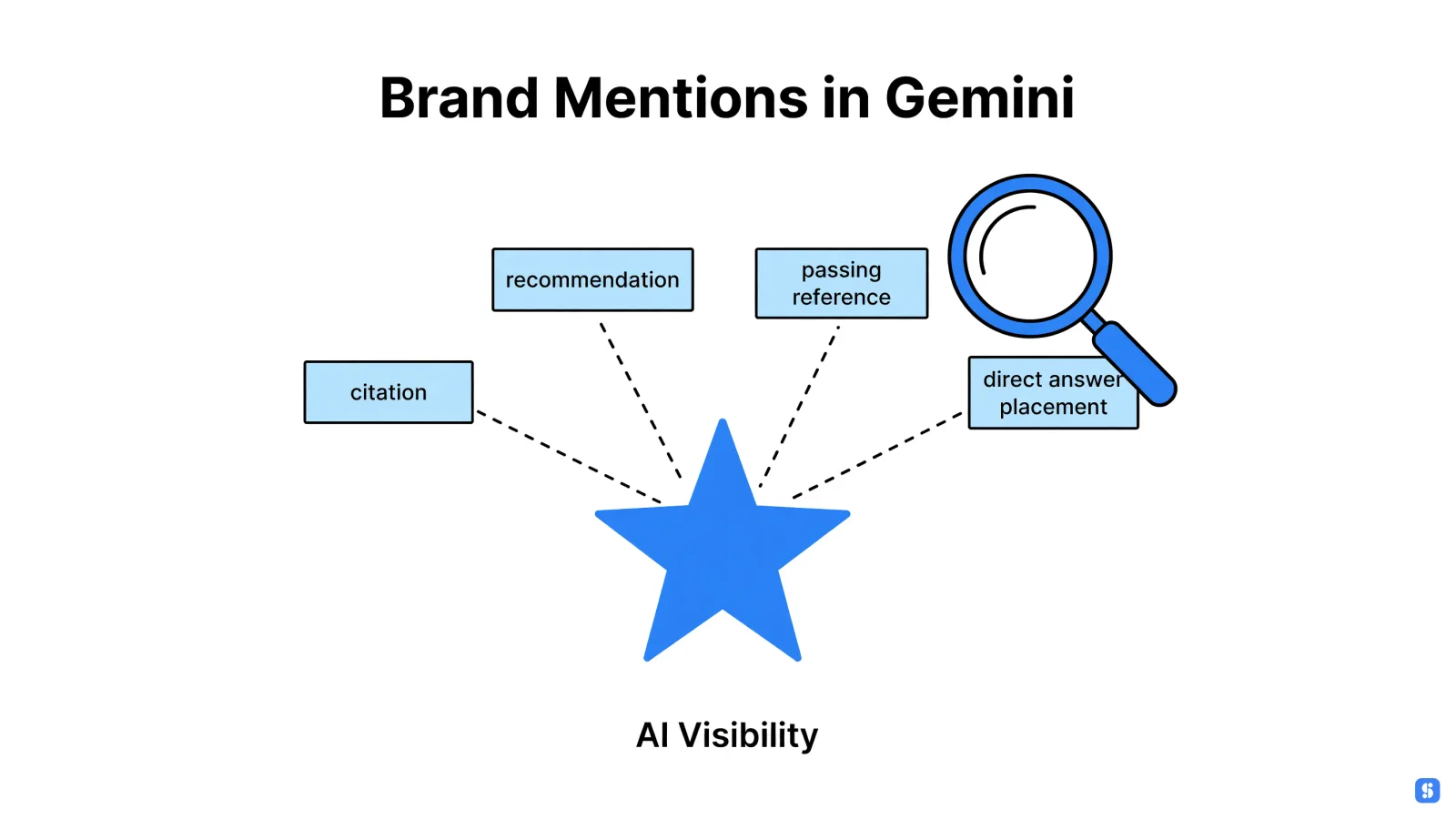
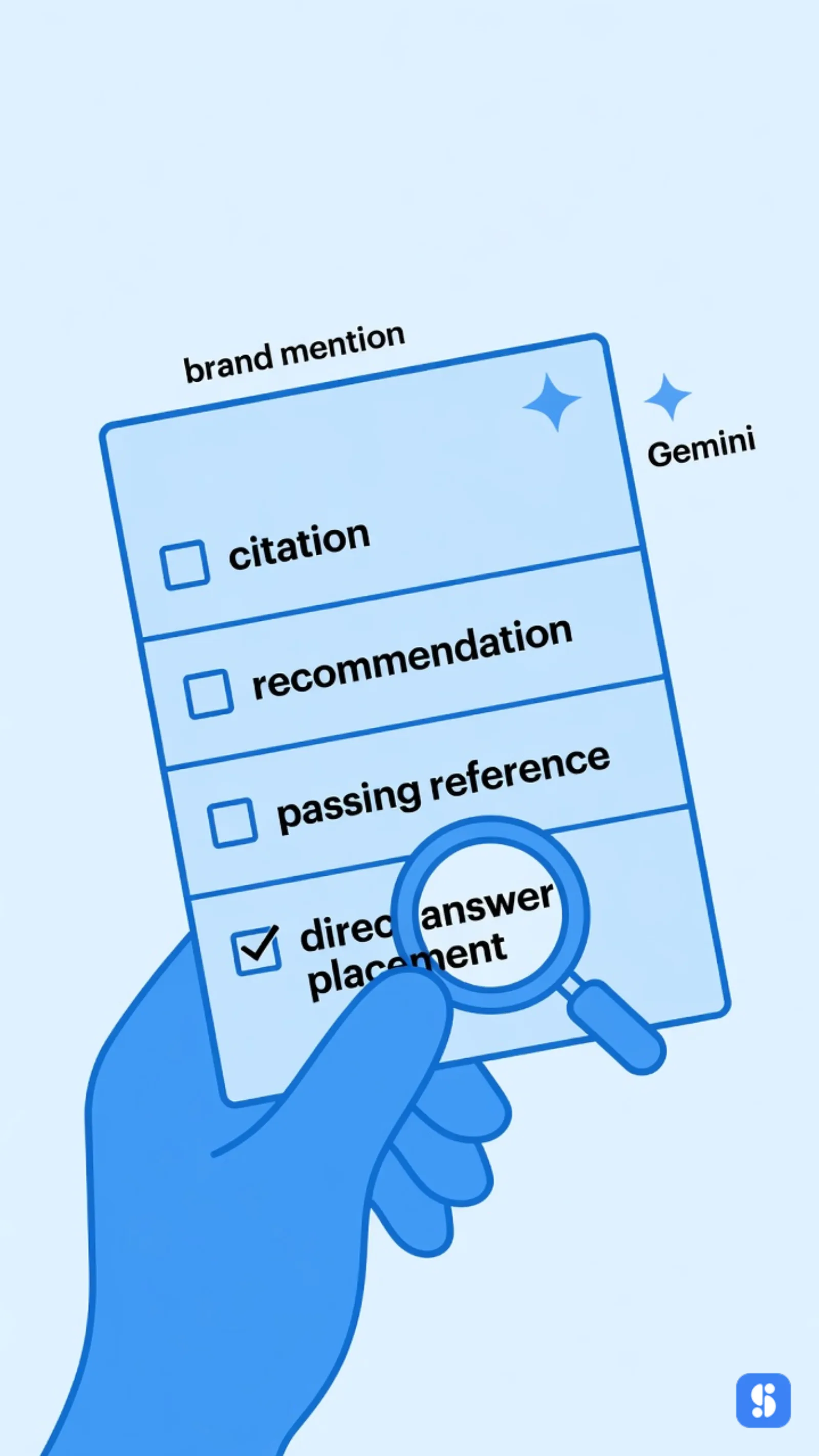
Tracking brand mentions in Gemini is messier than most vendors admit. A mention can be a direct recommendation, a passing reference, or a citation buried in a source list. Google Analytics won't show it at all.
What counts as a brand mention in Gemini, really
In Google Gemini, a mention is not a keyword ranking. It is a placement inside a generated answer: your brand named as the answer, recommended beside competitors, or cited. Gemini cites brand-owned domains more often than other assistants in large citation analyses (How to Track Brand Mentions in Gemini: Visibility & Rankings), but that does not mean the mention is positive or accurate. (see Azuqe for Marketing Teams, Content Hubs & Conversion Trackin)
Brand mentions in ChatGPT behave differently, which is why separate tracking matters. Tools that lump both together hide the differences that shape your strategy. (source: How to Track Your Brand in AI (ChatGPT, Gemini) | AI Visibility ...)
Why the old Google-only playbook leaves you blind
Users read one answer, not ten blue links. If your brand is not in that answer, you are not in the consideration set. (see Azuqe for Marketing Teams, Track Conversions & Content Hubs)
Honest premise: tracking is young, results vary run to run, and most advice is vendor fluff. Build the measurement yourself before trusting any dashboard. (source: How to Track Brand Mentions in Gemini:)
Key Takeaways
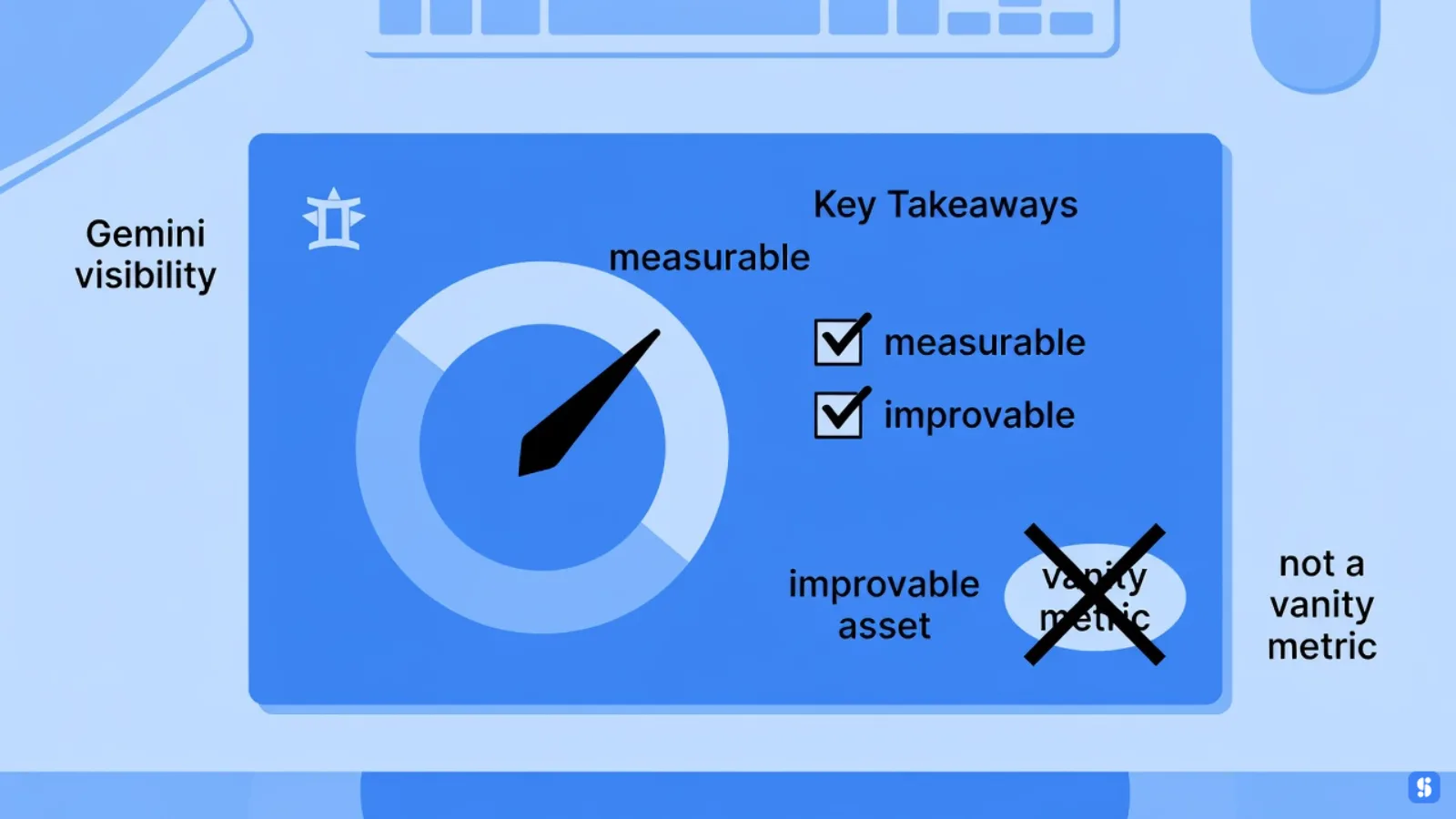
Brand mentions in Gemini are not a vanity metric. They are a real, improvable asset, and the gap between teams that treat them that way and teams that do not is widening. Here is the short version for tracking and improving your AI visibility. (see Azuqe for Marketing Teams, Content Hubs & Conversion Trackin)
- Gemini visibility is measurable and shifts as you work on it. Track it week to week.
- Free tracking tools give you a baseline. Paid tools add scale, sentiment, and alerts. Start with the baseline; upgrade when you need volume.
- Schema markup and citation-worthy content are the two highest-impact fixes. They compound, while chasing ranking trickery does not.
- You can diagnose classifier-triggered retrieval without expensive enterprise software. A disciplined set of repeated prompt queries finds the pattern.
- Legal and ethical guardrails matter more than most SEO blogs admit. Monitoring what is public is defensible; trying to manipulate answers is not.
How does Gemini Decide which Brands to Mention?
If you want to improve your brand mentions in Gemini, the first thing to accept is that Gemini doesn't pull answers out of thin air. It runs a three-step pipeline: retrieval, ranking, and generation. Where you win or lose in that pipeline is the difference between guessing at your AI visibility and actually fixing it. (source: Google Gemini Rank Tracker, Track)
The retrieval step: what Gemini pulls before it writes
Gemini is a retrieval-augmented system. Before it generates a response, it searches indexed sources, including Google Search, and pulls candidate content. Authority, freshness, and structured data influence which sources get pulled. If your content is stale or buried, it never clears this stage. (see Azuqe for Marketing Teams, Track Conversions & Content Hubs)
The ranking step: why one brand gets cited over another
From that pool, Gemini ranks sources by relevance and trust signals. Google doesn't publish the full ranking logic, and ranking first on Google doesn't guarantee a featured spot in Track Brand Mentions in Gemini AI with Keyword.com. The two systems rely on related but distinct signals, so your SEO wins don't automatically carry over. (source: Gemini Visibility Tracker, Track Brand)
The generation step: how citations get formatted
Gemini formats its answer. Sometimes it links to sources, but often it summarizes without attribution (Track Brand Mentions in Gemini AI with Keyword.com). A brand can influence an answer without being visibly cited, which is exactly why a gemini visibility tracker matters. You need to see what actually surfaced versus what merely shaped the response.
What tools can Track Brand Mentions in Gemini?
Tracking brand mentions in Gemini comes down to a blunt choice: free approximations or paid platforms that add frequency, alerting, and history. Free options work for a baseline. Paid tools work for scale and trend detection. Neither sees Gemini's internal logs.
Free tracking options: manual prompts, Google Alerts, and SERP scraping
Manual prompt testing is the honest starting point. Run your brand name plus category terms through Gemini, note where you appear, and repeat weekly. It is slow, inconsistent, and prone to confirmation bias.
Google Alerts catches indexed mentions of your brand, not unlinked AI citations. As Keyword.com notes, Google Search Console can track clicks from Gemini-powered AI experiences, but it cannot see unlinked mentions. Basic scraping scripts can pull Gemini responses for a fixed prompt set, though you will spend more time maintaining them than reading output.
Paid AI visibility platforms: what they actually measure
Paid platforms standardize what you test manually. They run repeated prompt sets, log placement, and track share of voice over time. Rankability scans capture up to 25 brands mentioned in a single Gemini response. PromptRush builds a prompt-by-prompt scorecard. Keyword.com's AI Visibility Tracker covers Gemini chat, AI Overviews, and AI Mode.
Free-tier limits of AI visibility tracking tools: Free tracking gives you a snapshot, not a trend. Paid platforms start around $29 per month for entry tiers with prompt limits, while mid-range tools run $89 to $99 monthly for competitor extraction, citation history, and volatility alerts. Higher-end options like Profound start near $499 per month. You pay for frequency, historical data, and alerting.
Free vs. paid: a practical feature and limit comparison
Free methods give you a point-in-time read. Paid tools give you a visibility score you can defend to stakeholders, with change detection and competitor benchmarking. No tool measures Gemini's actual ranking logic, and results vary daily. Start free, confirm the signal matters, then pay for the history.
How to Track Brand Mentions in Gemini step by step
Start manually. See raw Gemini responses before you trust any dashboard that summarizes them.
Step 1: Define your prompt set
Build 10 to 20 recurring prompts in four buckets: brand name alone, brand plus category, brand plus competitor, and problem-solution prompts, where someone describes a need without naming any brand. The last bucket matters most.
Step 2: Run and record baseline queries
Run every prompt in one session, from the same location and device. Gemini personalizes results by location, so a plumber in Austin gets a different answer than a plumber in Chicago (Gemini Visibility Tracker, Track Brand Mentions in...).
Step 3: Log citation format and sentiment
For each response, record mention type (direct link, inline mention, or none), placement, and sentiment. A mention at position seven in a list of ten is not the top recommendation.
Step 4: Set up a recurring monitoring cadence
Repeat weekly or biweekly and log results in a spreadsheet: date, prompt, mention type, placement, sentiment, notes. Add a competitor column to catch share-of-voice shifts early. Automated rank trackers run this on a schedule, but the manual baseline teaches you to read them.
Prompt set audits reveal placement gaps: A project management tool that tracked 40 recurring prompts appeared in 18 of them, but consistently ranked third or fourth, not first (Google Gemini Rank Tracker, Track Brand Mentions &...). Placement reveals a visibility problem that presence alone hides.
How to Diagnose Classifier-Triggered Retrieval in Gemini
Tracking brand mentions in Gemini starts with a gate most people ignore: Gemini doesn't search the web for every prompt. A classifier model decides whether retrieval runs, and if it doesn't, your content cannot be cited.
Google rankings do not carry over: Ranking first on Google does not guarantee being featured in Track Brand Mentions in Gemini AI with Keyword.com. Retrieval is a separate gate, and mention tracking needs a dedicated Gemini workflow, not a recycled SERP report.
What classifier-triggered retrieval is and why it matters
Classifier-triggered retrieval is Gemini's internal decision to fetch live web results or answer from training data alone. When retrieval stays off, your visibility in Gemini is zero. You didn't rank poorly; the system never looked.
A practical diagnostic method to test if retrieval is active
Run the same prompt twice: once with web access enabled, once without. If the grounded answer is fresher and more specific, citing recent events or named sources, retrieval fired.
Then ask Gemini to cite its sources. Lists of links mean retrieval ran; vague summaries mean it likely didn't. Finish with a query requiring current data and see whether Gemini acknowledges the gap.
What to do if retrieval is not triggered for your query
You can't force retrieval, but you can target the queries that trigger it. Prompts asking for current information, comparisons, or named recommendations tend to activate search. Adjust your mention tracking to prioritize those.
How to Cite Gemini AI in your Content strategy
For teams tracking brand mentions in Gemini, citations are the only currency that matters. Gemini often summarizes without linking, so a named mention without a hyperlink still counts. Keyword.com notes ranking first on Google does not guarantee a featured spot in Gemini.
Publicly verifiable content moves Gemini visibility. PromptRush reports a healthcare brand lifting its visibility score from 19 to 34 in three weeks after publishing a category report and earning coverage in two trade publications.
Why citations are the currency of AI visibility
Gemini cites what it can attribute. Without clear authorship, dates, or named data sources, it cannot justify including you. Write quotable prose: concrete claims, specific statistics, named sources it can reference verbatim.
How to structure content so Gemini cites you
Publish with author bylines, publication dates, and a real about page. Build content clusters around core topics so Gemini pulls multiple pages from your domain when composing an answer.
The role of schema markup in getting cited
Schema markup helps Gemini parse your page structure. Article, FAQPage, and HowTo clarify what each page covers, while Organization and Person verify who published it.
Schema Markup for Gemini Visibility: A Technical guide
When you're tracking Brand Mentions in Gemini: How to Track and Improve Your AI Visibility, schema rarely gets enough attention. It won't force Gemini to cite you, but it removes technical barriers.
Which schema types matter most for AI citation
Article, FAQPage, and Organization markup carry the most weight. Article signals authorship and dates; FAQPage feeds AI answers; Organization establishes entity clarity.
Code examples: Article, FAQPage, and Organization markup
Place JSON-LD in the <head>. Minimal Article example:
{
  "@context": "https://schema.org",
  "@type": "Article",
  "headline": "Your Title",
  "author": {"@type": "Person", "name": "Author Name"},
  "datePublished": "2026-01-15",
  "dateModified": "2026-02-01"
}
FAQPage needs pro /Answer pairs. Organization markup needs your logo, URL, and sameAs links.
How to test your schema
Use Google's Rich Results Test and the Schema Markup Validator. Common errors: missing author, missing datePublished, invalid FAQ structure. Schema isn't a guaranteed citation trigger, but it stops Gemini guessing who wrote your content and when.
How to Improve your Gemini Brand Mention Rate
Brand Mentions in Gemini: How to Track and Improve Your AI Visibility isn't a one-and-done audit. Tracking is only half of it. The other half is giving Gemini reasons to name you in the first place.
Those reasons fall into three buckets: content, technical, and authority. Expect 4-8 weeks before changes show up consistently.
Content fixes: writing for answer engines, not just search engines
Answer the prompts your customers actually type. Gemini rewards direct, self-contained answers written in the exact language buyers use. Include statistics with named sources: AI models prefer claims they can verify.
Technical fixes: site speed, structured data, and indexation
If Gemini can't crawl and parse your pages, nothing else matters. Keep your site fully indexed, schema valid, and page speed fast. Unspectacular work, but most visibility drops trace back to an indexing problem.
Authority fixes: backlinks, brand mentions, and digital PR
Build backlinks from sites Gemini already trusts and pursue brand mentions in industry publications. This is where AI visibility tracking and brand monitoring start to compound.
Authority compounding: In a documented case, a healthcare brand's Gemini visibility score moved from 19 to 34 in three weeks after publishing a category report and earning coverage in two trade publications (Gemini Visibility Tracker, Track Brand Mentions in...). Citations create more visibility, and more visibility creates more citations.
Common mistakes that Kill your Gemini Visibility
Tracking brand mentions in Gemini is the easy part. Improving them is where most teams stumble. The unglamorous truth about Brand Mentions in Gemini: How to Track and Improve Your AI Visibility is that most teams abandon the effort after two weeks. Results come slowly, and the work feels nothing like traditional SEO.
Mistake 1: Optimizing for keywords instead of prompts
Keyword density is dead for AI engines. Gemini answers conversational, intent-based queries, not keyword strings. A page optimized for "best CRM pricing" won't surface when someone asks "what's a good CRM for a 12-person startup that doesn't want to pay per seat?"
Write for the question, not the keyword. Your rank tracking should monitor prompts, not just terms.
Mistake 2: Ignoring the classifier problem
If your target query doesn't trigger retrieval, nothing else matters. Gemini decides whether to pull sources at all, and ranking first on Google does not guarantee being featured in Track Brand Mentions in Gemini AI with Keyword.com. All your content work is wasted if the classifier never selects your category for an answer.
Mistake 3: Treating AI visibility like a one-time project
AI visibility requires ongoing monitoring and iteration, not a one-off audit. Gemini delivers different results based on location; a plumber in Austin gets a different answer than a plumber in Chicago (Google Gemini Rank Tracker, Track Brand Mentions &...). What worked last month can vanish without warning.
Mistake 4: Neglecting legal and ethical guardrails
Scraping Gemini outputs can violate terms of service. Manipulating AI outputs is a reputational risk you don't want to explain to legal. Track ethically, publish genuinely useful content, and let visibility follow.
Frequently Asked questions
Tracking brand mentions in Gemini and improving your AI visibility comes down to a few repeatable practices. These are the most common questions teams ask once they start tracking brand mentions across AI answer engines.
How do you track brand mentions in Gemini?
Run a fixed set of prompts that include your brand name or category terms, then record your placement, recommendation rate, and whether the citation links to you. Consistent tracking requires repeated runs and a stable prompt library.
What are the best AI brand monitoring tools for ChatGPT, Gemini, and others?
Manual spreadsheet runs are free but quickly become unmanageable. Paid tools like Rankability and PromptRush offer daily scans and prompt-by-prompt scorecards, while Keyword.com reads Gemini outputs across chat, AI Overviews, and AI Mode. Each has tradeoffs, so trial them on your own brand names first.
What metrics are important for tracking brand mentions in Gemini?
Track share of voice, citation format, sentiment, and trend over time. A single snapshot tells you little; weekly consistency reveals real changes.
How do you track competitor visibility in Gemini AI?
Apply the same prompt set to competitor brand names and compare. Benchmarking your share of voice against theirs reveals where you are losing ground.
What are the limitations of tracking brand mentions in Gemini?
Gemini outputs vary run to run, with no impression or click data and no deterministic ranking to validate against. Tools reveal patterns, but they cannot give you ground truth, so treat any absolute number with skepticism.
Conclusion: the Messy work of Tracking Gemini Mentions is the work
Brand Mentions in Gemini: How to Track and Improve Your AI Visibility is not a tidy process. Gemini answers vary between runs, there is no impression data, and most brand monitoring tools still measure it like a classic SERP. Messy does not mean optional. The teams winning AI visibility accept imperfect signal and keep measuring anyway.
Key Takeaways
- Set up a ten-prompt baseline this week, even in a spreadsheet. It beats a perfect tool you never open.
- Fix schema and write for prompts, not just keywords. Those are the levers that move citations.
- Rerun the same baseline monthly. Consistency, not tooling, is what separates the teams that win.
No tool fixes a team that stops measuring. Run the baseline, keep it ugly, keep it going. In six months, that consistency beats every dashboard upgrade.