What counts as an AI visibility tool in 2026?
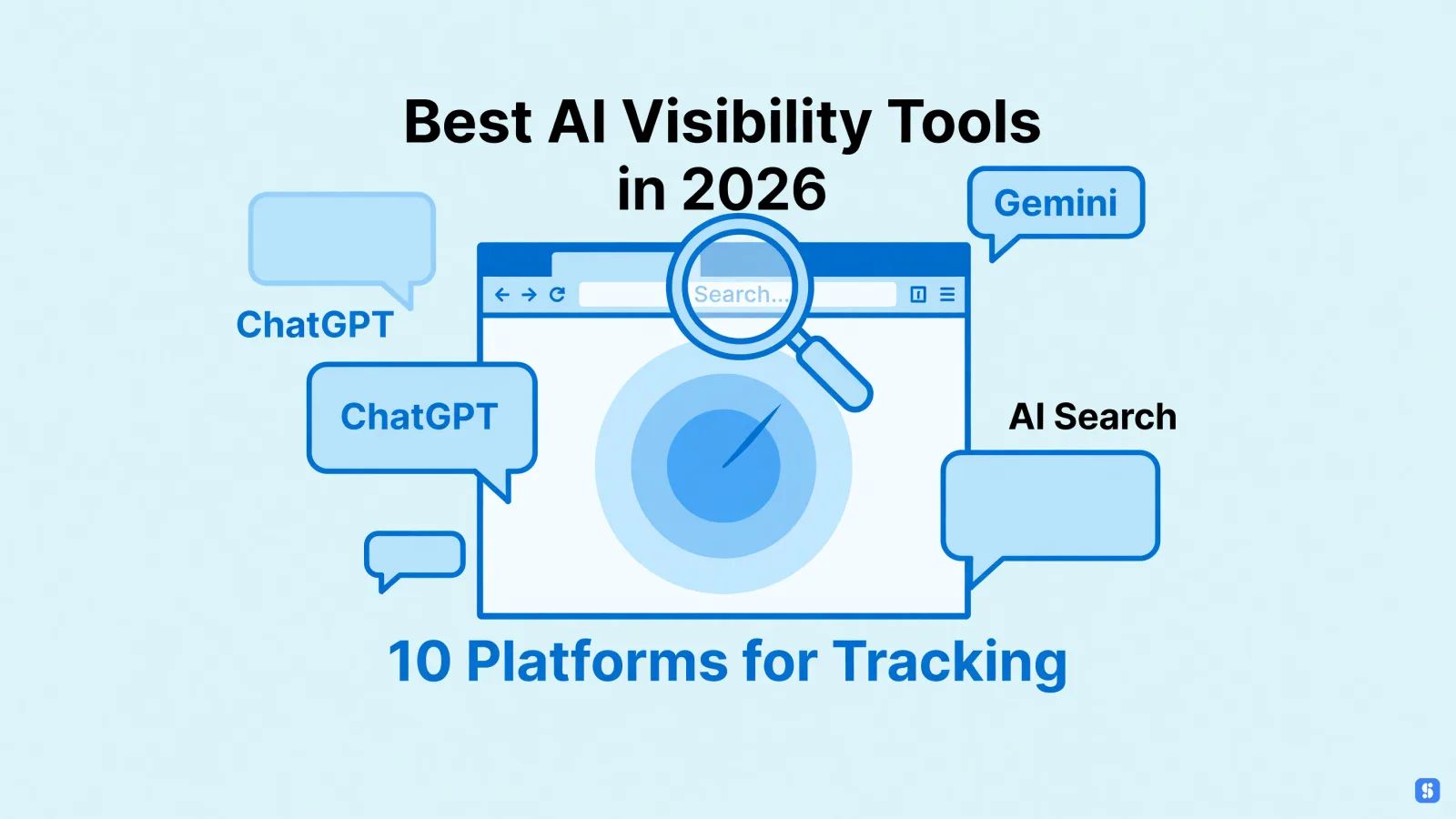
If you're hunting for the best AI visibility tools in 2026, the category has settled into something specific: platforms that track how often your brand shows up in AI-generated answers across ChatGPT, Gemini, Perplexity, and other answer engines. Unlike traditional rank tracking, they monitor brand mentions inside conversational responses, not just blue links. This guide covers Best AI Visibility Tools in 2026: 10 Platforms for Tracking ChatGPT, Gemini & AI Search in depth. Best keyword clustering tools and content research tools matter here too.
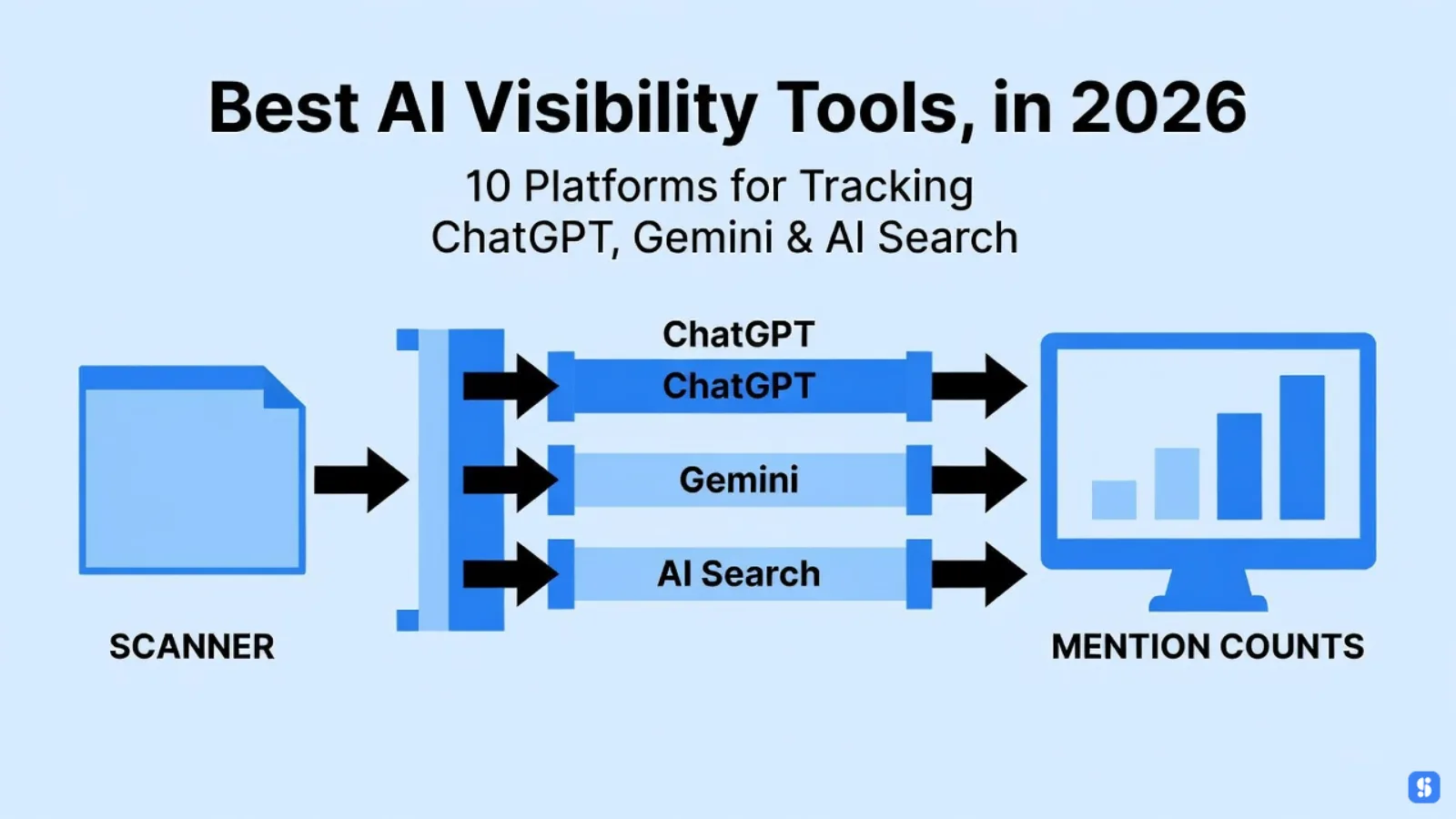
Most work by firing prompts at each AI engine, then scoring whether your brand appears, how prominently, and with what sentiment. The good ones layer on competitor benchmarking. Ahrefs Brand Radar and Frase have jumped into this space, alongside dedicated platforms like Profound, Peec AI, and Otterly.AI. (source: 10 Best AI Visibility Tools in 2026 (Compared + Free ...)
Why the old SEO playbook stopped being enough
Ranking on page one of Google no longer guarantees you're in the answer. When a user asks ChatGPT for the best project management software and gets three names, everything outside those names effectively doesn't exist. That's generative engine optimization (GEO), and it demands a different monitoring approach than classic SEO. (source: The 10 Best AI Visibility Tools)
Traditional rank tracking shows where you sit on Google. AI visibility tools show whether you're part of the conversation. They measure different realities, and treating them as interchangeable is the fastest way to get caught off guard. (source: The 8 best AI visibility tools in 2026)
Key Takeaways
The best AI visibility tools in 2026 for tracking ChatGPT, Gemini, and AI search solve one problem: showing where your brand appears in AI answers, not just Google rankings. Most tools miss that these are two different games. (source: 10 Best AI Visibility Tools for 2026)
- AI visibility is not traditional SEO. A #1 Google ranking does not guarantee a ChatGPT or Perplexity citation. Track them separately.
- Accuracy varies by engine. Some tools sample live queries, others simulate prompts. Ask which ChatGPT and Gemini models they test against before paying.
- Look for competitive benchmarking, not just your own score. Knowing you have 40 citations is useless until a competitor shows 400.
- Brand radar has catch unsolicited AI recommendations, not just replies to your own prompts.
- Check monthly. Weekly checks are overkill for stable brands; quarterly misses fast shifts.
- Free tools only scratch the surface. They sample limited queries and often exclude Gemini or DeepSeek. Budget for a paid visibility platform if you compete in SaaS or e-commerce.
How do AI visibility tools actually track brand mentions in LLM chatbots?
The short answer: they ask the chatbots, not spy on them. Any serious roundup of the best AI visibility tools in 2026 has to explain this, because it's the part vendors gloss over. Most platforms work by prompt injection: sending batches of preset questions to ChatGPT, Gemini, Perplexity, and similar engines, then parsing the generated answers for your brand mentions. It's a survey method, not a wiretap. Tools like Ahrefs Brand Radar and Frase run these queries repeatedly across model versions and regions to build a visibility score. Since no public API exposes who ChatGPT recommended, every visibility platform hits the same ceiling: results vary run to run. That's why two tools can show different scores for the same brand.The difference between AI visibility and traditional SEO
Traditional rank tracking checks where a page lands on a Google search results page. AI visibility tracks whether an LLM cites you within a generated answer, and whether that's a passing mention or a direct recommendation. Generative engine optimization (GEO) is the practice of improving those citations so you get pulled into more answers.What makes a good AI visibility tool? the criteria that actually matter
Most AI visibility tools run prompts, collect answers, and hand you a score. That baseline stopped being enough a while ago, especially when you're weighing the Best AI Visibility Tools in 2026: 10 Platforms for Tracking ChatGPT, Gemini & AI Search. Judge every platform on three things: coverage, actionability, and pricing.
Coverage: which engines and surfaces are monitored
Check whether a tool tracks ChatGPT, Gemini, and Perplexity separately, then ask what it actually parses from each answer. A citation is not a mention, and a mention is not a recommendation. Good visibility monitoring separates those categories and reports which prompt types your brand appears in, not just a blended number.
Actionability: does it tell you what to do next?
A falling score with no explanation just gives you a number to worry about. The tools worth paying for show which competitor displaced you, on which engine, and for which query. That turns a metric into a fix list.
Pricing models across the market
Pricing varies by seats, prompt volume, and audit frequency. Free tiers exist but typically cover one engine or a small prompt set, which understates real visibility. Budget for weekly checks rather than a one-off audit, because AI answers shift fast.
The 10 best AI visibility tools compared
The best AI visibility tools in 2026 are not interchangeable. Each tracks ChatGPT, Gemini, and Perplexity differently: what works for an enterprise GEO team will frustrate a two-person crew. Compare what they monitor, how often they check, and whether they connect to your traditional SEO work.
Profound: best for enterprise-grade GEO analytics
Profound is an enterprise-grade generative engine optimization (GEO) analytics tool. It runs large prompt sets across ChatGPT, Gemini, and Perplexity and breaks down which citations you win and lose. Expect real depth and pricing that matches.
Peec AI: best for real-time AI search monitoring
Peec AI focuses on real-time AI search monitoring, so you catch visibility drops the day they happen. Agencies managing multiple brands get the most value here.
Otterly.AI: best for automated share-of-voice tracking
Otterly.AI automates share-of-voice tracking at an approachable price. Scheduled scans show your brand presence against competitors across AI engines without a dedicated analyst.
Ahrefs Brand Radar: best for teams already in the Ahrefs ecosystem
Ahrefs Brand Radar is the pick for teams already in the Ahrefs ecosystem. It tracks brand mentions across AI search and connects them to your backlink and rank tracking data.
Semrush: best for combining classic SEO with AI visibility
Semrush positions its AI Visibility toolkit as the obvious add-on for existing users, pairing AI tracking with the rank tracking you already run.
Scrunch AI: best for creator and influencer citation tracking
Scrunch AI tracks creator and influencer citations specifically, showing which creators mention you and whether AI engines treat those mentions as citation sources.
Azuqe: best for unifying AI visibility with technical SEO fixes
Azuqe stands apart by unifying AI visibility tracking with technical SEO fixes. It monitors brand visibility across Google SERPs and AI answer engines like ChatGPT and Gemini, then rolls everything into one score. Continuous audits feed an automatic fix center, so issues that hurt citations get fixed without a developer.
Frase: best for teams who want to monitor AND fix in one workflow
Frase suits content teams that want to monitor and fix in one workflow. It surfaces the questions AI engines answer about your niche, then lets you act on them in the same tool.
Two more platforms worth your time
AthenaHQ is worth testing for fast, low-cost visibility reports. Ziptie covers basic ChatGPT and Perplexity monitoring when you do not need enterprise complexity.
Leading AI visibility optimization tools: how to choose the right one for your team
When you compare the best AI visibility tools in 2026, the right pick depends on team size and workflow maturity. A two-person startup tracking brand mentions in ChatGPT and Perplexity needs something different than an enterprise SEO team monitoring dozens of brands across answer engines.
Budget and team size considerations
For SMBs, prioritize a visibility platform with per-seat pricing, prompt-level tracking, and built-in sentiment analysis, so a neutral citation isn't mistaken for a negative one. Budget scales with tracked prompts and brands more than user count, so scope your keyword set before signing up.
Enterprise vs. SMB feature tradeoffs
Enterprise buyers should look for deeper integrations, like linking AI visibility data to Google rank tracking or pulling in Ahrefs Brand Radar for competitive citation gaps. The tradeoff is setup complexity and cost, so resist paying for governance and advanced reporting unless your team will actually use them.
Best practices for using AI visibility tracking tools effectively
Any of the Best AI Visibility Tools in 2026: 10 Platforms for Tracking ChatGPT, Gemini & AI Search can produce a score. What changes traffic is how you set up these monitoring tools, connect them, and schedule the work.
Building a prompt set that mirrors real customer questions
Don't track your brand name alone. Build prompts from customer language, not yours: "best CRM for small teams," "why is my SaaS churning." Mine support tickets, sales calls, and search console queries. Rotate 20 to 50 prompts per product line; ChatGPT and Perplexity answers shift weekly. Your terminology flatters you; raw customer phrasing shows where you actually lose or win mentions.
Integrating AI visibility data with your content workflow
Connect visibility monitoring to your editorial calendar: flag pages that lost citations, route them into content updates. If a competitor's answer displaces you on a high-intent prompt, that's a brief, not a report. Treat AI visibility like rank tracking: use it to decide what to fix next.
Setting a measurement cadence that is actually sustainable
Weekly beats daily; AI answers fluctuate, so daily runs burn budget on noise. Track weekly, review monthly trends, re-run the full prompt set quarterly. Consistency beats frequency.
Common mistakes teams make with AI visibility tools
Each of the best AI visibility tools in 2026, the 10 platforms for tracking ChatGPT, Gemini & AI Search, paints a different picture of your brand. That's not a flaw. It's the first thing most teams get wrong.
Treating the data as gospel
AI visibility tools run a finite set of prompts and report what comes back. Unlike rank tracking, where a Google position is fairly deterministic, these scores are estimates. Two tools can show wildly different numbers for the same brand. Treat any single score as directional and watch trends, not snapshots.
Ignoring the non-deterministic nature of LLMs
ChatGPT and Gemini don't return the same answer twice. Run the same prompt again and citations can change or vanish entirely. A visibility drop might be noise. Use rolling averages over a week or more before changing anything.
Buying the most expensive tool first
Price buys depth, not accuracy. Premium platforms add more prompts, more models, more reports. If your team isn't acting on the data weekly, start cheaper. An affordable tool you actually open beats an expensive one you visit once a month.
Frequently Asked questions about AI Visibility tools
What are AI visibility tools?
AI visibility tools track how often your brand appears in AI-generated answers across ChatGPT, Perplexity, Gemini, and other answer engines. Unlike traditional rank tracking, they monitor brand mentions and recommendations within conversational responses, not just blue-link positions. The Best AI Visibility Tools in 2026: 10 Platforms for Tracking ChatGPT, Gemini & AI Search all do this differently, which is why scores vary so much between platforms.
How much do AI visibility tools cost?
Most platforms price per seat, per month. Expect entry-level plans around $49 per seat monthly, with advanced tiers climbing to $149 or higher depending on audit frequency, content generation quotas, and the number of websites you track. Enterprise options with custom prompt volumes run significantly more.
Are there free AI visibility tools?
Yes, but they are limited. Most vendors offer free trials, typically five days, and some provide basic visibility checks on a single website. Free tiers rarely include continuous monitoring across multiple AI engines, so treat them as a taste test rather than a permanent solution.
What is the difference between AI visibility and traditional SEO?
Traditional SEO optimizes for Google's ranking algorithm. AI visibility focuses on generative engine optimization (GEO), which shapes how models like ChatGPT and Perplexity cite and recommend your brand. One tracks rankings; the other tracks citations. You need both, but they are not interchangeable metrics.
What's the best AI Visibility tool in 2026?
The best AI visibility tools in 2026 for tracking ChatGPT, Gemini, and Perplexity aren't the ones with the sleekest dashboards. They're the ones that connect brand mentions to actions you can take, whether that's a technical fix or a shift in your generative engine optimization (GEO) strategy.
Profound and Peec AI lead on real-time answer tracking. Ahrefs Brand Radar and Semrush are stronger if you already run their suites. Otterly.AI covers the most engines per dollar. Pick based on where your traffic comes from, not where the demo looks best.
The winner in 2026 is the tool that surfaces a citation drop before your traffic feels it. Track less often, act faster, and give AI engines something worth citing.
AI Brand Visibility tools: the Standout Platforms in 2026
If you're hunting for the best AI visibility tools in 2026, your shortlist should include Profound, Peec AI, Otterly.AI, Ahrefs Brand Radar, Semrush, Scrunch AI, AthenaHQ, Frase, and Azuqe.
Each one earns its place for a different reason. Profound is the pick for enterprise-grade accuracy. Peec AI leads the pack on answer share tracking. Otterly.AI makes recurring brand mention monitoring painless. Ahrefs Brand Radar ties AI visibility straight into your existing SEO data. Scrunch AI delivers fast audits, Frase handles the content side of generative engine optimization (GEO), and AthenaHQ keeps getting better for brand-level AI monitoring.
Traditional rank tracking only shows you Google positions. Tracking ChatGPT, Gemini, and Perplexity demands a visibility platform that measures citations and recommendations, not just keyword rankings. Pick the tool that fills your weakest gap, then re-run the comparison in six months. This market moves fast.
Most Effective AI Visibility tools with Generative Engine Optimization
The best AI visibility tools in 2026 connect AI answer tracking to real content optimization, not just visibility monitoring. For generative engine optimization (GEO), the practice of getting brands cited inside ChatGPT, Perplexity, and Gemini answers, you need a platform that ties brand mentions back to the prompts that triggered them.
For most teams, that means pairing AI rank tracking with a content layer like Frase to rework pages losing citations. Ahrefs Brand Radar links AI visibility to classic link and keyword data. AthenaHQ is worth testing when you want faster monitoring without enterprise prices.
Skip any tool that only hands you a score. The effective ones show what changed, which query caused it, and what to edit next. That loop is what actually improves your standing in AI search.
## Which AI Visibility Tool Should You Pick? The best AI visibility tools in 2026 all answer the same question: are ChatGPT, Gemini, and Perplexity recommending your brand or a competitor's? They just answer it differently. Some sample a fixed set of prompts daily, others run a broader query set weekly, and a few fold the results into a visibility platform that also covers classic SEO. That's why scores differ: different query pools, different answer engines sampled, different time windows. Start with what you actually need. Defending market share? Look for brand mentions and citation share against competitors. Creating content? Pick a tool that connects visibility gaps to generative engine optimization (GEO) work, like Azuqe, AI Audits, Keyword Research & AI Visibility Tracking. Three filters narrow the field:- Your existing stack. Ahrefs Brand Radar and Semrush's AI Toolkit make sense if you already live in those ecosystems and want AI data beside your rank tracking. Frase suits content teams; Profound and AthenaHQ target larger multi-brand orgs.
- Sampling cadence. Ask how often a tool queries ChatGPT, Perplexity, and other answer engines. Daily sampling catches shifts faster but costs more; weekly checks suit slower-moving brands.
- Budget. Monitoring-only plans start cheap, but costs climb fast as you add brands and query volume. Know your ceiling before comparing.
What do Cluster tools Actually do for your AI Visibility Score?
When you're weighing the best AI visibility tools in 2026, cluster tools are the feature most buyers rush past. A cluster tool groups the brand mentions an AI visibility platform detects into thematic buckets. Instead of seeing "35 mentions this week," you see which questions, intents, and buying stages those mentions came from.
Standard rank tracking answers "are we cited?" Cluster tools answer "in which conversations are we cited, and which clusters are growing?" Those are different workflows entirely.
Real cluster capability should give you three things:
- Query grouping: semantically related questions pulled together, not exact-match keywords. ChatGPT can phrase the same intent a dozen ways.
- Intent separation: discovery queries separated from comparison and purchase-intent queries, so a strong visibility score can't hide a weak commercial position.
- Cluster trends: which thematic groups gain mention volume across ChatGPT, Gemini, and Perplexity over time.
Where it breaks down in 2026: most tools claim clustering, then ship a glorified tag cloud. Ahrefs Brand Radar handles brand mentions well, but true cluster-level grouping is still the least mature layer of the category. If a tool can't show share of voice by cluster, you're paying for data, not insight.
Treat cluster grouping as a tiebreaker, not a headline feature. It won't matter on day one, but six months in it's the difference between a weekly report and a generative engine optimization (GEO) strategy.