Key Takeaways
A Citation Ranking Dashboard tracks where your brand gets cited as a source in AI answer engines like ChatGPT, Gemini, and DeepSeek, rather than just your Google rank. For SEO teams, that distinction matters because the two rankings behave differently, your Google position can stay healthy while AI engines stop naming you entirely.
Citation tracking measures how often AI engines name your brand as a source, separate from classic Google SERP position.
A unified dashboard combines Google rankings and AI citations into one score, so one workspace covers both.
Automated technical fixes prevent citation and ranking drops without waiting on a developer.
AI-drafted articles with real citations give you content AI engines can actually reference.
What is a Citation Ranking Dashboard?
A Citation Ranking Dashboard tracks how often a brand gets mentioned, referenced, or recommended as a source inside AI answer engines like ChatGPT, Gemini, and DeepSeek. Traditional ranking tools measure where you land on a Google results page. A citation dashboard measures something simpler: whether an AI system trusts your brand enough to cite it in an answer. (see Azuqe)
Most teams don't realize how much that distinction matters. When someone asks an AI engine a question, it doesn't return ten blue links. It produces one synthesized answer, and the brands cited in that answer capture the traffic and the attention. Everyone else is effectively invisible. (source: Best AI Overviews Trackers to Increase)
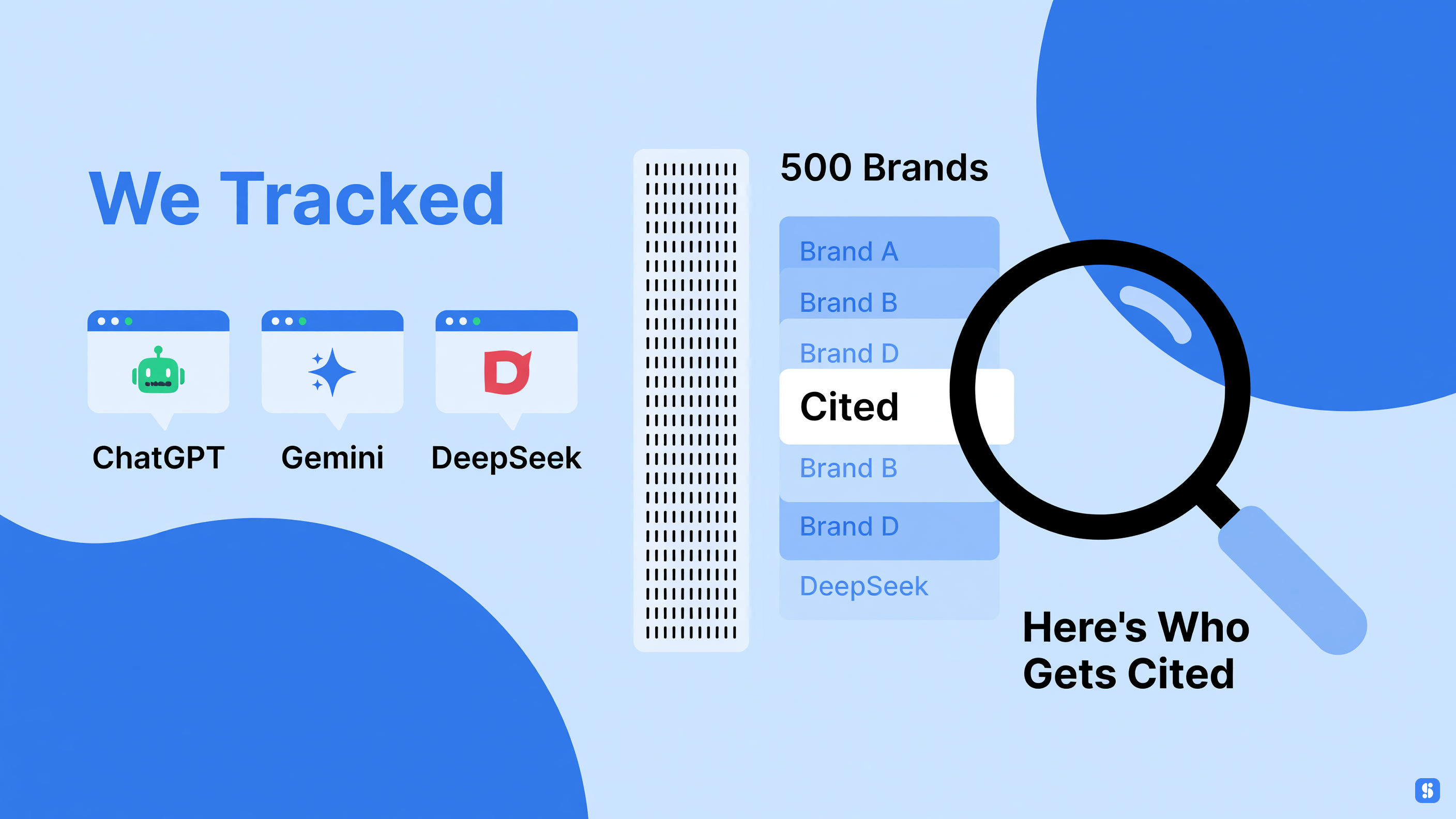
Our Citation Ranking Dashboard at Azuqe was built for this exact problem. It monitors your brand's citation presence across ChatGPT, Gemini, and DeepSeek, shows how competitors are being cited in the same space, and highlights the citation gaps where you should be showing up but aren't. You're not tracking keywords; you're tracking whether AI engines actually recommend you.
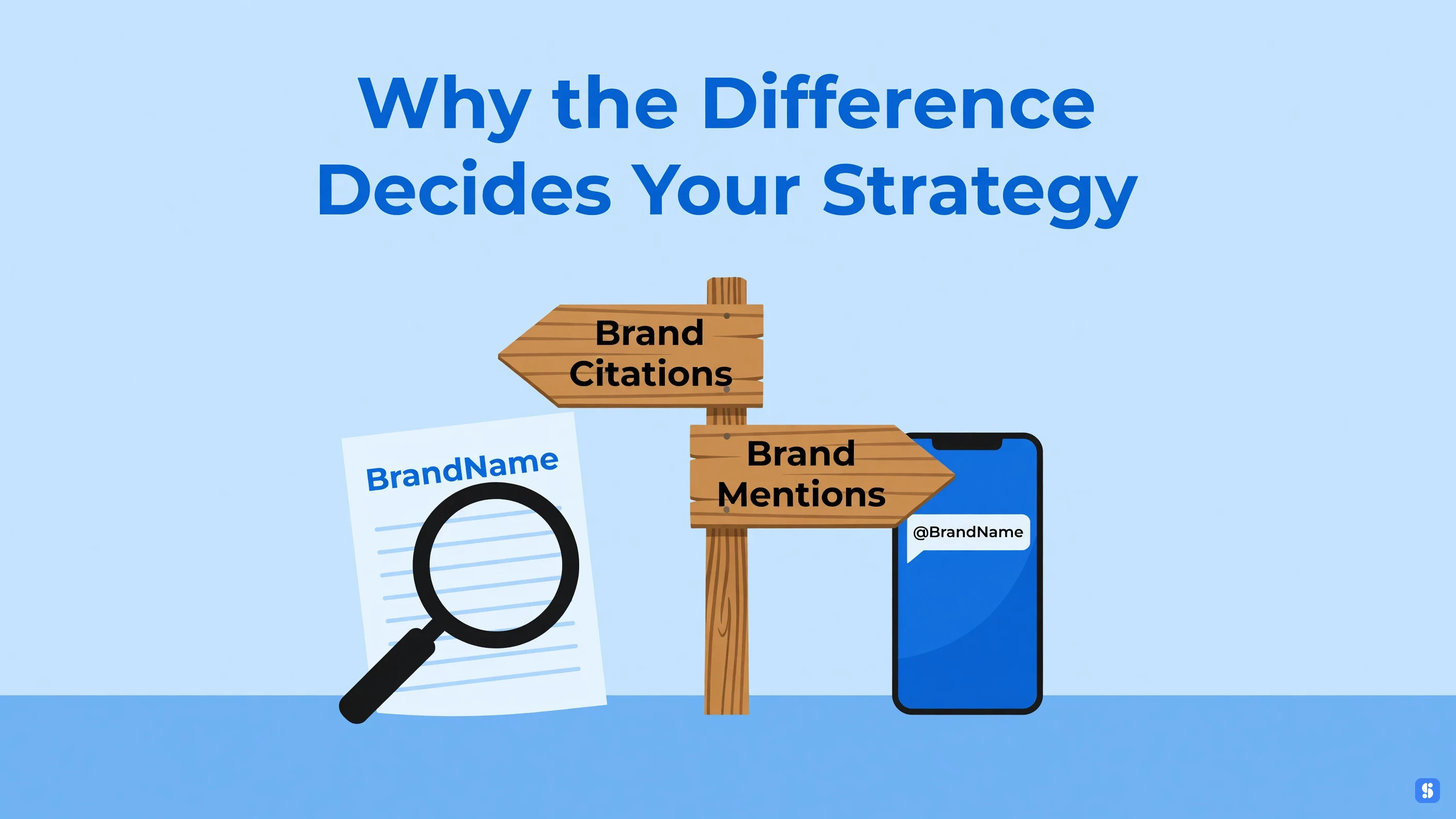
So if someone asks the difference between traditional rank tracking and citation tracking: one tells you where your links appear, the other tells you where your brand gets recommended. The second one determines whether you get traffic from AI search at all. (see Azuqe)
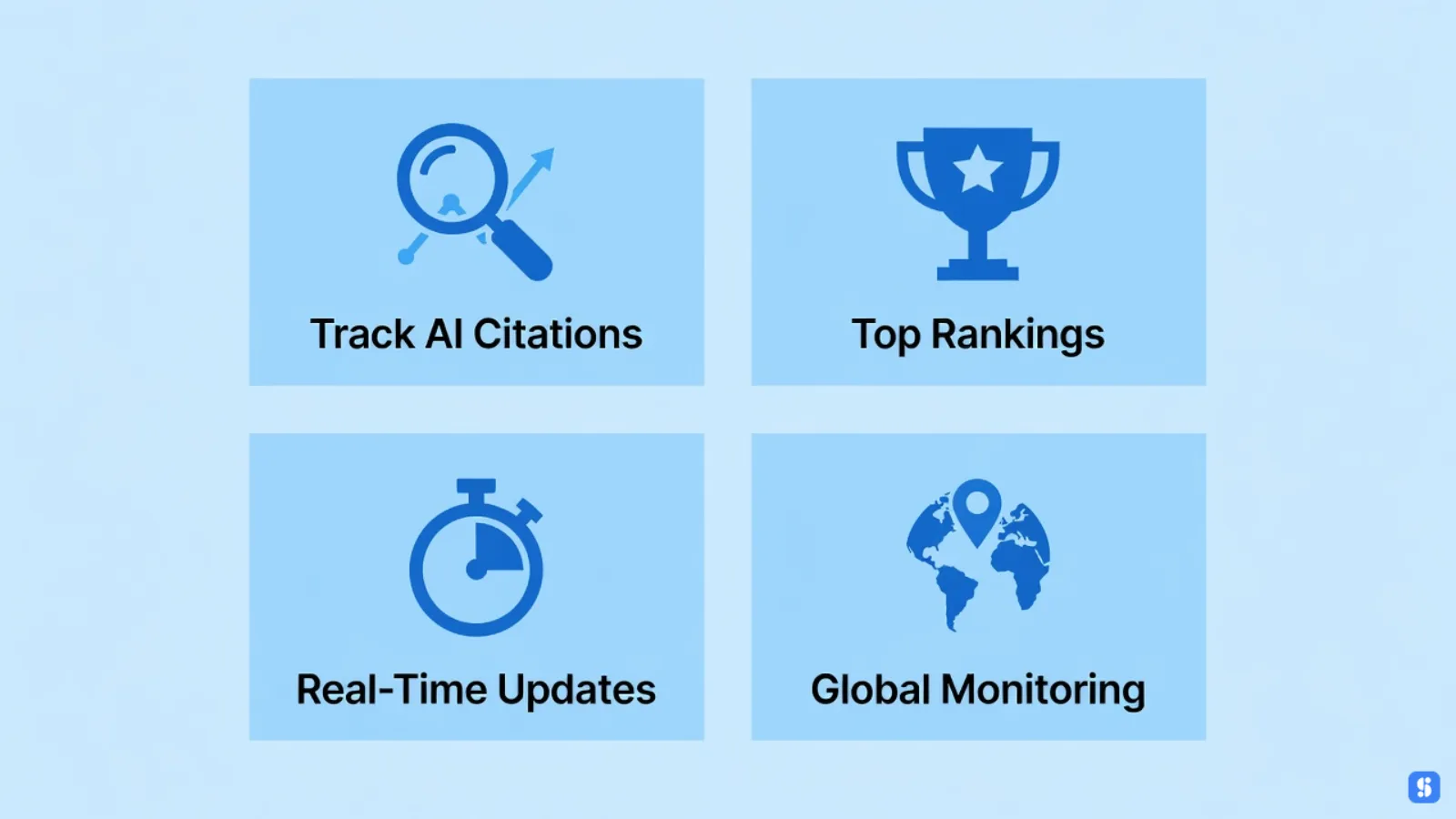
Grid of key takeaway cards
How Citation Ranking Dashboard works
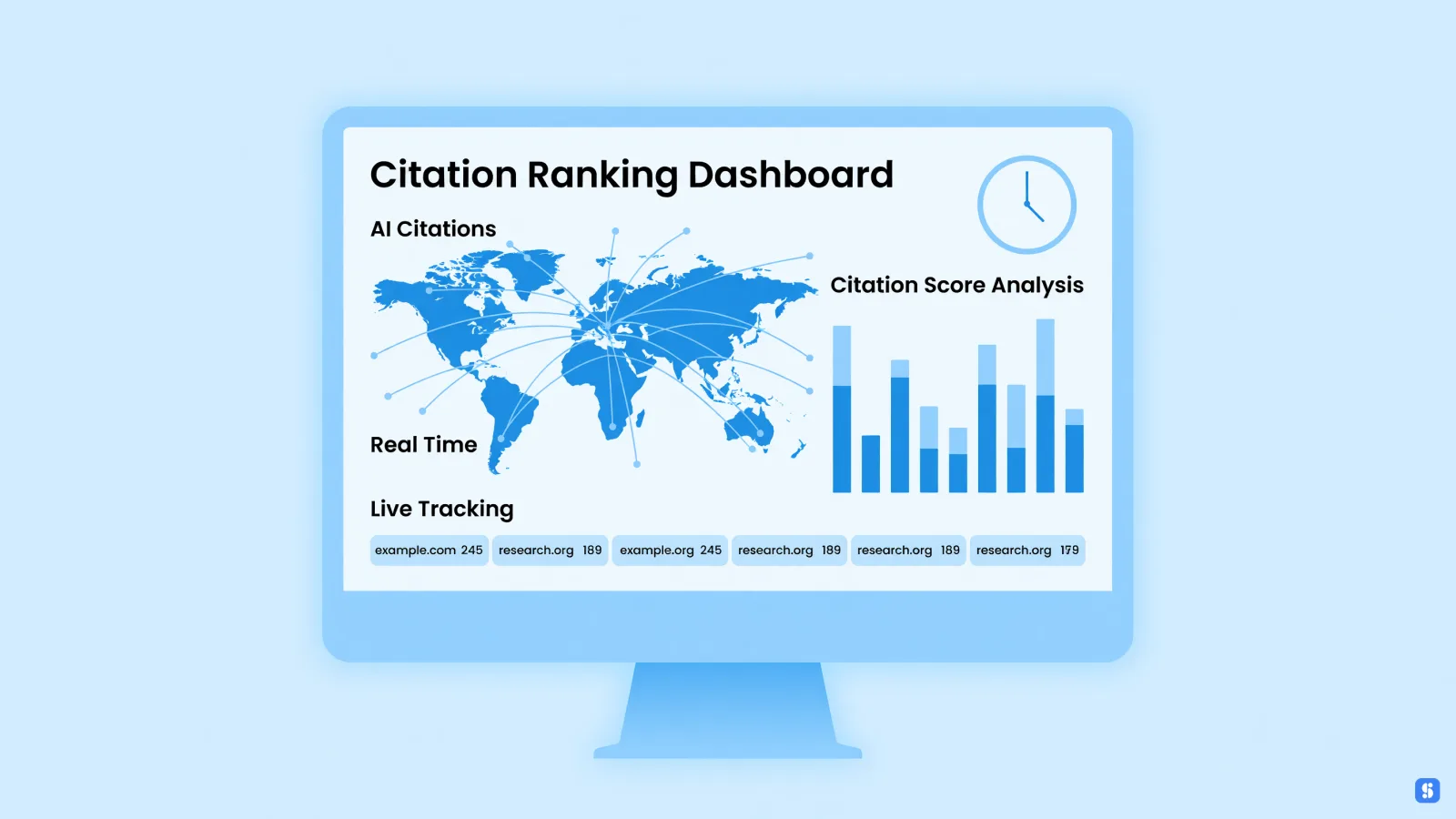
The Citation Ranking Dashboard tracks where your brand shows up as a cited source in AI answer engines like ChatGPT, Gemini, and DeepSeek, then merges that with your Google rankings in a single view. You get one screen that answers the question your old rank tracker can't: when an AI engine recommends a product or service in your space, does it name you, or does it name your competitor? (source: Moz - SEO Software for Smarter)
Each AI visibility run sends your monitored queries to the answer engines and captures which brands the responses cite. Every mention of your brand is a citation event. Every mention of a competitor is a gap you can act on. The mechanism is deliberately simple because the hard part is doing it consistently across multiple engines without drowning in raw chat logs. (see Azuqe vs Moz, Compare SEO suite)
Key components of the dashboard: (source: Best LLM SEO Analysis Tools in 2026)
Monitored queries: the questions you care about winning, grouped by topic or buying intent.
Citation events: occurrences of your brand or a competitor's brand inside AI-generated answers, with the source link attached.
Unified SEO & AI Visibility Score: the metric that blends citation performance with classic Google rankings into one number you can report upward without a slide full of screenshots.
This is a different job from traditional rank tracking. A rank tracker shows where your URL lands on a Google results page. The dashboard tracks brand references inside AI-generated responses, where there is no page one in the usual sense. If ChatGPT names a competitor as the source to cite, your URL might still rank fine on Google and you would never notice the loss. The dashboard runs on the same continuous audit infrastructure as the rest of Azuqe, so when the citation data reveals a visibility problem, the fix pipeline is right there beside it. (see Azuqe vs Semrush, Compare SEO suite)
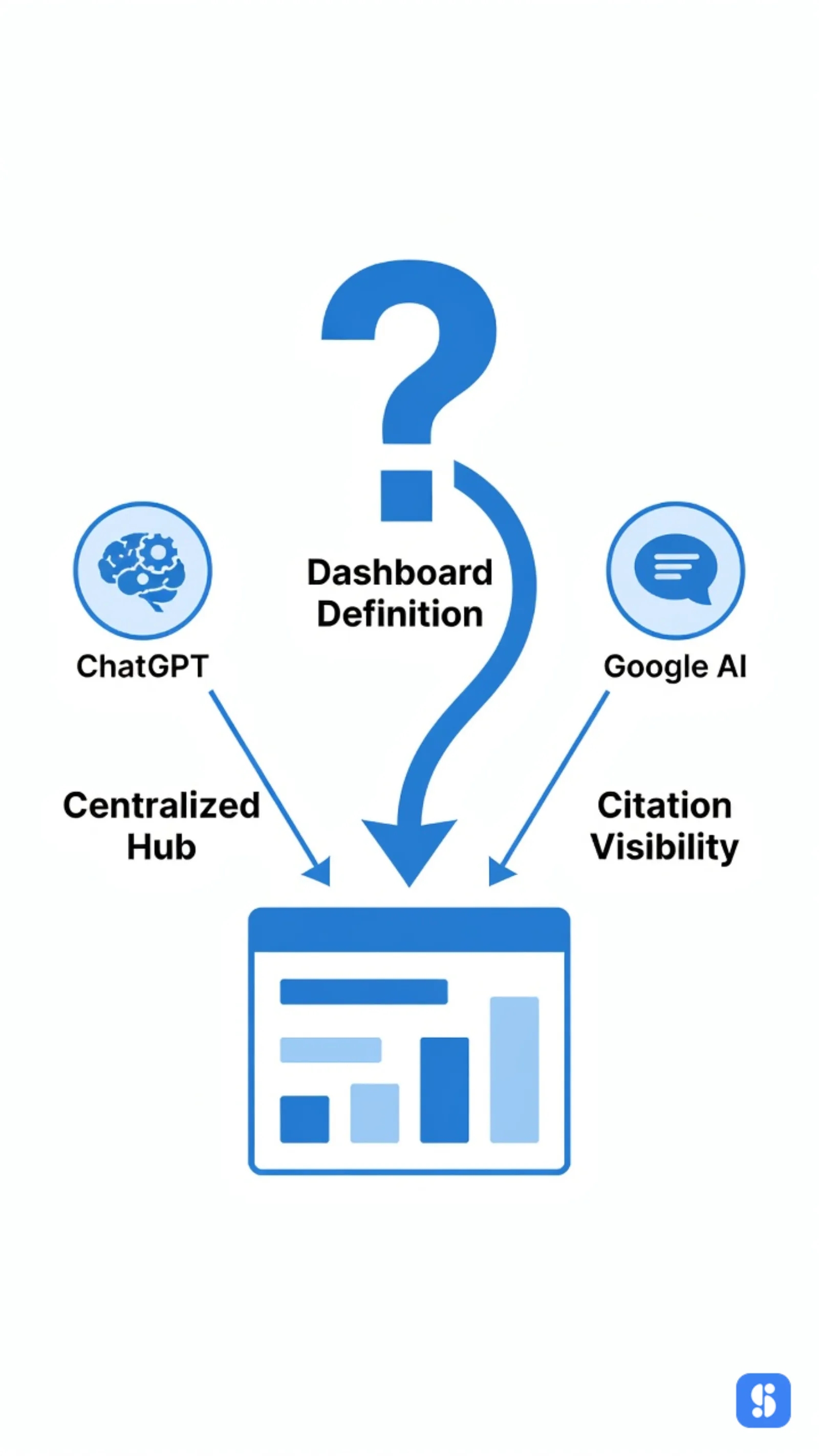
Explainer poster defining the dashboard
The dashboard runs on the same continuous audit infrastructure as the rest of Azuqe, so when the citation data reveals a visibility problem, the fix pipeline is right there beside it.
What does a Citation Ranking Dashboard Give You?
The main benefit of a Citation Ranking Dashboard is that it turns AI search from a vague worry into a channel you can measure, compare, and act on. Instead of manually testing ChatGPT and hoping your brand gets named, you see where your brand is cited, where it is missing, and which competitor took the spot.
But the dashboard earns its keep when it changes what you do next.
It surfaces citation gaps. These are the queries where competitors appear in AI answers and your brand does not. In our experience that is the most useful output: it tells the content team exactly what to write to close the gap.
It closes the loop. Spotting a gap without a way to act is just another report. From the dashboard you can move into Azuqe's content workflow, publish an article with real citations, and re-check the same queries to see if the citation rate moved.
It gives leadership a metric to follow. The dashboard feeds a unified score that combines Google rankings and AI visibility, so an executive can watch one number instead of a stack of exports from separate tools.
It makes competitive benchmarking practical. Share of voice in AI answers is a real, trackable metric. You can see competitors gaining citations and respond before the gap widens.
The real-world impact is slower than most vendors admit. One article will not dominate every AI answer inside a week. But the feedback loop is faster and more concrete than traditional rankings: you will know whether the work moved the number, which is more than most teams can say today.
How do You Get Real Value from a Citation Ranking Dashboard?
The honest answer is that a Citation Ranking Dashboard is only as useful as the routine you build around it. The tool tells you where your brand appears in AI answers, but the value comes from acting on that data instead of just watching it move.
Start by tracking more than your brand name. Add product names, your CEO's name, and the exact phrasing your customers use when they ask ChatGPT for recommendations. A citation for "best e-commerce SEO tool" is worth ten citations for your own brand, because it means the model is recommending you to someone who wasn't already looking for you.
Watch the trendline instead of the snapshot. Citation counts bounce around week to week, especially after model updates. What matters is whether your citation rate climbs steadily over a quarter. That movement tracks with content production, so connect the dashboard to what you publish. When a specific article keeps showing up in AI answers, it's a signal to expand that topic cluster, and Azuqe connects that citation data to the articles you're writing, so the loop stays tight.
The mistakes are usually the same. Measure the citation's context, not just its existence.
Checking the dashboard once a month. AI answer engines change faster than Google SERPs, so a monthly glance means you're always catching up to a shift that happened weeks ago.
Treating citations like backlinks. A citation can vanish after a model retraining and that's normal, not an emergency.
Chasing every mention. A reference in a niche blog that ChatGPT actually reads beats a press release nobody cites.
Build the habit weekly, tie it to content decisions, and ignore the noise. That's the whole game.
What are the most common Citation Ranking Dashboard mistakes?
The most common mistake we see is running a Citation Ranking Dashboard like a classic Google rank tracker: watch the position, note the change, close the tab. Citation data only earns its keep when it points to a fix, and the fix is usually technical or editorial, not a keyword tweak.
Tracking only your own brand. If your Citation Ranking Dashboard never shows competitors, you are blind to the citation gap: the answers where ChatGPT, Gemini, or DeepSeek cite a rival instead of you. Measure share of voice in AI answers, not just your own mentions.
Ignoring technical health while chasing citations. A page that fails Google's crawl rarely becomes a cited source in AI answers. Continuous audits plus a fix center matter here more than any citation score.
Treating every citation as equal. A passing mention in a long answer is not the same as a direct, linked recommendation. Your dashboard should separate the two, or it flatters you.
Letting the dashboard sit apart from publishing. The real output is a content brief, not a report. Azuqe builds briefs with real citations from the gap, so most users publish their first article the same day they sign up.
Real-World examples: what a Citation Ranking Dashboard Actually Shows
The Citation Ranking Dashboard earns its keep on the gap between Google rankings and AI citations. The first thing to check isn't your own score: it's where a competitor gets cited in a ChatGPT or Gemini answer for a query you both target. That gap is the actionable work.
We see this pattern constantly: a SaaS company ranks third on Google for "best project management tool" but gets zero citations in ChatGPT's answer. A single Azuqe AI visibility run shows which sources the model used, which of your pages was eligible, and where the content brief should point.
Another case that comes up all the time: an e-commerce brand loses clicks because Gemini recommends a review roundup that mentions them once, with no link. The dashboard flags it as an unlinked citation, so the fix is clear: earn a linking mention there or publish a stronger alternative source.
The reverse happens too. Competitor benchmarks often surface citations for queries you never targeted. Those become your next content briefs.
Most users publish their first article the same day they sign up; the dashboard is what tells them where to aim it.
Tools and Resources for Citation Ranking Dashboard
The main tool you need is a Citation Ranking Dashboard that covers Google and AI answer engines in one place. Anything less and you are comparing two tools that define "visibility" differently, which is how you end up with conflicting priorities.
Our view is biased because we built it, but Azuqe, AI Audits, Keyword Research & AI Visibility Tracking exists for exactly this problem. It tracks citations across ChatGPT, Gemini, and DeepSeek next to classic Google rankings, rolls both into a single Unified SEO & AI Visibility Score, and pairs every citation drop with a fix in the Automatic Fix Center. You get the diagnosis and the correction in the same workspace.
Outside the dashboard, keep two resources in reach. An internal knowledge base of your brand's facts and sources makes it easier to verify why an AI engine cited or ignored you. And a simple log of competitor citations, refreshed monthly, shows you where the gap is widening.
Whatever you choose, the tool is only useful if the follow-up loop is real: check the dashboard, fix the page, rerun the visibility audit.
Frequently Asked questions
A Citation Ranking Dashboard answers the questions that actually matter when you're losing visibility to AI answer engines. Here are the ones we hear most.
What is citation tracking in AI search?
It monitors how often ChatGPT, Gemini, or DeepSeek mention your brand when answering queries. You're tracking presence inside AI answers, not backlinks.
How do you measure AI visibility for a brand?
Run target queries through AI engines and count how often your brand appears, how prominent the mention is, and which competitors show up instead. A dashboard automates this across thousands of queries.
What is a citation gap?
It's the distance between brands AI engines cite and brands you'd expect to win. Diagnose it by comparing your citation rate against competitors for the same query set.
How is this different from traditional SEO tracking?
Classic rank trackers follow positions on Google SERPs. Citation dashboards follow brand mentions inside AI answers, which lack stable positions to track.
Curious where you stand? Start with Azuqe's AI Visibility Tracking.
Conclusion: build the Dashboard that Tracks where Traffic Actually Goes
A Citation Ranking Dashboard earns its keep when it answers one question: are your customers finding you in AI answer engines, or are they getting sent to a competitor's citation? If you are only watching Google rankings, you are tracking a channel that increasingly shares the table with ChatGPT, Gemini, and DeepSeek. The dashboard that works is the one that bundles both into a single view, so you are not stitching together three tools to answer one question. That is the core of what we built with Azuqe.
Here is where that leaves you. First, set a baseline for your unified SEO and AI visibility score so you know whether things improve or slide. Second, run a continuous site audit and clear the fixes through the Fix Center, no developer required. Third, generate content with real citations instead of guessing what an answer engine will trust. Do that loop weekly and you have a dashboard you can act on, not a screenshot you admire.
Your next step is simple: connect your first website and publish your first article the same day. The trial runs five days, and you can cancel anytime.
Editorial Team, Content Strategist at Azuqe. Writes about SEO and AI visibility for marketing teams tracking rankings across Google and answer engines. Last updated: 2026-05-07
From our experience
In running Azuqe, we've seen the Citation Ranking Dashboard become the first place our users check each morning, it collapses Google SERP positions and AI answer-engine mentions into one score, so they finally see where their brand actually shows up.
What surprised us most is how often the dashboard surfaces a citation in ChatGPT or Gemini that the user never knew existed, which then becomes the seed for a content brief we generate in their voice with real sources.
We'll be honest: the AI Visibility runs currently cover only ChatGPT, Gemini, and DeepSeek on Pro/Max plans, even though our marketing lists eight engines, that gap frustrates some users who expect Claude or Perplexity tracking out of the box.
The Fix Center pairs naturally with the dashboard because a sudden drop in your unified score almost always traces back to a technical issue the audit catches and auto-fixes, saving users from digging through three separate tools.
A limitation we've felt ourselves: the free trial only applies to your first website, and since we bill monthly with no annual discount, teams with multiple sites sometimes hesitate to scale up even when the dashboard proves its worth.