What Counts as an AI Agent in Search Right Now
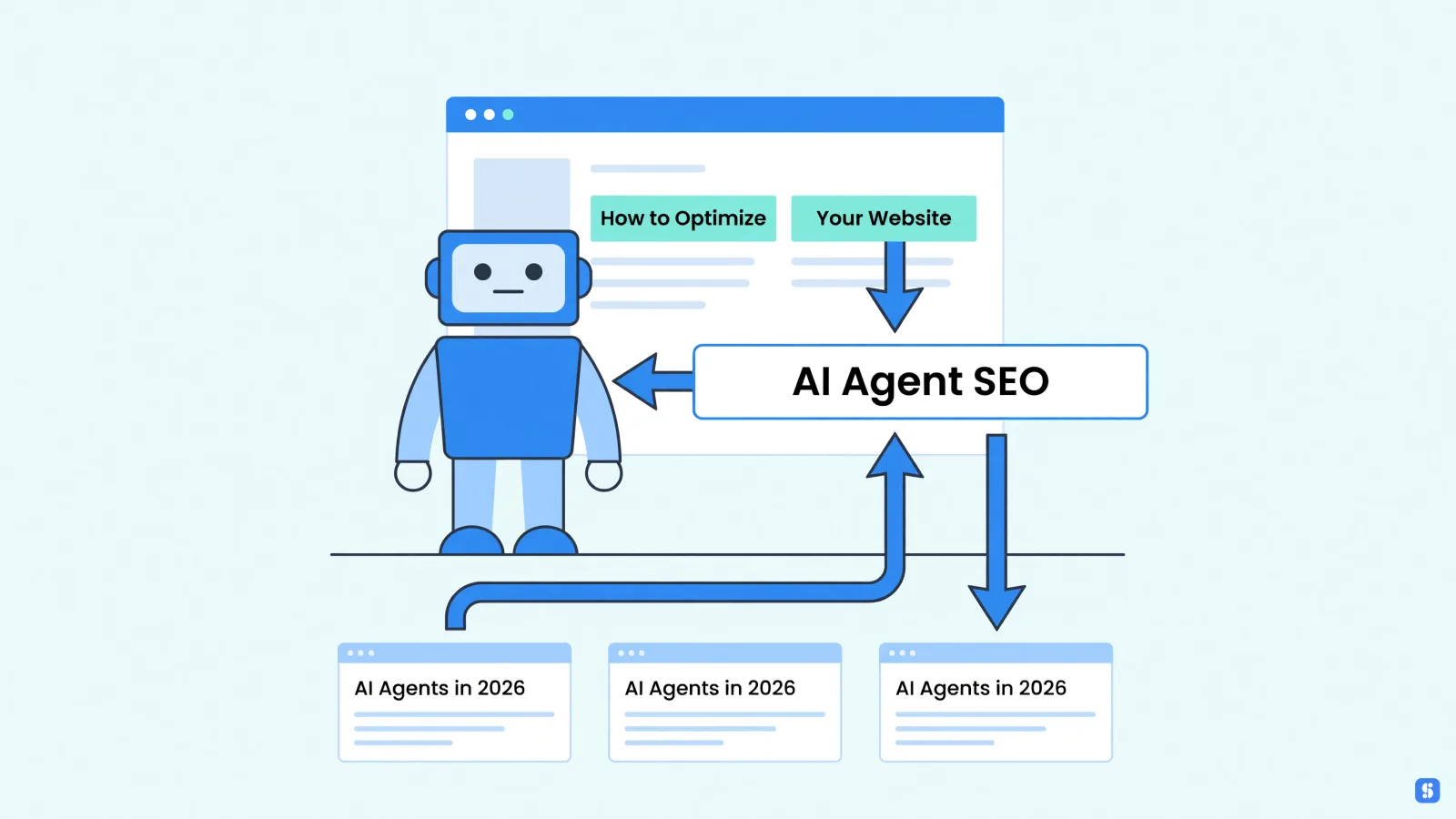
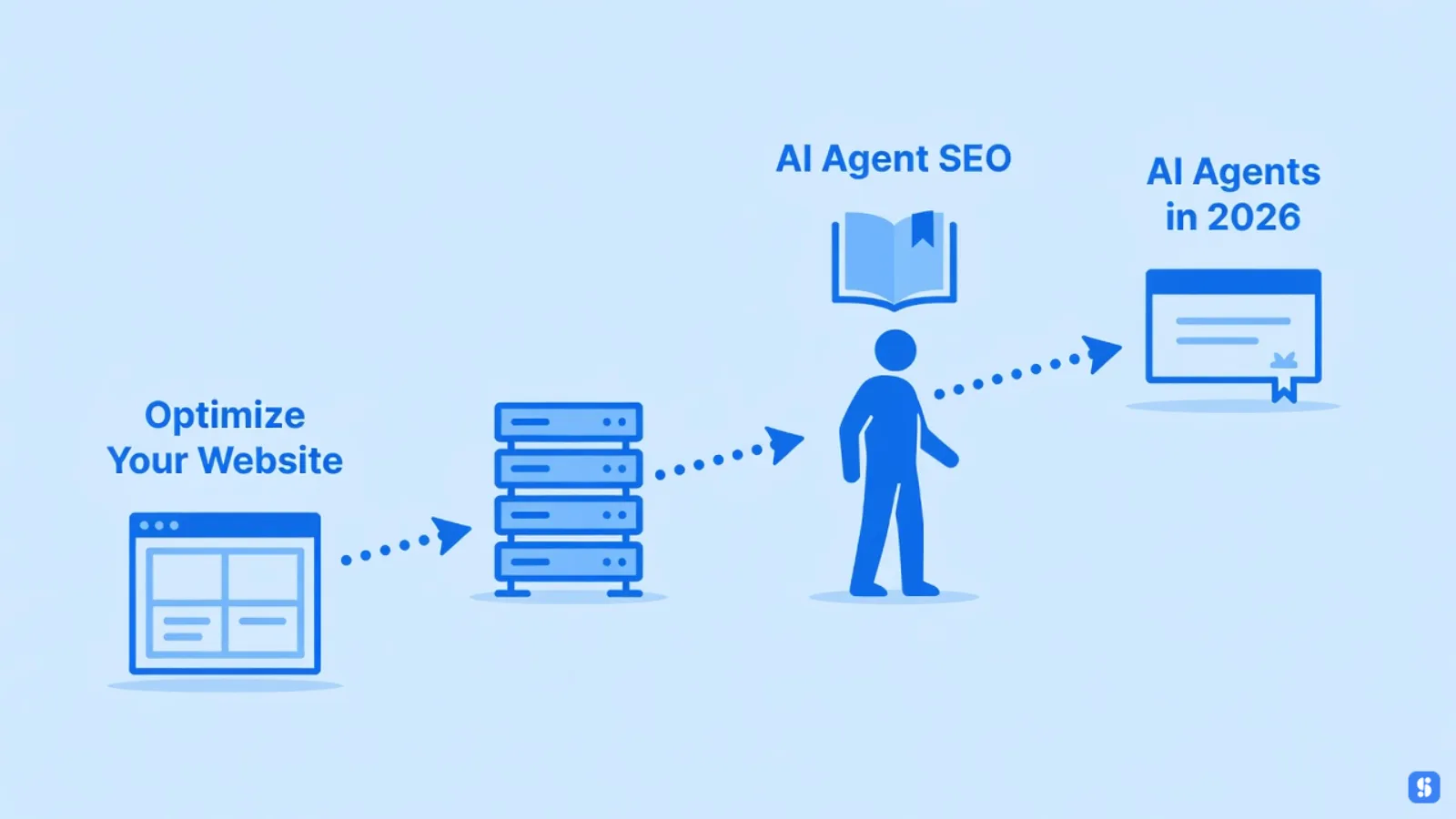
If you're searching for AI Agent SEO: How to Fine-tune Your Website for AI Agents in 2026, you already know the old playbook is breaking. The question is what replaces it. Most of it comes back to AI Agent SEO: How to Tweak Your Website for AI Agents in 2026. In practice, AI Agent SEO: How to Optimize Your Website for AI Agents in 2026 is where this begins.
An AI agent, in the search context, is any system that reads your content and answers a user's question without sending them to your site. That includes answer engines like ChatGPT, Gemini, and DeepSeek, plus the agentic search tools layered on top. These agents don't browse the web like a human. They pull from indexed pages, structured data, and citation patterns, then synthesize an answer. (source: Improve Your Brand Marketing for AI-Powered Search)
Why the 2026 Shift is about Citations, not Clicks
The metric that matters is no longer clicks. It's being named as a source inside an AI-generated answer. When an agent cites your page, you earn visibility even if the user never visits. When it doesn't, you're invisible, regardless of where you rank in classic Google results. That's the whole game now. (source: SEO AI Visibility | Lead the Search &)
So the real work of AI agent SEO is making your content easy for an agent to trust, extract, and attribute: clear answers, named entities, and structured formatting a machine can parse without guessing. Less keyword density, more being the obvious source for a specific claim. (source: AI SEO & GEO: Boost Your Brand's AI Visibility)
Key Takeaways
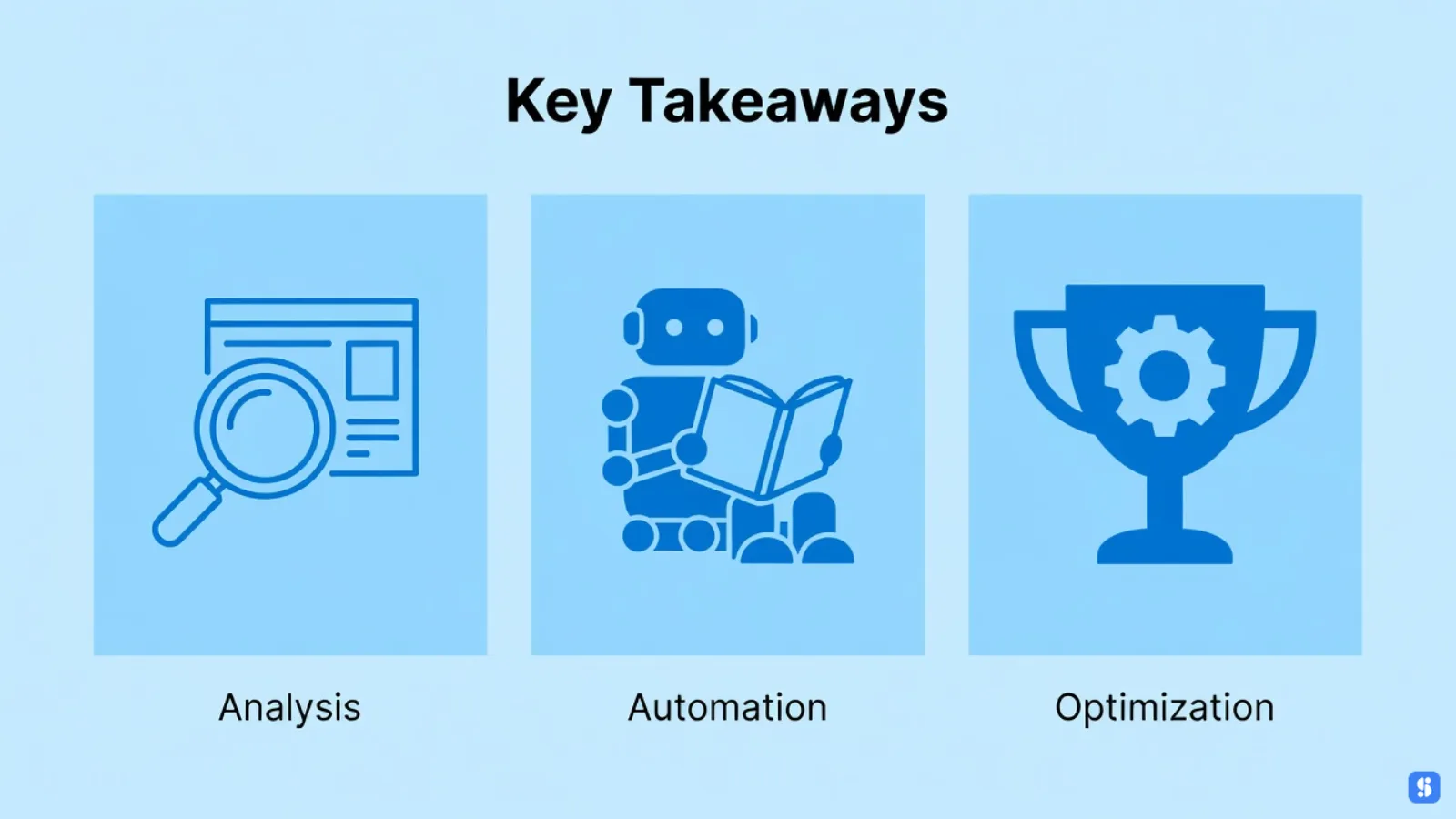
AI Agent SEO: How to Make better Your Website for AI Agents in 2026 comes down to one honest truth: the fundamentals carry most of the weight. Agents mostly read what Google reads, so clear structure beats new meta tags. I've watched teams chase schema while their robots.txt blocked half the site. (source: How to fine-tune your website)
- Traditional SEO is the foundation. Crawlability, clean HTML, and fast pages keep your site legible to both Google and AI agents.
- Format for extraction. Direct answers, summary blocks, and entity-rich detail let a language model lift your points without rewriting them.
- Structured data is a signal, not a savior. Schema helps agents parse entities but won't rescue thin content.
- Citations come from trust. Agents favor consistent, quotable sources that get referenced repeatedly, so earn it over time.
- Treat AI visibility as an iterative optimization loop. Measure where your brand appears in AI answers, adapt, repeat.
Skip the hype cycle. If your content answers real questions and earns references, AI agent SEO is mostly finishing the workflow you already run. The hard part is doing it every week.
How do AI Agents Actually Decide what to Cite?
Most AI Agent SEO advice treats citation as a ranking problem. But optimizing your website for AI agents in 2026 means understanding what actually happens between a query and a cited brand.
AI agents do not rank pages the way Google does. They run a pipeline: retrieval, ranking, and answer generation.
Retrieval, ranking, and the answer generation layer
Retrieval pulls candidate sources from an index or live search. A page that is poorly structured, blocked, or hard to parse never enters this pool. That's why technical SEO still matters.
Ranking scores candidates for relevance, authority, and freshness. But the agent is not building a results page. It's gathering the few sources that will make its answer defensible.
Answer generation is where citations get decided. The model writes the response and picks which sources to name. Being retrieved and ranked well does not guarantee a visible mention.
Why your brand mention rate matters more than your domain authority
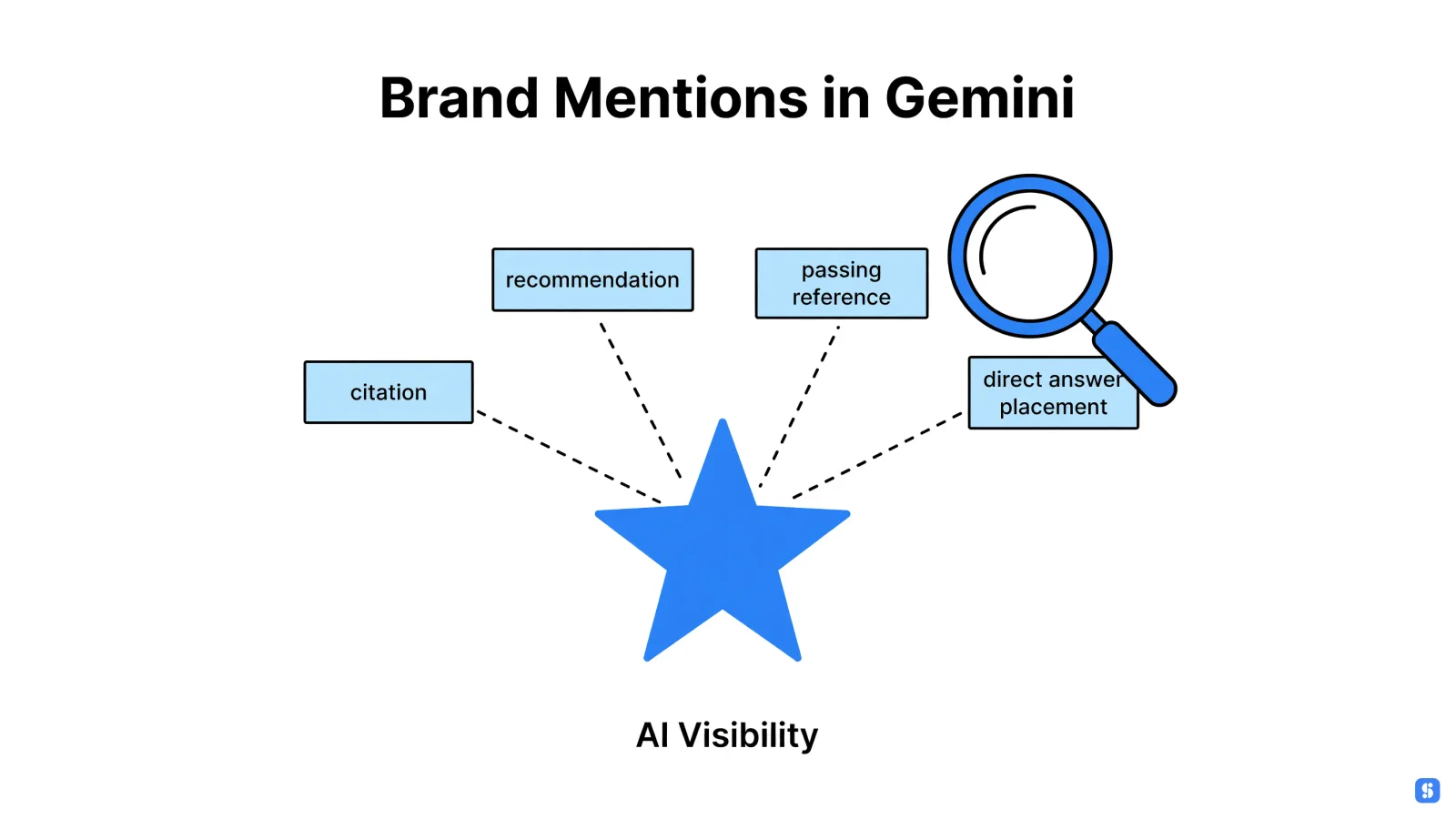
Domain authority predicts visibility on a list of ten links. AI answers leave room for a handful of named references, so brand mention rate, how often your brand appears as a cited source, is the metric that actually drives AI visibility.
Brands that keep getting pulled into relevant contexts win at generation time. A focused site with strong topical density can out-cite a bigger brand whose authority only surfaces in generic queries. I've seen a small SaaS blog beat a Fortune 500's help center on citation rate because it answered the exact question.
What Technical SEO Factors Matter Most for AI Visibility?
The technical factors that keep you visible in Google are the same ones AI agents rely on, but the priority order shifts. When you improve your website for AI agents in 2026, tackle crawlability first, structured data second, site speed third. An agent cannot cite a page it cannot access, and most AI visibility problems start there, not with missing schema.
Crawlability and indexation basics that still apply
AI answer engines pull from the indexed web, so robots.txt, XML sitemaps, and internal linking still decide what agents can see. The failures I actually run into: key pages blocked by robots.txt, crawl budget wasted on thin or duplicate URLs, and money pages left as orphans with no internal links. Fix those before touching anything else. A sitemap entry does not help when the crawl path to the page is broken.
Structured data that helps agents parse your content
JSON-LD markup gives agents explicit entities, relationships, and facts instead of leaving them to infer everything from prose. Article, Product, FAQPage, and Organization schema cover most use cases. The honest caveat: agents parse plain HTML reasonably well, and structured data is a clarity signal, not a guarantee. If you must choose between writing schema and fixing crawl issues, fix crawl issues. I've skipped schema on a dozen pages and still got cited because the text was clear.
Site speed and Core Web Vitals as a trust signal
Core Web Vitals (LCP, INP, CLS) act as a trust and usability signal, and crawlers visit slow pages less often. The practical fixes are unglamorous: compress images, trim third-party scripts, and get INP under control, since interaction delays are the most common real-device failure. You don't need a perfect score. You need to stop being the slowest page on the topic.
How should You Structure Content so AI Agents Quote You?
For AI Agent SEO in 2026, the fastest way to improve your website for AI agents is to write every section as a standalone answer. Agents extract passages, not entire posts. If a section only makes sense after four paragraphs of build-up, it won't be quoted.
The shift is from "blog post" to "self-contained block of truth."
Write self-contained answers, not blog posts
Open each section with the direct answer, then add the context. One idea per paragraph. If a sentence relies on the previous paragraphs to make sense, an agent will drop it and your point disappears with it.
Use headings and lists agents can parse
Make headings the exact question someone asks, or the exact claim you're making. Clever hooks are wasted here, because agents scan for semantic structure, not wordplay. Mark up steps, conditions, and examples as real lists so the shape of your answer survives extraction.
Let citations show your work
Link to primary sources for anything you claim. Agents check citations to decide who to trust and who to quote, so make that job easy. Put exact dates, numbers, and named entities in plain text near the claim they support; those details survive extraction far better than vague generalizations.
What is AI Visibility Tracking and why does It Matter?
AI visibility tracking measures how often, and in what context, your brand shows up in AI-generated answers. For any real AI Agent SEO: How to Make better Your Website for AI Agents in 2026 effort, it's the metric that tells you whether your optimization work is actually paying off or just burning time.
Moving beyond Google rank tracking
Google rank tracking shows where you land in a list of blue links. That list is no longer the whole search experience. ChatGPT, Gemini, and DeepSeek synthesize answers and cite the sources behind them, and their picks don't match page-one rankings. You can hold the #1 spot in Google and still be completely absent from AI answers.
Measuring your citation rate across ChatGPT, Gemini, and DeepSeek
Your citation rate is the share of AI-generated answers to relevant queries that name you as a source. Pick a fixed set of questions your buyers actually ask, run them across the AI engines, and note whether you're cited, paraphrased, or ignored. Do this on a weekly cadence and the trend tells you more than any single screenshot.
The goal isn't to obsess over one answer. It's to catch the direction early, while you can still correct it.
How do Continuous Site Audits and Automated Fixes Help?
For AI Agent SEO in 2026, the honest answer is that most teams audit too rarely for the format to matter. A quarterly crawl catches problems that have been costing you AI citations for ninety days.
Why quarterly audits are too slow for AI-era SEO
AI answer engines refresh their knowledge base on different cycles than Google's index, and they reward sites that stay technically clean between crawls. A broken schema tag or a blocked page that survives for a quarter is a quarter of missing AI answers.
Continuous audits flip the order: you find the regression the day it ships, not the day the report is due.
What an automatic fix center can and cannot do
An automatic fix center is only useful if you respect its limits. It can resolve deterministic problems: canonical conflicts, missing meta tags, invalid structured data, internal links pointing at redirects. These are mechanical, and machines are better at them than humans.
What it cannot do is decide whether your content deserves to be cited. Technical cleanliness gets your pages read; it does not make your content more useful than a competitor's. That judgment, the positioning and the substance, still sits with you.
Best practices for AI Agent SEO in 2026
The practical version of AI Agent SEO: How to Make better Your Website for AI Agents in 2026 comes down to one loop: publish answer-shaped content, keep the technical base clean, and measure AI visibility as its own metric. Most teams overthink strategy and skip the boring parts that actually move citations.
A practical checklist for your next content sprint
- Answer the target question in the first 100 words, then expand. AI engines lift short, self-contained answers.
- Define key terms inline. Generative engine optimization (GEO) is the practice of making content citeable by AI answer engines, and a one-sentence definition beats assumed context.
- Keep HTML clean: one H1, logical heading order, descriptive anchor text, and structured data for FAQ and HowTo so entities are explicit.
- Link out to sources for claims. Verifiability is a ranking signal for answer engines.
- Write quotable standalone sentences. If someone pastes a line from your post into a prompt, it should make sense alone.
- Refresh dated posts before starting new ones. Stale advice gets dropped from AI answers quickly.
What to measure and how often
Track two things: brand citation rate in AI answers and referral traffic from AI engines. Check citations weekly by running your core queries in ChatGPT and Gemini. Review referral sessions monthly in your analytics. Compare AI visibility against Google rankings quarterly. Sudden divergence usually follows a site change or a competitor content push, and catching it early is the whole point of measuring at all.
Common mistakes that Kill your AI Visibility
Most AI Agent SEO advice, how to improve your website for AI agents in 2026, repeats three mistakes. None of them are technical, which is why standard audits never catch them.
Over-optimizing for one AI engine
ChatGPT dominates, so teams tune everything for it: phrasing, answer formats, citation patterns. That's a fragile target. Gemini, DeepSeek, Claude and Perplexity retrieve differently, and none of them publish stable criteria. Improve for machine readability generally. Don't treat each engine as a separate optimization problem. Content that parses for one parses for most.
Ignoring the difference between a click and a citation
Traditional SEO optimizes for the click. AI engines don't need your click, they need citable content. Withhold the answer to earn traffic and the engine cites a competitor that states it plainly. Write for the reader who never arrives; treat the citation as the conversion.
Treating AI SEO as a separate strategy
Running AI visibility as a parallel workstream doubles the workload and produces thin, engine-chasing pages. Google and AI agents consume the same crawlable web. One content operation built on structured data, entity clarity and search intent serves both.
Frequently Asked questions
Everything people ask about AI agent SEO, how to tweak your website for AI agents in 2026, comes back to four questions. The short answers are below, and none require a new tool stack.
What is the difference between AI SEO and traditional SEO?
Traditional SEO optimizes for a ranking algorithm that returns links. AI SEO optimizes for a generation process that returns a synthesized answer, often with a citation. Your target shifts from position one to being the source a model trusts enough to name. That said, the older discipline is not obsolete: AI engines lean heavily on pages that already rank well in Google. The difference is in what you fine-tune for, not whether you show up.
How do I measure my brand's visibility in AI search results?
Run the exact queries your customers run, in the AI engines they actually use, and track whether your brand appears in the response, and whether that mention is cited with or without a link. Build a library of questions tied to your buying intent, run it across ChatGPT, Gemini, and whatever else your audience opens, then log every appearance of your brand or domain. It is slower than pulling a rankings report because every prompt variation reshapes the answer, but that is the honest measurement.
Do I need structured data for AI visibility?
Yes, but it is not where you should start. Structured data helps AI engines parse entities and relationships on the page, and it matters most for product, FAQ, and organization markup. For ordinary content, clear and specific prose matters more. If a model cannot tell what your page is about from the text itself, schema will not fix it.
How often should I audit my site for AI readiness?
Monthly for visibility, quarterly for the technical layer. AI engines update their retrieval behavior often, so a monthly check of your citations across key queries is worth the time. Crawl issues and structured data do not change on that cadence. Once a quarter is enough, unless you are publishing at high volume or rebuilding large parts of the site.
Conclusion
AI Agent SEO: How to Tweak Your Website for AI Agents in 2026 comes down to one shift: stop optimizing for crawlers and start optimizing for answers. If your site is structured, cited, and intent-driven, AI agents will surface it regardless of which engine wins.
The practical path is smaller than most make it. Make your content machine-readable, align it with the queries agents actually answer, and build citation-worthy authority. Traditional SEO is the foundation, not the finish line. The brands that win treat AI visibility as a continuous discipline: test queries, track citations, fix what breaks, and publish with that Minimum Array Sum of effort, where every small fix compounds.
Start with the one question your customers ask most. Make better that page, then measure whether an AI agent cites you. That single loop beats a year of speculation.