Keyword Research is not what You Think It is
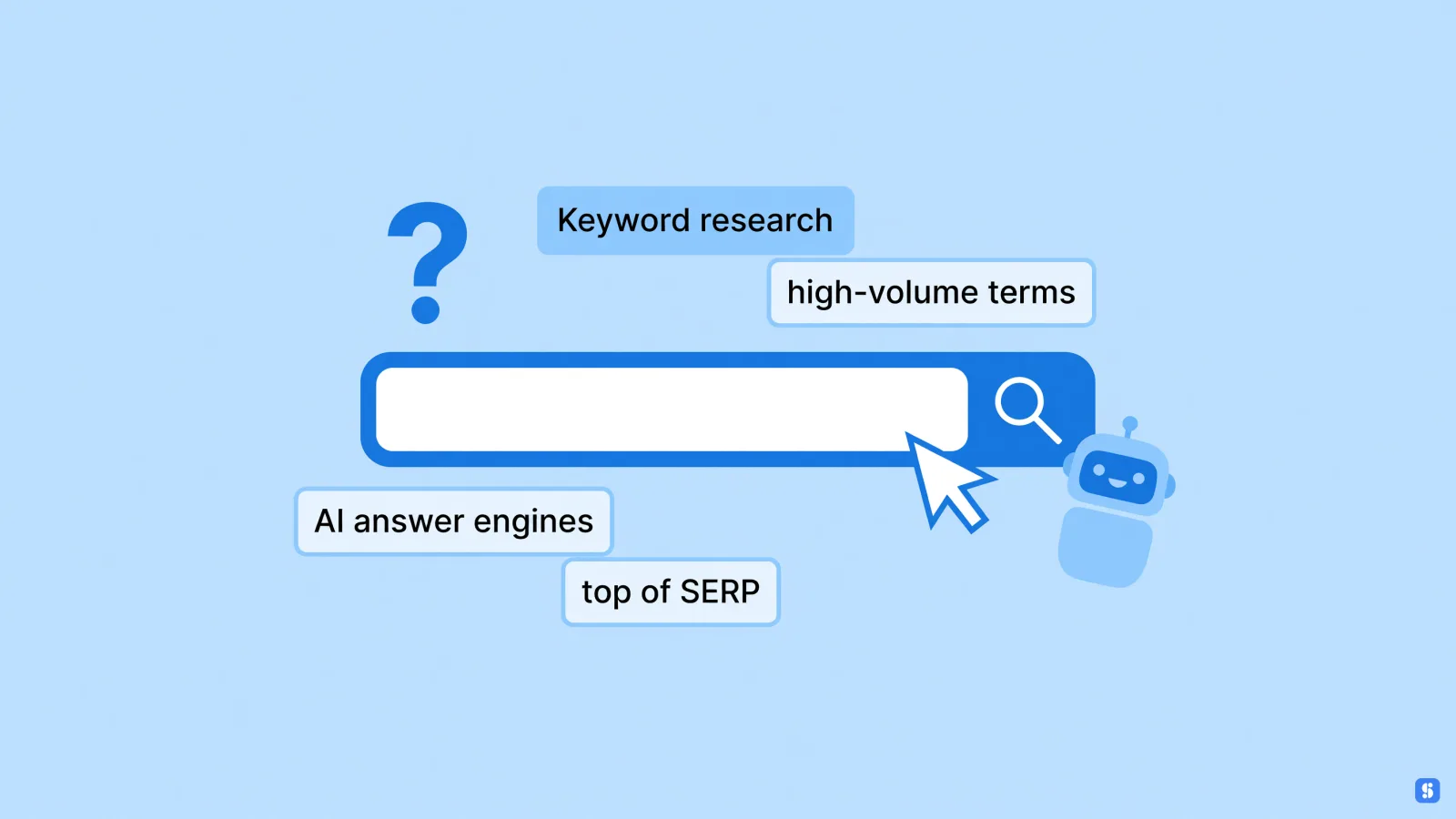
Keyword research used to mean finding high-volume terms to stuff into pages. That playbook is dying because AI answer engines, tools like ChatGPT, Gemini, and DeepSeek, now occupy the top of the SERP. Today, keyword research is about finding the questions your audience asks and making sure your brand is the cited source in AI-generated answers.
Azuqe's AI Visibility Tracking shows brands losing traffic not to competitors but to ChatGPT, Gemini, and DeepSeek recommending answers without citing them. That changes what you research.
The old keyword research playbook is dying
High-volume keywords were a proxy for demand. Pick a big term, stuff it into titles, and the traffic followed. That worked when ten blue links were the whole game. Now AI engines read intent and answer directly, leaving no link to click unless your content is the cited source. (see Azuqe)
What keyword research means when AI answers the queries
You're researching the questions people ask when they're ready to act, and which sources AI engines trust on those topics. Azuqe's unified SEO & AI Visibility Score measures whether you rank in Google SERPs and AI engines simultaneously, so research has to cover both. Ask what your audience asks, then become the citation.
Why Keyword Research is no Longer about Search Volume
Keyword research has quietly changed. The old game was finding the highest-volume term you could rank for. The new game is finding the questions AI engines like ChatGPT and Gemini answer with citations, and making sure that citation is you. A 10,000-volume keyword that people skim past is worth less than a 50-search question from someone ready to buy. (source: Search Engine Optimization – Marketing)
Most teams waste time on the wrong keywords because they ignore the citation gap: the queries where AI answers without ever mentioning your brand. That gap is a ready-made keyword list. Azuqe's Citation Ranking Dashboard shows you exactly which AI answers name your competitors but not you. Those are your targets.
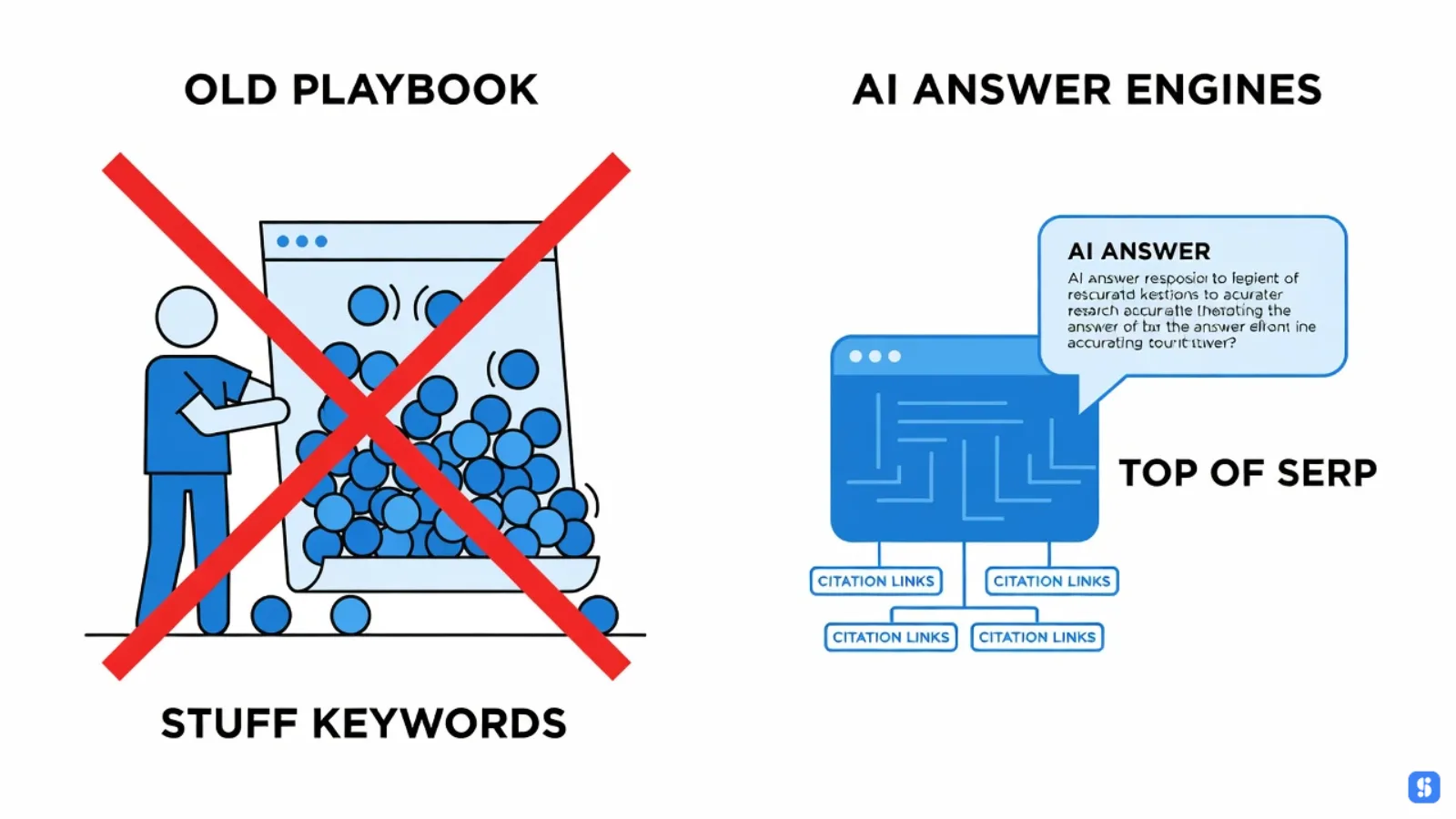
comparison of keyword stuffing vs AI answers
Search intent matters more than volume, but intent is useless if technical issues bury your page. Broken pages and crawl errors silently kill rankings. Azuqe's Continuous Site Audits and Fix Center resolve those issues without a developer, so your research ranks.
How does Keyword Research work in an AI-First World?
Keyword Research is the process of identifying the search terms and questions your audience uses to find solutions, then optimizing content to win visibility in both Google and AI answer engines. In an AI-first world, you also need to identify which AI-generated answers cite your competitors but not you. (source: SEO Visibility, Keyword Research, and Auditing)
Google rankings and AI citations are not the same metric. A page can rank first in Google and still go unmentioned when ChatGPT or Gemini answers a buyer's question. If you only track rankings, you never see that traffic loss. (source: SEO AI Visibility | Lead the Search &)
Azuqe's AI Visibility Tracking monitors brand mentions across ChatGPT, Gemini, and DeepSeek, giving you a direct feed of where you are missing. The Citation Ranking Dashboard ranks your brand against competitors inside AI answers, turning a vague fear into a list of questions to target.
That list becomes your Keyword Research target list for the quarter, grounded in citation gaps, not guesswork. (source: Semrush Report: AI Overviews' Impact on Search in 2025)
The Three Keyword Research mistakes Everyone Makes
Most keyword research fails before a single word of content gets written. These are the three mistakes I see marketing teams repeat, and how to avoid them with Azuqe.
Mistake one: chasing search volume over intent
High-volume keywords are tempting. But a 10,000-volume keyword like "what is SEO" brings browsers, not buyers. They read and leave. Research intent first: who is searching, what do they want next, and can your page realistically answer it? Volume matters only after intent checks out.
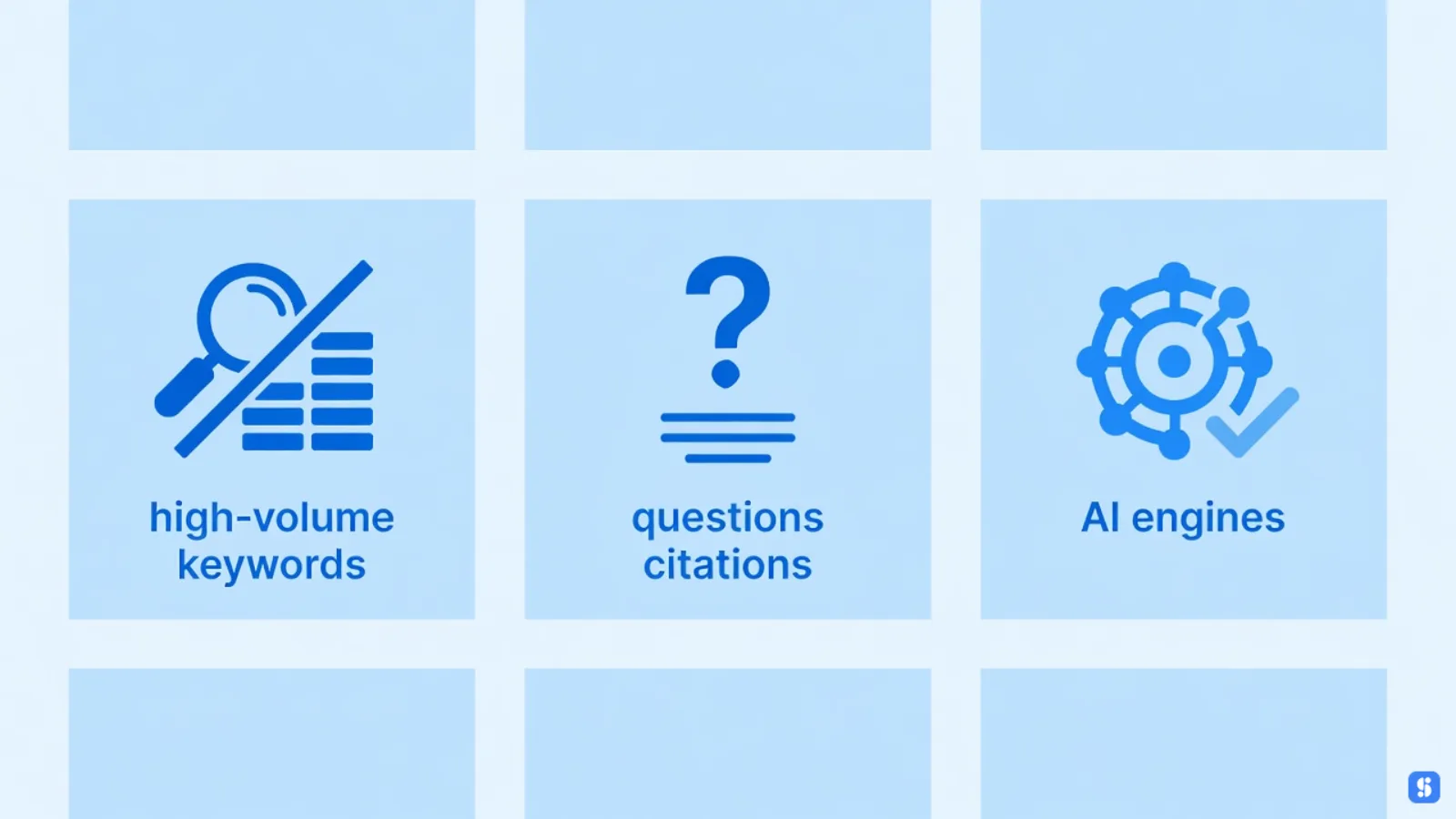
grid of cards showing shift to questions
Mistake two: ignoring the citation gap
The citation gap is where AI engines answer a question without citing your brand. That gap is the most valuable keyword research list you can build. Azuqe's Citation Ranking Dashboard shows exactly where ChatGPT or Gemini mentions a competitor but not you. Each one is a ready-made keyword with proven intent.
Mistake three: researching keywords without fixing technical issues
Researching keywords while your site has technical errors is wasted effort. A keyword list can't rank if crawlers hit broken internal links or missing schema. Azuqe's Continuous Site Audits find these issues automatically, and the Fix Center resolves them without a developer, so your researched keywords have a chance.
How to Find Keywords that Actually Rank in AI Engines
Keyword Research for AI search works backwards from where you are already winning. Instead of guessing what to write next, audit your existing AI citations.
Starting with your existing citations
Azuqe's AI Visibility Tracking shows where your brand or content already appears in ChatGPT and Gemini answers. Those mentions are your best keyword seed list: terms where AI engines already trust you. Expand around them instead of starting from zero.
Expanding from your winning content
If a blog post gets cited in AI answers, research the related questions around that topic. Each follow-up question is a content brief.
Using the Fix Center to protect your rankings
The Citation Ranking Dashboard shows which competitors appear in AI answers for your target topics, and the Fix Center flags the technical issues that block your pages from ranking. Build content that answers those questions better, with clearer structure and real citations. Azuqe's content briefs and AI-drafted articles come with real citations baked in, so your keyword research becomes content structured to be cited.
Most users publish their first article the same day they sign up, which means your Keyword Research can turn into published content within hours, not weeks.
Search Intent is the Only Metric that Matters
Search intent is the reason behind a user's query: informational, navigational, commercial, or transactional. Most Keyword Research stops at "how many people search this?" and skips "why are they searching?" That's the mistake.
Four types of search intent and how to target them
Informational queries want answers. Navigational queries want a specific site. Commercial queries compare options. Transactional queries are ready to buy. Target the intent directly: a transactional page needs pricing, specs, and a clear path to purchase, not a definition.
Why intent beats volume every time
A keyword with 50 searches and transactional intent converts far better than a 10,000-volume informational keyword that never leads to a sale. Volume feels safe. It isn't.
For AI visibility, intent matters even more. AI engines like ChatGPT and Gemini summarize answers, and they cite sources that directly satisfy the intent, not just sources that rank high. Azuqe's content creation tools write in your brand voice with real citations, so you can target commercial and transactional intent with content that earns AI citations. The unified SEO & AI Visibility Score then tracks whether you rank for the intent you targeted, not just whether you show up somewhere. That distinction is the whole game.
Keyword Research is a Translation Problem, not a Discovery Problem
Most keyword research stops at discovery: find high-volume terms, stuff them into a spreadsheet, map each one to a page. That misses the actual job. Keyword research is how you translate what your customer is trying to do into a page you can actually rank and a topic you can realistically win. The mistake I see constantly is treating one page as if it can serve every version of a query. You cannot rank a single product page for both "CRM software" and "best CRM for construction companies." Those are different jobs. One person wants a list of options, the other wants a tool to buy. Pick the intent you are targeting, then move the keyword to the page that already serves that job. Keyword research is how you decide which page wins which intent. The translation step is where it breaks down. Most people stop at the raw phrase and miss the question variant. For example, from "how to run keyword research in Azuqe," you would translate to "does Azuqe have keyword research?" for the FAQ, "how to find keywords for AI search" for the guide, and "Azuqe keyword research tool" for the title tag. Same topic, three intents, three pages. With AI Overviews now summarizing answers directly in the search results, the old habit of stacking five similar keywords onto one page is dead. You need one clear intent per page, or you rank for none of them. Your final deliverable is not a keyword list. It is a mapping table that says which page wins which intent. If that table is missing, the research is not finished.
How to Track Keyword Rankings across Google and AI
Setting up your tracking in Azuqe
Tracking keyword rankings used to mean checking Google SERPs by hand, once a week, and calling it done. That stops being useful the moment ChatGPT or Gemini answers a query without ever showing your site. Your keyword research only counts if you can see it working in both places.
In Azuqe, AI Visibility Tracking watches your brand across ChatGPT, Gemini, and DeepSeek from the same dashboard you already use for Google. Instead of a separate report for every engine, your Google positions and AI citations feed into one unified SEO & AI Visibility Score. When that number moves, you know exactly where you gained or lost.
Reading your unified SEO & AI Visibility Score
The score combines Google rankings and AI citations into a single figure, so you can answer one question fast: is the keyword research working? If rankings rise on Google but the AI score stalls, the gap tells you where the content is weak.
Two things run in the background so your tracked keywords don't slip because of something you could have caught earlier. Continuous Site Audits flag technical issues, and the Fix Center resolves them without a developer. A broken schema or a slow page can cost you a position you already earned. This is where you stop it.
Keyword Research best practices for 2025
Keyword Research gets oversold as a discovery exercise, but it's really a listening exercise. The highest intent keywords you'll ever find are the ones your audience is already asking you directly.
Build a question bank, not a keyword list
Skip the keyword tool at the start. Instead, pull every question your audience has already asked you: sales calls, support tickets, comments on social media. Those questions are real search intent, phrased in your customers' actual language, not the language a tool guesses at. Collect them in a spreadsheet and treat that as your seed list for Keyword Research.
Research your competitors' citations
This is the part most people skip. Search ChatGPT, Gemini, or DeepSeek for your target questions and look at who gets cited. If an AI answer engine cites a competitor for a question you can answer better, that's a keyword opportunity. Azuqe's Citation Ranking Dashboard shows exactly which competitors appear in AI answers for your target topics, so you can see the gap before you write a word.
Publish fast and iterate
Your keyword research shouldn't sit in a spreadsheet for two weeks. Azuqe's content tools create full briefs and AI-drafted articles with real citations in your brand voice, ready to publish. Most users publish their first article the same day they sign up, so your keyword research can go live within hours, not weeks.
Troubleshooting: why your Keywords Aren't Ranking
If your Keyword Research surfaces great terms but your pages still don't move, the problem is usually execution, not research. Start by checking the technical foundation, then look at how well your content matches search intent.
Technical issues silently killing your rankings
Broken links, missing schema, slow pages, and crawl errors are the quiet killers. They prevent search engines from finding and indexing your content.
Azuqe's Continuous Site Audits run automatically and surface these issues before they hurt your rankings. The Fix Center resolves them without a developer, so you don't wait on engineering support.
Content that doesn't match search intent
If your content doesn't answer the question the keyword implies, no amount of keyword research will help. Rewrite it to directly address what the searcher wants.
Missing citations in AI answers
If you rank in Google but not in AI answers, check the Citation Ranking Dashboard to see which competitors are being cited. Build content that is more quotable, with clear, standalone claims.
Frequently Asked questions
Keyword research gets confusing when you're juggling Google and AI engines. Here are the questions we hear most, answered directly.
What is keyword research?
Keyword research is the process of finding the search terms and questions your audience actually types in, then building content that earns visibility for those terms in both Google and AI engines. It tells you what to write about and how to phrase it so you show up where your customers are already looking.
How do I do keyword research for SEO?
Start with your existing citations, then expand from your winning content. Use Azuqe's Citation Ranking Dashboard to find where competitors are cited but you are not, and target those gaps. That gives you a practical list of keywords grounded in real visibility, not guesswork.
How do AI Overviews affect keyword research?
AI Overviews and AI answer engines change keyword research because they favor conversational queries and long-tail questions, and they cite sources rather than just ranking them. So you need to make better for being referenced, not just for position.
What is the difference between short-tail and long-tail keywords?
Short-tail keywords are broad and high-volume. Long-tail keywords are specific and lower-volume, and they dominate AI citations because they match natural language questions. For most teams, long-tail is where the actual wins are.
Keyword Research is not Dead: It Just Moved to the Citation Layer
Keyword research is not dead, but it has changed. The old playbook of chasing high-volume terms and stuffing them into pages is failing because AI answer engines now occupy the top of the SERP, and they cite sources rather than just rank them. The real job now is finding the questions your audience asks and making sure your brand is the answer they cite.
Your next step is to audit your current AI visibility: see where you are cited, where you are missing, and which competitors are winning the citations you want. Azuqe's AI Visibility Tracking and Citation Ranking Dashboard gives you that audit in minutes, and the Fix Center clears the technical issues that block your rankings across Google and AI engines.
Start with your own brand. Run an AI visibility check today and build your keyword list from the gaps you find.
From our experience
In running keyword research for our own site, we've seen that classic Google rankings and AI answer engine citations now diverge sharply, a keyword can hold page one on Google while vanishing from ChatGPT's response entirely, which is why our unified visibility score exists.
Keyword research without a citation ranking dashboard is guesswork in the AI era; our users consistently discover that terms they thought were 'safe' are being answered by competitors' cited sources in Gemini and DeepSeek, not their own content.
One honest limitation: our AI Visibility runs only cover ChatGPT, Gemini, and DeepSeek on Pro/Max plans, so keyword research for Claude or Perplexic audiences still requires manual checks, we don't pretend otherwise.
From operating the Fix Center, we've learned that keyword research often surfaces technical issues (slow pages, broken internal links) that kill rankings before content quality even matters, so we pair every keyword report with continuous site audits to catch those automatically.
We've observed that users who pair keyword research with our Automatic Fix Center stop losing traffic to AI recommendations, not because they find better keywords, but because they fix the underlying crawl and indexation problems that Google and AI engines both penalize.