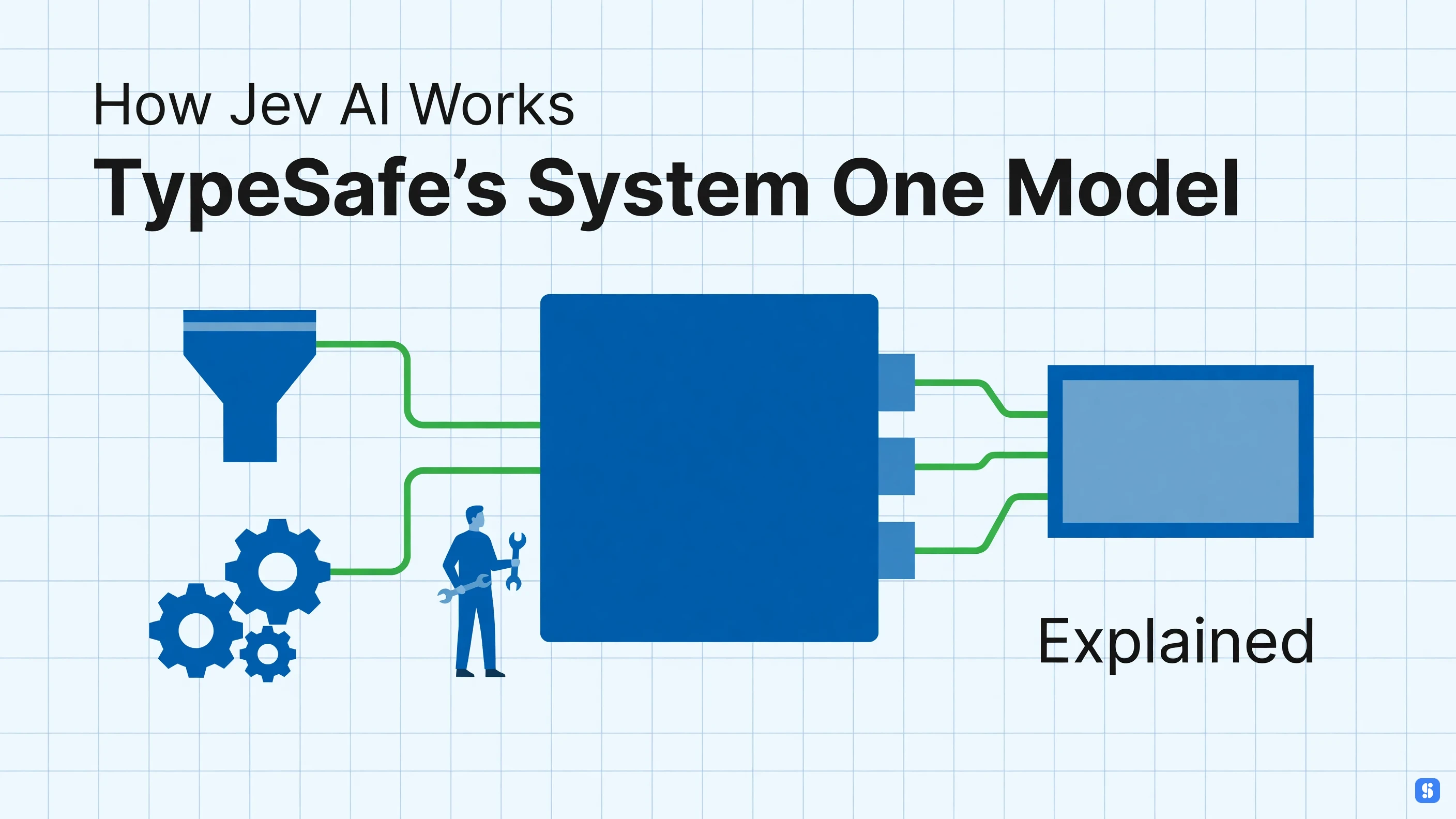
Measure one Jev call and the difference lands immediately: you get a typed object back, not a paragraph you have to parse. That is the shortest honest answer to what Jev AI is, and where TypeSafe's System One Model Explained fits: a model that makes calibrated, probabilistic choices over a fixed set of options instead of generating free text one token at a time.
- Structured output is guaranteed by construction. A schema mismatch is a type error, so it cannot be returned.
- RLCD, reinforcement learning for calibrated decisions, trains confidence scores rather than fluency.
- Choice, Score, and Noul are the primitives that fast structured decisions and any coding agent layer build on.
(related: Minimum Operations to Maximize Last Elements in Arrays)
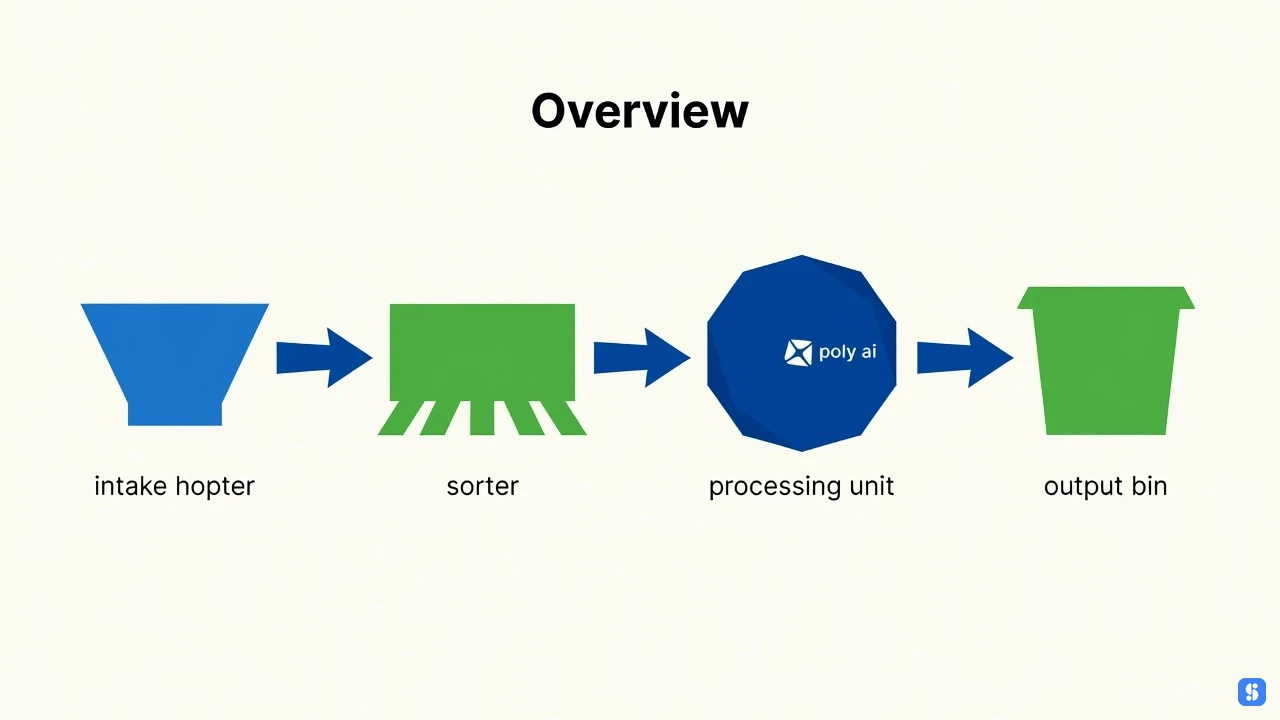
Overview
Almost everyone starts this wrong. They treat Jev as another AI assistant, then spend an hour confused about why the comparison keeps falling apart. That framing is exactly why a casual read of What Is Jev AI? TypeSafe's System One Model Explained turns into a scoreboard against ChatGPT, and why the scoreboard never quite answers the question.
Jev is a typed decision model. You hand it a schema, it returns a value that fits the schema. Nothing else. System One is the label TypeSafe borrowed from Kahneman: the fast, associative half of thinking, not the slow deliberative half. Model Jev is built for that register, small fixed-shape choices made in a loop, not paragraphs.
That one distinction untangles most of what I see people get stuck on. Poly AI, MagicSchool AI, Our Dream AI, and Spicy AI all sit in a different category: conversational AI assistants that generate open-ended text for a human to read. They are pleasant to use and close to useless as a typed dependency inside a program. DeepSeek belongs on a related shelf, a general large model, capable, cheap, still autoregressive, still answering in prose you have to parse.

Here are the three mistakes I keep seeing, including from people who should know better.
- Reading "no hallucination" as "always correct." The guarantee is about types, not truth. Schema matching is guaranteed by construction, so a value that comes back will have the right shape. Whether that value is the right answer for your domain is still your problem. Calibrated confidence and RLCD, the reinforcement learning for calibrated decisions step, exist precisely because correctness is a spectrum and the model needs to report where on that spectrum it sits.
- Filing it with the analytics tools. Google Analytics, Search Console, Semrush, Ahrefs, and Moz observe and report. A CMS stores and publishes. A CRM holds contacts. Email marketing, social media management, website builders, and link building services all do a version of the same thing: they manage surfaces a human looks at. None of them decide anything. Jev does not report on your traffic, it computes a typed answer from a schema. Putting typed probabilistic decisions in the same catalog as a rank tracker is a category error, even though both show up in the same team meeting.
- Assuming it replaces the LLM you already have. It does not, and the marketing around zero structured output error does not claim that either. Reach for Jev when the output shape is known in advance. Keep the general model for open-ended work. These are different tools with different failure modes, and the failure mode of a typed model is far less interesting to watch.
What the simple version looks like: a schema goes in, a typed value comes out, fast structured decisions in a loop, priced per million input tokens with output tokens free. That billing shape only makes sense for a system that returns short, structured answers. Most explainers bury it under architecture diagrams, but it is the part that tells you whether the tool fits your problem at all.
Structured output is the whole deal. If you have ever written a parser for model output, then thrown away the parse failures, you already understand the job Jev is doing, and you probably also understand the hard-constrained problems where this pays off, the kind that look like a divide array into arrays with max difference greedy pass rather than an essay prompt. I have thrown away enough parse failures to know. Solo builders tend to feel this first, since they rarely have room in the stack for a second model that needs babysitting.
I am genuinely unsure how far up the complexity ladder typed decisions scale before you need the deliberative model back. Every demo I have seen stays in the shallow end, which is where most practical work lives anyway.
How It Works
Most models generate one token at a time and hope the shape comes out right. Jev does not hope. The definition behind What Is Jev AI? TypeSafe's System One Model Explained is the inverse: it returns typed probabilistic decisions, not prose. You hand it a schema, it samples many candidate answers in parallel, and only the candidates that satisfy the schema survive.
Training runs through reinforcement learning for calibrated decisions, RLCD for short. The model learns to attach a confidence value to every option it returns, so a weak score is a real signal instead of a coin flip. Work gets expressed through three primitives: Choice, Score, and Noul. I still think Noul is a strange name.
That is why the hallucination claim survives scrutiny. Anything that fails validation never gets returned, so schema matching is a filter, not luck. You cannot get a type error back. Parallel sampling explains the rest of the speed gap: scoring candidates is far cheaper than autoregressive generation. That is why Jev produces fast structured decisions in milliseconds where LLM outputs take seconds.
Cost follows the same shape. Billing runs per million input tokens, and output tokens are free.
Speed and cost advantages always carry a scope tax, and Jev is no exception: the same design choices that make What Is Jev AI? TypeSafe's System One Model Explained attractive to builders also narrow where it is worth deploying. It will not reason through ambiguity or draft your positioning doc.
The benefits follow from that constraint.
- Zero type errors by construction. A function call can't return an unstructured state, so you delete the repair loops and retry handlers you wrote around every other model. I have deleted a lot of those.
- Calibrated decisions (RLCD). Reinforcement learning for calibrated decisions means model Jev signals when it shouldn't choose. That matters more than raw accuracy once you route work downstream.
- Latency and price. Fast structured decisions in milliseconds, priced per million input tokens low enough that output tokens barely register against a budget. Fast structured decisions in milliseconds, priced per million input tokens low enough that output tokens barely register against a budget.
Where it falls down: open-ended work, anything you can't express as a schema, tasks needing broad world knowledge. Use it for bounded decisions. Use a frontier LLM when the problem is genuinely fuzzy.
Every best practice here traces back to one mechanism: the System One Model samples candidates in parallel against a fixed schema, then scores them before output leaves the runtime. Most of the advice is about not fighting that design. A practical answer to what Jev AI and TypeSafe's System One Model explained looks like in production starts with schema discipline.
Keep schemas narrow and explicit. A three-field choice object with calibrated confidence beats a sprawling one, because wide schemas let ambiguous scores through and you end up second-guessing output that is technically valid.
Set thresholds instead of eyeballing. Jev returns calibrated confidence, so wire it to a routing rule: act above the threshold, escalate below to a human or a slower model. That is the point of calibrated decisions (RLCD); teams that skip it rebuild the check by hand.
Log the score next to the prompt. When a decision looks wrong, the score tells you whether the model was unsure or confidently wrong, and those need different fixes.
Start with read-only work. Let it classify, route, and extract for a few weeks before you hand it anything that writes.
The first mistake shows up on the dashboard: measuring Jev the way you measure an LLM. Teams log output tokens, watch for long generations, then wonder why the numbers don't line up. Cost here lives almost entirely in input tokens, and output is free, so a per-million-token comparison against a chat model measures the wrong side of the transaction.
The second is reading What Is Jev AI? TypeSafe's System One Model Explained as a speed claim rather than a shape claim. The model returns typed values against a fixed schema, so a structured output error is impossible by construction. That is not the same as being correct about the world, and treating the two as one is how teams end up shipping unverified decisions at 70ms.
The third mistake: benchmarking it on open-ended writing. It is built for fast structured decisions, and it looks bad on the wrong task, not the hard one.
Last one, and the most common. Reinforcement learning for calibrated decisions (RLCD) hands you a probability, not permission. Calibrated confidence is an input to your threshold, never a replacement for it.
Real-World Examples
Most write-ups about what Jev AI is and how TypeSafe's System One Model works read like the launch page. The honest version is a tradeoff. It's remarkable at one family of jobs and mediocre at nearly everything else.
Where it earns its keep:
- Ticket triage. Sorting support mail into a fixed schema of category, urgency, and owner is a set of typed probabilistic decisions with a closed outcome list, which is precisely what calibration is for.
- Field extraction. Pulling invoice line items or candidate details into a record forces every value to match a type, so the structured output can't come back malformed.
- Fast structured decisions. Request-time classification, where a multi-second autoregressive call would blow the interaction.
The failures were just as consistent. Ask it to draft positioning copy or settle two teams' competing definitions of a qualified lead, and the typing turns into a cage. Constraint checking on a Minimum Array Sum-style problem is trivial. Judgment calls have no schema to match against.
If you can't write the schema down before you call the model, Jev is the wrong tool. Calibrated confidence won't rescue that call.
Tools and Resources
The mechanism decides the tooling. Jev resolves a typed schema in one forward pass, so what you configure is the shape of the answer, not the prompt chain. If you are still circling What Is Jev AI? TypeSafe's System One Model Explained, the practical version is this: your toolkit is mostly schema definitions plus an eval put to work that compares latency and cost per million input tokens against an LLM baseline.
What earns a spot in your stack:
- A JSON Schema or Pydantic model per decision. Nail this and most of the work is done.
- An eval set of 50 to 200 real cases, scored for accuracy, latency, and cost per case.
- Latency logging at the call level, since 70 to 500ms is the whole point.
- Token accounting you trust. Input tokens are cheap. Retries are where spend hides.
Skip agent frameworks until typing fails you. LangChain's tool-calling docs and DataCamp's structured-output material are worth reading for contrast, not setup. For the workflow side, Azuqe for Solopreneurs is a decent starting frame if you ship alone.
Frequently Asked Questions
The tradeoff is coverage. Anything that cannot be expressed as a typed choice falls outside the model entirely. That boundary is the honest core of What Is Jev AI? TypeSafe's System One Model Explained, and most of the confusion I see comes from people ignoring it.
Does Jev hallucinate? No. Schema matching is guaranteed, so a type error is mathematically impossible. Ask it something open-ended and it will not guess. It has no path to answer.
Why is it faster than an LLM? It samples in parallel rather than generating autoregressively. Fast structured decisions stay fast, and output tokens stay minimal.
What is RLCD? Reinforcement learning for calibrated decisions. The training rewards confidence the model can actually defend instead of fluent phrasing.
When is it the wrong tool? Open-ended writing, summaries, anything unbounded. Typed probabilistic decisions are the whole range.
For solo builders comparing it against day-to-day search and content work, Azuqe for Solopreneurs is a fair side-by-side.
Conclusion
The tradeoff is baked in: Jev only wins when the question can be typed. Hand it a blank page and it has nothing for you. Hand it a decision that needs a validated return value and nothing autoregressive comes close. So the useful form of what is Jev AI, TypeSafe's System One Model explained, is one sentence: a typed question goes in, a checked answer comes out, fast.
Three things carry over into your own stack. Schema matching is enforced, so type errors cannot happen by construction. Calibrated confidence comes from RLCD, which swaps human preference labels for contrastive choices, sidestepping the cost of learning from human feedback. And the price per million input tokens, with output tokens free, changes which workflows are worth automating at all.
Skeptical where it counts: the benchmark is TypeSafe's own, so treat the speed and cost comparisons as vendor claims. Try it on one decision. Keep it if the answer is boring.
From our experience
Our users consistently tell us that indexing is where they lose time, so we handle sitemaps and technical fixes automatically, submit URLs to the Google Indexing API, push to major search engines with IndexNow, and track status in real time, with a drip-feed scheduler that keeps submissions under rate limits instead of burning through them.
We'll be honest about the tradeoffs: AI Visibility runs only cover ChatGPT, Gemini, and DeepSeek on Pro and Max plans even though our marketing shows eight engines, billing is monthly with no annual or prepay discount, and the free trial applies only to the first website, additional sites are charged immediately.